This law problem is solved step by step below, with detailed explanations to help you understand the method and arrive at the correct answer.
The theme of the story "The Editor" often explores the power and responsibility of shaping narratives. This can involve the editor's influence over truth, public perception, and the fate of creative
Law

ScanSolve AI Answer
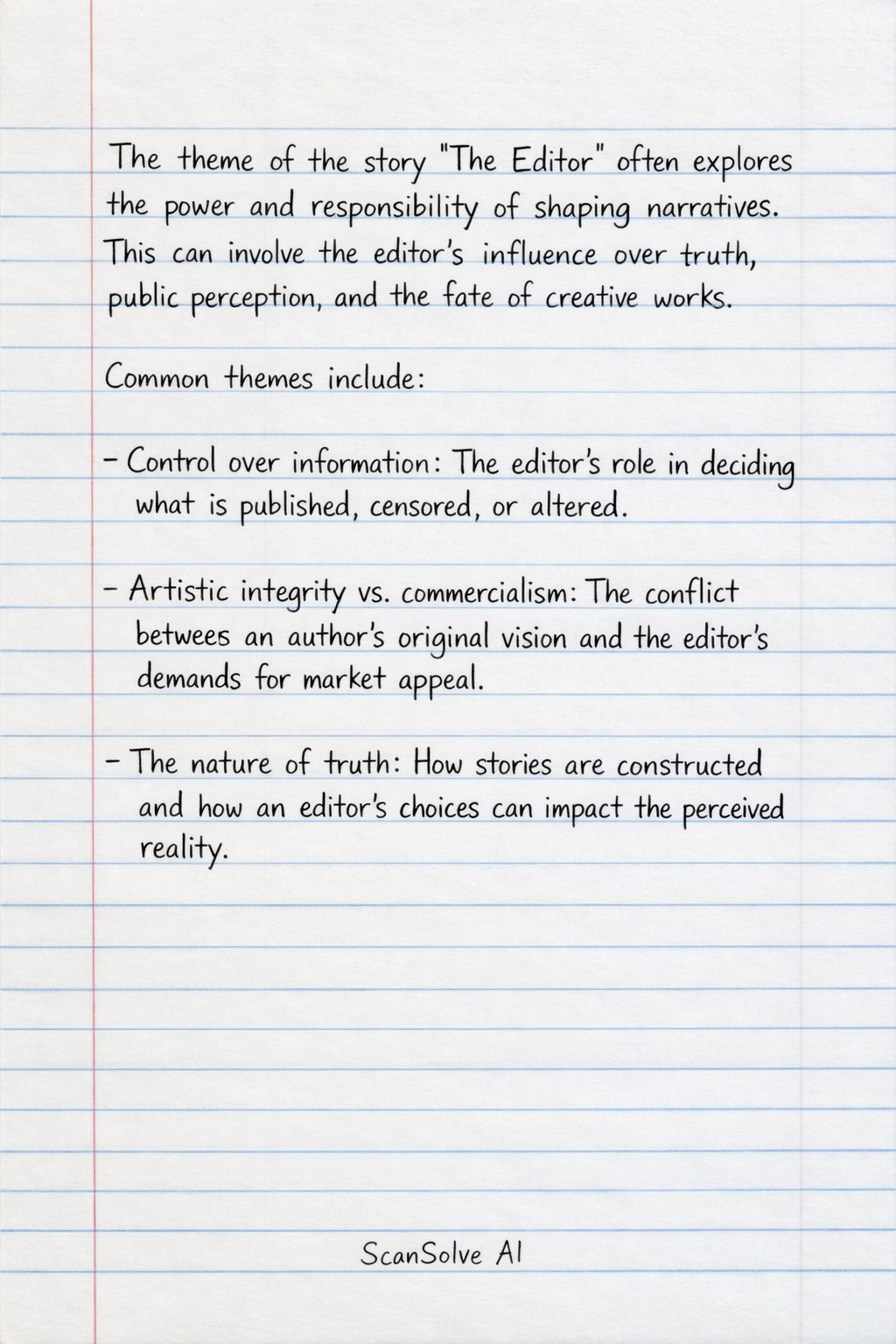
The theme of the story "The Editor" often explores the power and responsibility of shaping narratives. This can involve the editor's influence over truth, public perception, and the fate of creative works.
Common themes include:
- Control over information: The editor's role in deciding what is published, censored, or altered.
- Artistic integrity vs. commercialism: The conflict between an author's original vision and the editor's demands for market appeal.
- The nature of truth: How stories are constructed and how an editor's choices can impact the perceived reality.
Was this helpful?
Need help with your own homework?
Get instant step-by-step solutions to any question. Free to start.
Ask Your Question
Handwritten Step-by-Step Solution
Get this as a handwritten image on WhatsApp — like a tutor wrote it for you.
Try on WhatsAppMore Law Questions
QExplain how international institution make and enforce law using the two mechanisms of international…QGive real life situation s where you have experienced the violation of the human rightsQWhat is the role of judiciary in arms of the governmentQExplain two functions of central government and give one example of each from mumbwa discrictQGrila care POATE fi cu raspuns multiplu ! Fapta penală se poate manifesta: a. doar sub forma unei ac…
Still have questions?
Quick Answer
The theme of the story "The Editor" often explores the power and responsibility of shaping narratives.
ScanSolve AI Answer
The theme of the story "The Editor" often explores the power and responsibility of shaping narratives. This can involve the editor's influence over truth, public perception, and the fate of creative works. Common themes include: Control over information: The editor's role in deciding what is published, censored, or altered. Artistic integrity vs. commercialism: The conflict between an author's original vision and the editor's demands for market appeal. The nature of truth: How stories are constructed and how an editor's choices can impact the perceived reality.