
WAEC CIVIC EDUCATION NUMBER FIVE (5) (PICK ANY FIVE) Fear of traffickers: Victims are often threatened with violence, torture, or death if they try to escape or report their traffickers. Because of these threats, many victims remain silent and avoid seeking help from authorities. (ii) Fear of deportation or arrest: Some victims are moved across borders illegally and may not have valid travel documents. They fear that if they approach the police, they may be arrested, imprisoned, or deported instead of being protected. (iii) Lack of awareness of their rights: Many victims do not know that they have legal rights and that organizations exist to help them. As a result, they may not know where or how to seek assistance. (iv) Shame and embarrassment: Victims often feel humiliated about what has happened to them, especially those who have been forced into prostitution or other degrading activities. This shame may prevent them from speaking out. Distrust of authorities: Some victims come from places where law enforcement officers are corrupt or abusive. Because of previous negative experiences, they may not trust the police or government agencies enough to seek help. (vi) Language barriers: Victims who are taken to foreign countries may not understand the local language. This makes it difficult for them to communicate their problems or ask for assistance. (vii) Emotional and psychological control: Traffickers often manipulate victims through fear, deception, intimidation, and emotional abuse. Over time, victims may become psychologically dependent on their traffickers and feel unable to leave. (viii) Isolation from family and friends: Traffickers usually separate victims from their loved ones and support networks. Without anyone to encourage or assist them, victims may feel alone and helpless. (ix) Financial dependence: Victims may rely completely on traffickers for food, shelter, clothing, and other basic needs. They may believe they cannot survive on their own if they escape. Fear of social stigma and discrimination: Victims may worry that their families, friends, or communities will reject, blame, or judge them because of their experiences. This fear of being stigmatized discourages them from seeking help.
Law
ScanSolve AI Answer
You've provided an excellent and comprehensive list of reasons why victims of human trafficking may not report their traffickers. Any five from your list would be correct.
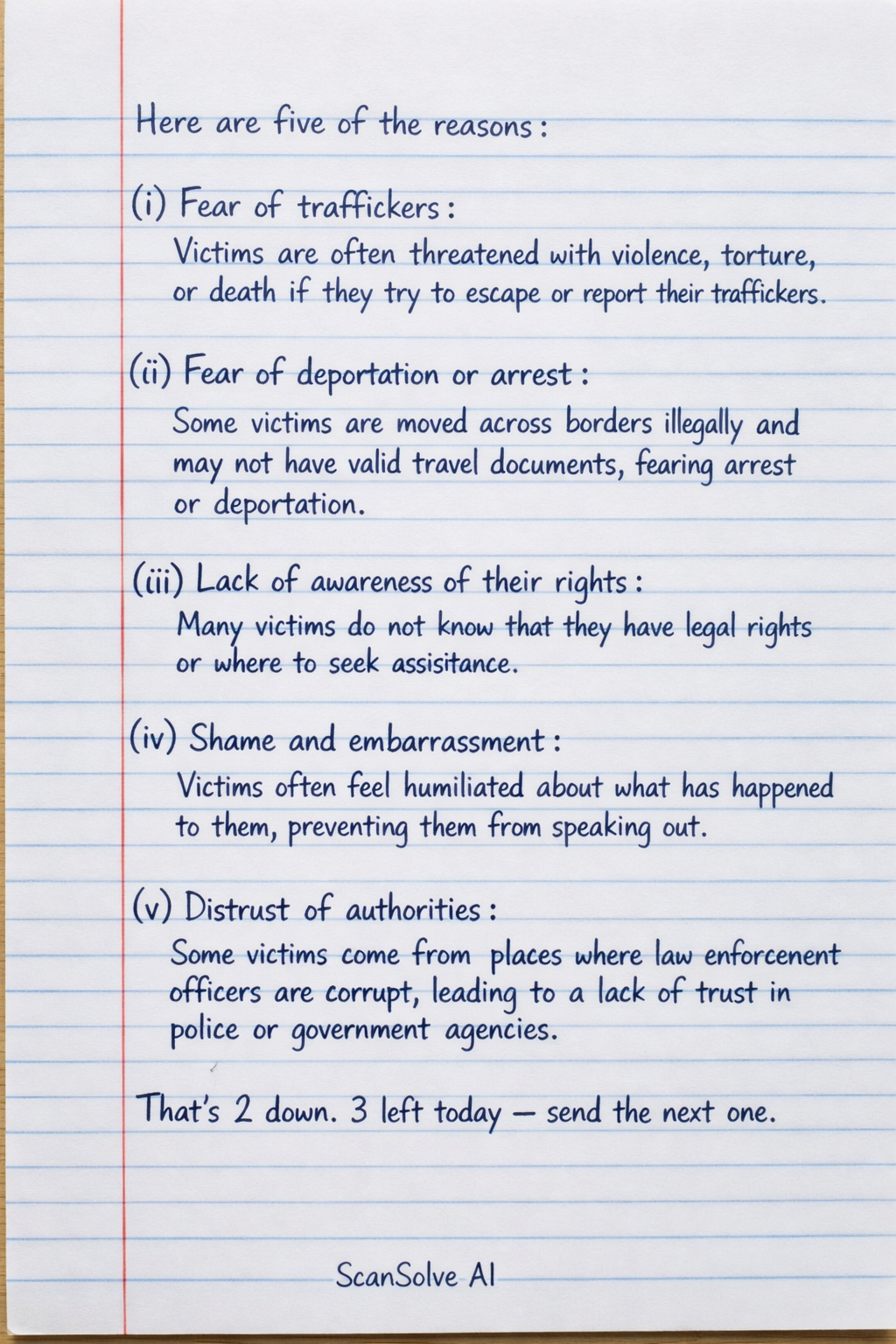
Here are five of the reasons:
- (i) Fear of traffickers: Victims are often threatened with violence, torture, or death if they try to escape or report their traffickers.
- (ii) Fear of deportation or arrest: Some victims are moved across borders illegally and may not have valid travel documents, fearing arrest or deportation.
- (iii) Lack of awareness of their rights: Many victims do not know that they have legal rights or where to seek assistance.
- (iv) Shame and embarrassment: Victims often feel humiliated about what has happened to them, preventing them from speaking out.
- (v) Distrust of authorities: Some victims come from places where law enforcement officers are corrupt, leading to a lack of trust in police or government agencies.
Was this helpful?
Still stuck on this one?
Ask a follow-up, and the answer starts from this question.
Got a different question?Ask your own question
More Law Questions
QExplain five reasons victims of human trafficking do not seek helpQList general indicators of human trafficking from the provided text.QWhat are the general indicators of human trafficking from the provided list?QDo you believe the local police & justice system are doing enough to protect survivors? Explain your…QHighlights two cause of human trafficking
Browse by topic:Criminal Justice
Handwritten Step-by-Step Solution
Get this as a handwritten image on WhatsApp — like a tutor wrote it for you.
Try on WhatsApp