The initial screening determines if applicants meet the critical job specifications and requirements to expedite the departure of unsuitable applicants. Explain how you will go about the initial screening process. What will you be looking for?

History
The initial screening determines if applicants meet the critical job specifications and requirements to expedite the departure of unsuitable applicants. Explain how you will go about the initial screening process. What will you be looking for?

ScanSolve AI Answer

3 steps
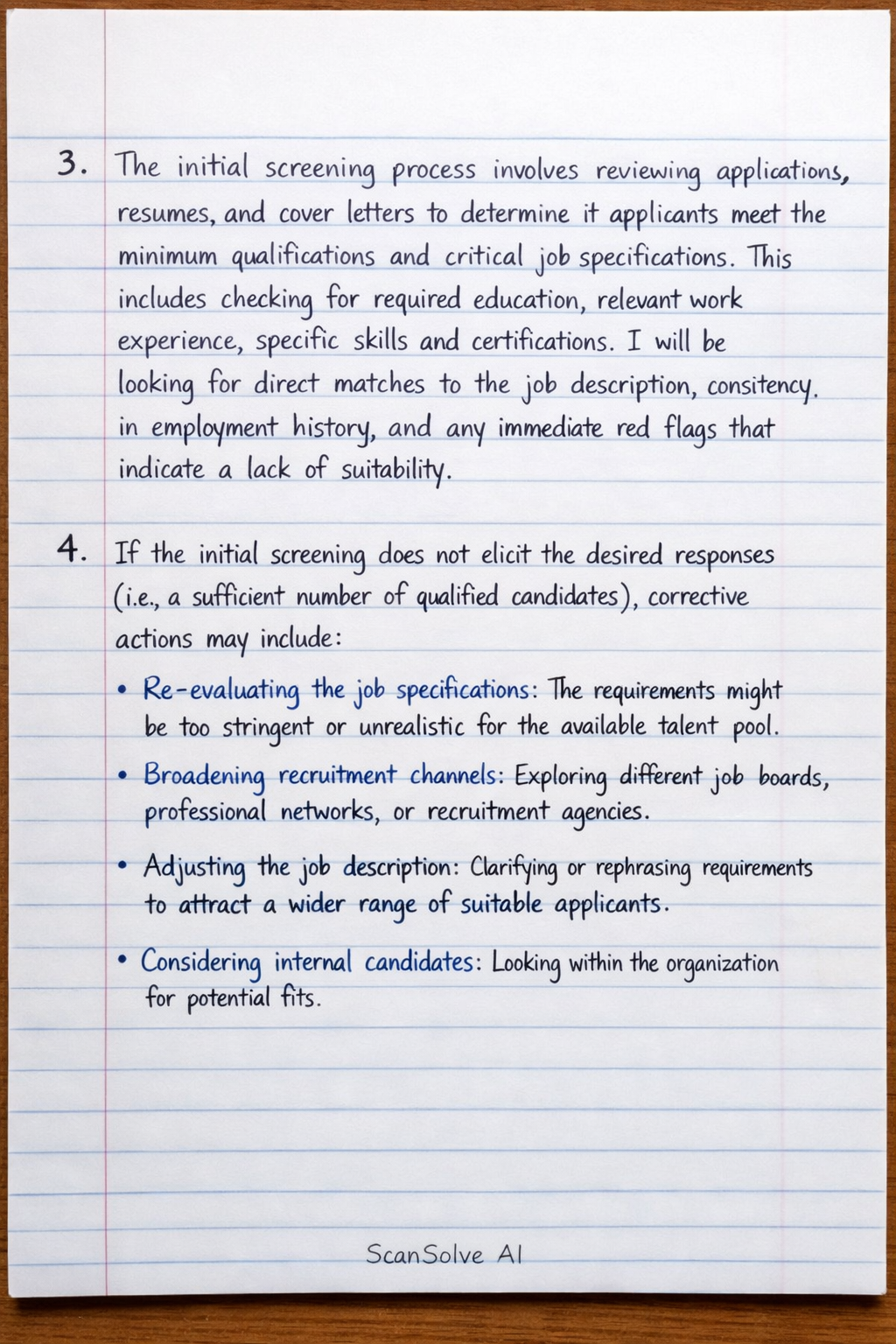
  1. The initial screening process involves reviewing applications, resumes, and cover letters to determine if applicants meet the minimum qualifications and critical job specifications. This includes checking for required education, relevant work experience, specific skills, and certifications. I will be looking for direct matches to the job description, consistency in employment history, and any immediate red flags that indicate a lack of suitability.

  2. If the initial screening does not elicit the desired responses (i.e., a sufficient number of qualified candidates), corrective actions may include:

    • Re-evaluating the job specifications: The requirements might be too stringent or unrealistic for the available talent pool.
    • Broadening recruitment channels: Exploring different job boards, professional networks, or recruitment agencies.
    • Adjusting the job description: Clarifying or rephrasing requirements to attract a wider range of suitable applicants.
    • Considering internal candidates: Looking within the organization for potential fits.
  3. To draw up a short list of potential candidates, I will:

    • Develop a scoring matrix: Assign weights to critical job requirements (e.g., experience, education, specific skills).
    • Score each screened applicant: Evaluate how well each applicant meets the weighted criteria based on their application materials.
    • Rank candidates: Order applicants from highest to lowest score.
    • Select top performers: Choose a manageable number of top-ranked candidates (e.g., 5-10) who best align with the job requirements for the next stage of selection, such as interviews or assessments.
Was this helpful?

Need help with your own homework?

Get instant step-by-step solutions to any question. Free to start.

Ask Your Question
Handwritten step-by-step solution preview

Handwritten Step-by-Step Solution

Get this as a handwritten image on WhatsApp — like a tutor wrote it for you.

Try on WhatsApp

Still have questions?

Quick Answer

3. The initial screening process involves reviewing applications, resumes, and cover letters to determine if applicants meet the minimum qualifications and critical job specifications.

The initial screening determines if applicants meet the critical job specifications and requirements to expedite the departure of unsuitable applicants. Explain how you will go about the initial screening process. What will you be looking for?
History

This history question requires analysis of historical events, causes, and consequences. The detailed answer below provides context, evidence, and a well-structured explanation.

ScanSolve AI Answer
3. The initial screening process involves reviewing applications, resumes, and cover letters to determine if applicants meet the minimum qualifications and critical job specifications. This includes checking for required education, relevant work experience, specific skills, and certifications. I will be looking for direct matches to the job description, consistency in employment history, and any immediate red flags that indicate a lack of suitability. 4. If the initial screening does not elicit the desired responses (i.e., a sufficient number of qualified candidates), corrective actions may include: Re-evaluating the job specifications*: The requirements might be too stringent or unrealistic for the available talent pool. Broadening recruitment channels*: Exploring different job boards, professional networks, or recruitment agencies. Adjusting the job description*: Clarifying or rephrasing requirements to attract a wider range of suitable applicants. Considering internal candidates*: Looking within the organization for potential fits. 5. To draw up a short list of potential candidates, I will: Develop a scoring matrix*: Assign weights to critical job requirements (e.g., experience, education, specific skills). Score each screened applicant*: Evaluate how well each applicant meets the weighted criteria based on their application materials. Rank candidates*: Order applicants from highest to lowest score. Select top performers*: Choose a manageable number of top-ranked candidates (e.g., 5-10) who best align with the job requirements for the next stage of selection, such as interviews or assessments.