

This mathematics problem involves applying core mathematical principles and formulas. Below you will find a complete step-by-step solution with detailed explanations for each step, helping you understand not just the answer but the method behind it.
ScanSolve AI Answer
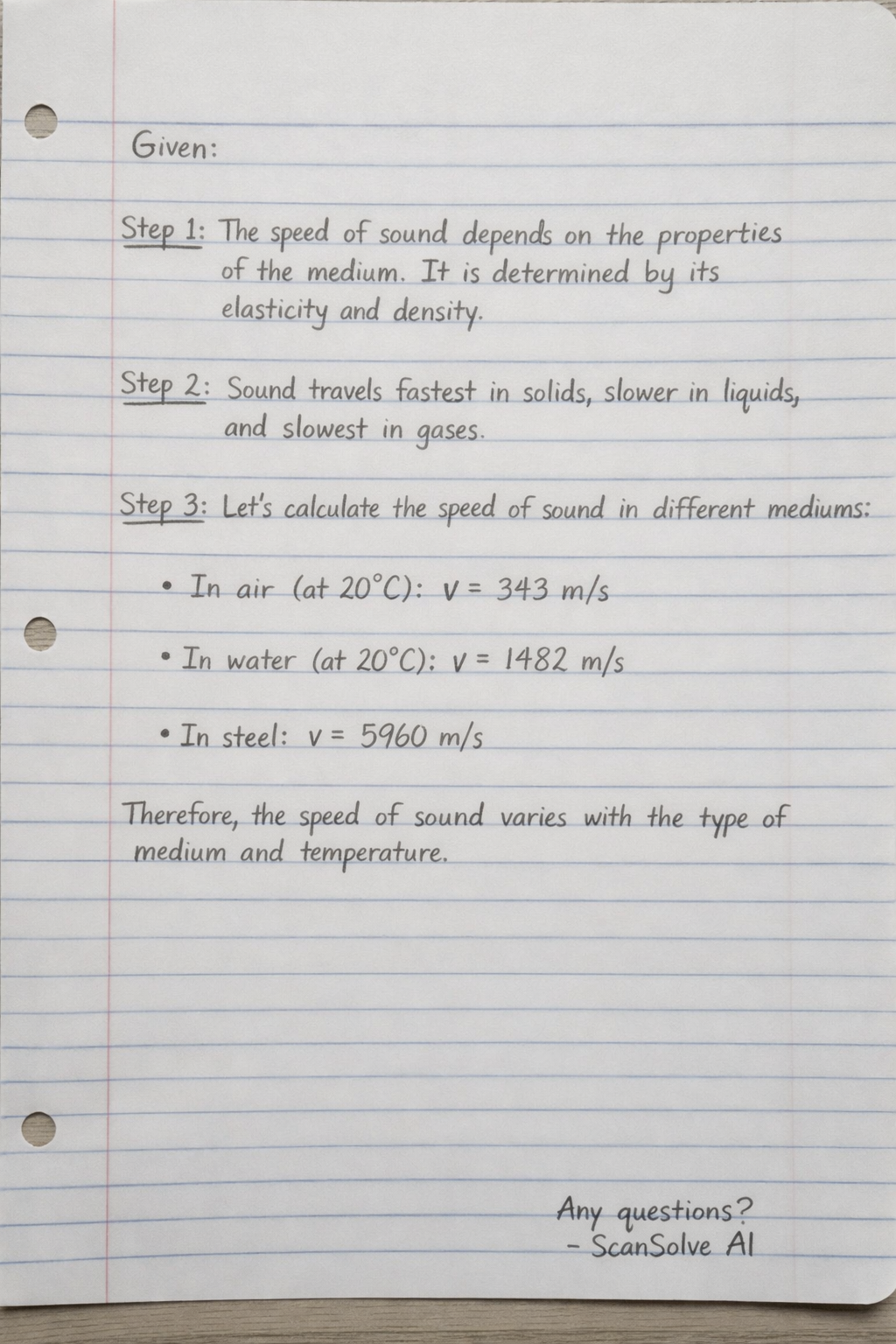
Step 1: ଶବ୍ଦର ବେଗ ଏକ ନିର୍ଦ୍ଦିଷ୍ଟ ମାଧ୍ୟମରେ ସ୍ଥିର ନୁହେଁ। ଏହା ମାଧ୍ୟମର ପ୍ରକୃତି, ଯଥା ତାହାର ସ୍ଥିତିସ୍ଥାପକତା (elasticity) ଏବଂ ଘନତା (density) ଉପରେ ନିର୍ଭର କରେ। Step 2: ସାଧାରଣତଃ, ଶବ୍ଦ କଠିନ ପଦାର୍ଥରେ ସବୁଠାରୁ ଦ୍ରୁତ ଗତିରେ ଯାତ୍ରା କରେ, ତା'ପରେ ତରଳ ପଦାର୍ଥରେ ଏବଂ ଗ୍ୟାସରେ ସବୁଠାରୁ ଧୀର ଗତିରେ ଯାତ୍ରା କରେ। Step 3: କିଛି ସାଧାରଣ ମାଧ୍ୟମରେ ଶବ୍ଦର ବେଗ ନିମ୍ନଲିଖିତ ଅଟେ: • ବାୟୁରେ (20°C ତାପମାତ୍ରାରେ): ପ୍ରାୟ 343\, m/s • ଜଳରେ (20°C ତାପମାତ୍ରାରେ): ପ୍ରାୟ 1482\, m/s • ଷ୍ଟିଲରେ: ପ୍ରାୟ 5960\, m/s ତେଣୁ, ଗୋଟିଏ ମାଧ୍ୟମରେ ଶବ୍ଦର ବେଗ ମାଧ୍ୟମର ପ୍ରକାର ଏବଂ ତାପମାତ୍ରା ଉପରେ ନିର୍ଭର କରେ। ଶବ୍ଦର ବେଗ ମାଧ୍ୟମର ପ୍ରକୃତି (ସ୍ଥିତିସ୍ଥାପକତା ଓ ଘନତା) ଉପରେ ନିର୍ଭର କରେ। ଉଦାହରଣସ୍ୱରୂପ: \\ ବାୟୁରେ (20°C): 343\, m/s \\ ଜଳରେ (20°C): 1482\, m/s \\ ଷ୍ଟିଲରେ: 5960\, m/s ଆଉ କିଛି ପ୍ରଶ୍ନ ଅଛି କି? ପଠାନ୍ତୁ 📸