
We read your photo as:
Who originally worked out the structure of the DNA molecule? Who provided the X-ray diffraction data, and who actually built the model?
Physics
ScanSolve AI Answer
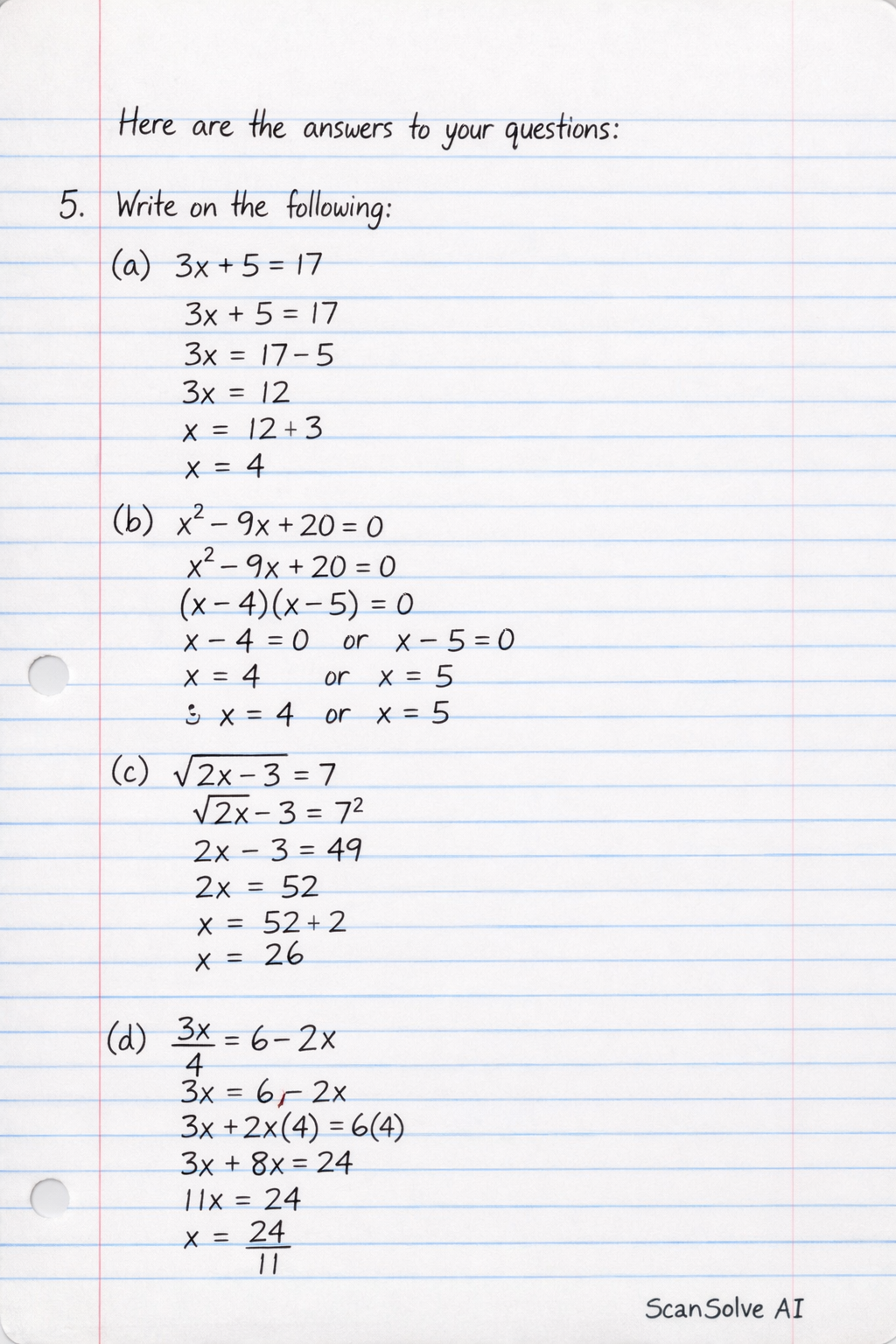
Here are the answers to your questions:
4. Who originally worked out the structure of the DNA molecule? Who provided the X-ray diffraction data, and who actually built the model?
- The individuals who originally worked out the structure of the DNA molecule and actually built the model were James Watson and Francis Crick.
- The crucial X-ray diffraction data that informed their model was provided by Rosalind Franklin and Maurice Wilkins.
5. Write on the following:
- Conjugation: Conjugation is the process of direct transfer of genetic material (usually a plasmid or a portion of the bacterial chromosome) from one bacterial cell to another through physical contact, typically via a pilus.
- Transformation: Transformation is the process by which a bacterial cell takes up naked, extracellular DNA from its environment and incorporates it into its own genome, leading to a change in its genetic makeup.
- Transduction: Transduction is the process of transferring genetic material from one bacterium to another via a bacteriophage (a virus that infects bacteria). The bacteriophage accidentally packages bacterial DNA instead of or in addition to its own viral DNA and injects it into a new host cell.
- Transposition: Transposition is the process by which a specific segment of DNA, called a transposon (or "jumping gene"), moves from one location in the genome to another. This movement can occur within the same chromosome or to a different chromosome or plasmid.
- Recombination: Recombination is the process by which genetic material is exchanged between different DNA molecules or different regions within the same DNA molecule, leading to the formation of new combinations of alleles. In eukaryotes, this commonly occurs through crossing over during meiosis, while in prokaryotes, it can happen after processes like conjugation, transformation, or transduction.
Was this helpful?
Still stuck on this one?
Ask a follow-up, and the answer starts from this question.
Got a different question?Ask your own question
More Physics Questions
QI) Watson and Crick model of DNA:QIdentify the scientists credited with discovering the double helix structure of DNA, and the…QReferencing a DNA double helix image, identify its bases, describe the ribbon-like structures…Q2.1.1 A DNA molecule is a double helix structure. It consists of two polynucleotide strands coiled…QProvide the answers for the following questions related to DNA and protein synthesis.
Handwritten Step-by-Step Solution
Get this as a handwritten image on WhatsApp — like a tutor wrote it for you.
Try on WhatsApp