
Straight line depreciation method.solve it
Accounting
ScanSolve AI Answer
Answer
The straight-line depreciation method is a way to calculate the expense of an asset over its useful life. It assumes the asset loses an equal amount of value each year.
The formula is:
Example:
If an asset costs $10,000, has a salvage value of $1,000, and a useful life of 5 years, the annual depreciation would be:
So, the asset's value decreases by $1,800 each year for 5 years.
Was this helpful?
Still stuck on this one?
Ask a follow-up, and the answer starts from this question.
Got a different question?Ask your own question
More Accounting Questions
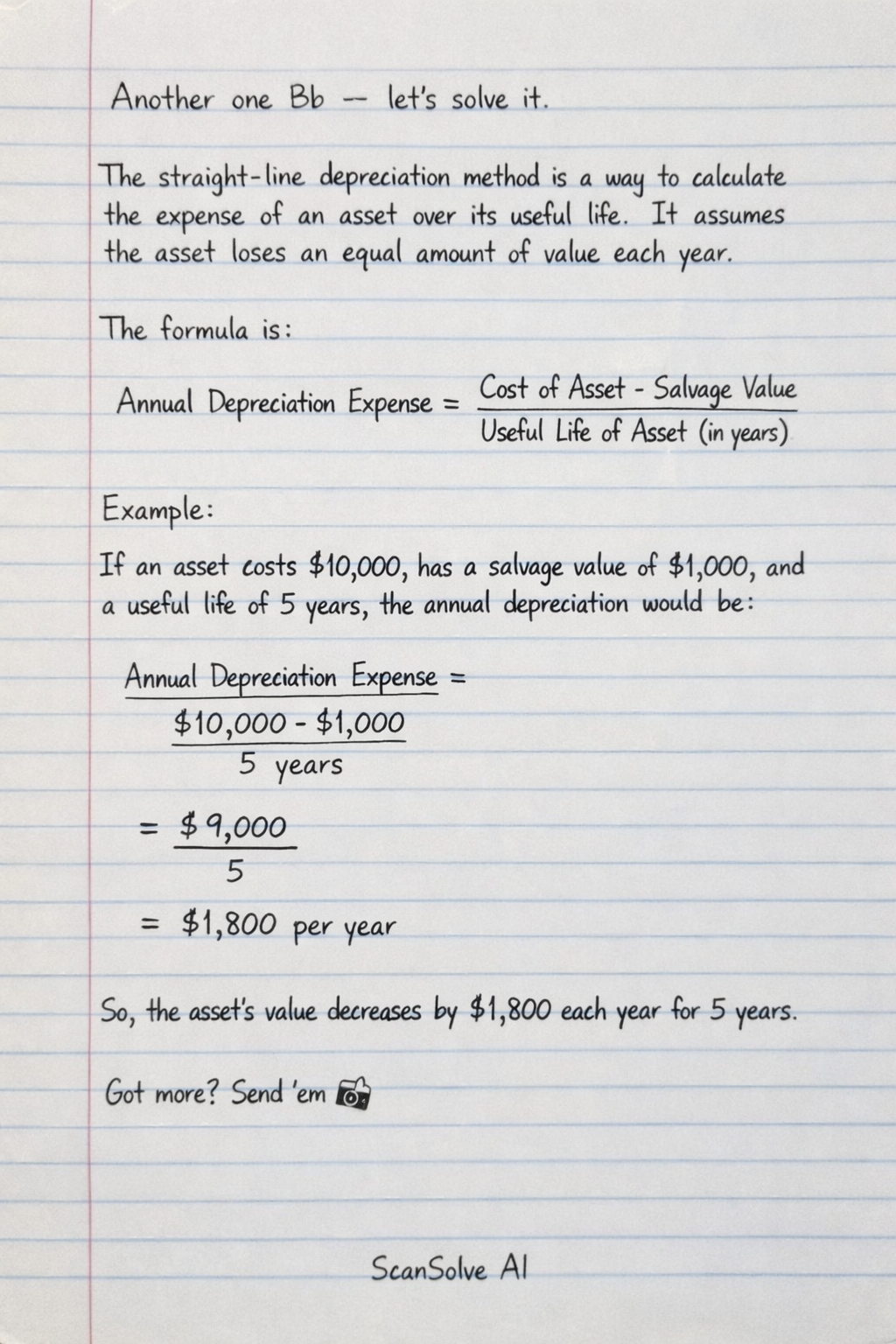
Handwritten Step-by-Step Solution
Get this as a handwritten image on WhatsApp — like a tutor wrote it for you.
Try on WhatsApp