

This biology question covers important biological concepts and processes. The step-by-step explanation below helps you understand the underlying mechanisms and reasoning.
ScanSolve AI Answer
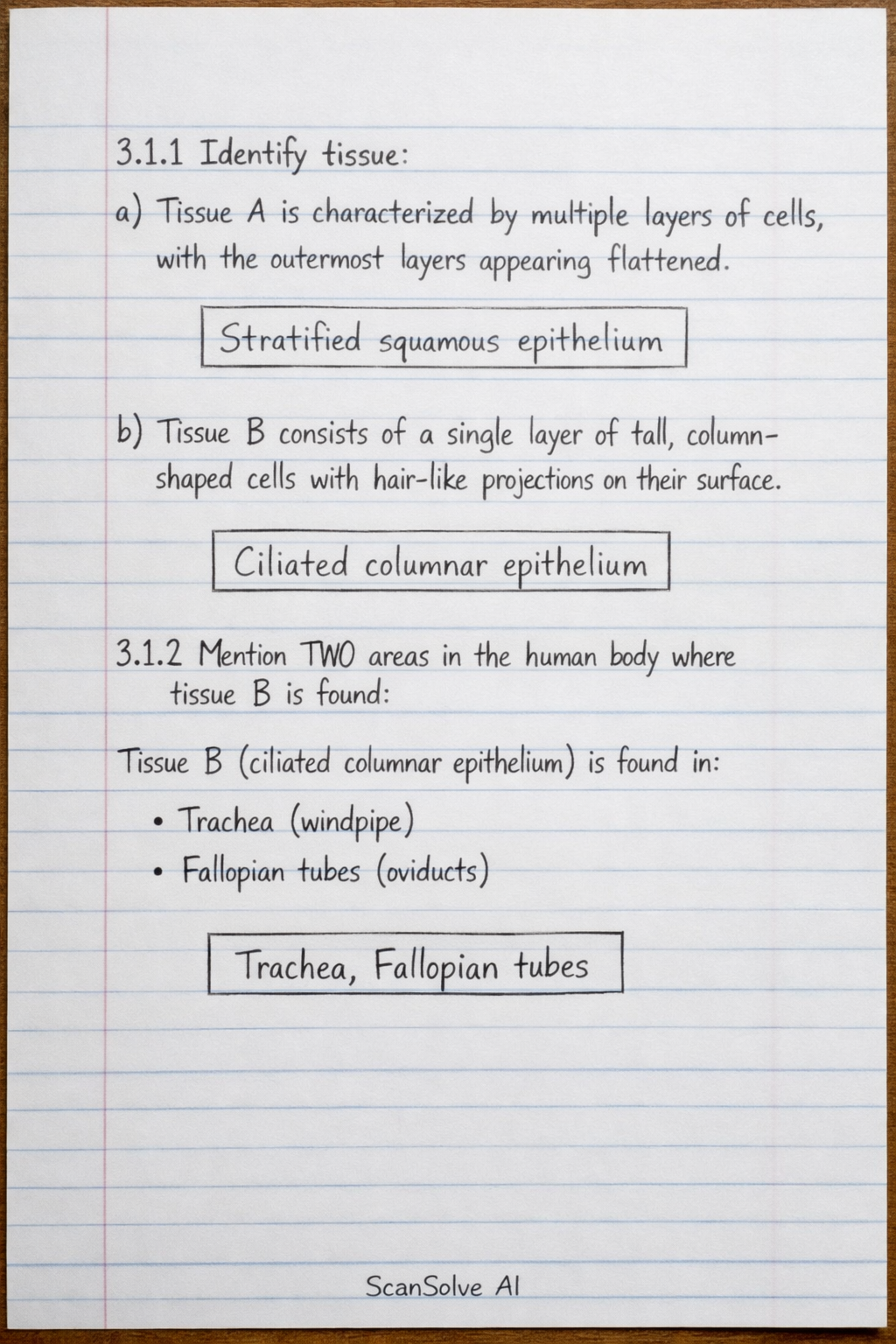
3.1.1 Identify tissue: a) Tissue A is characterized by multiple layers of cells, with the outermost layers appearing flattened. Stratified squamous epithelium b) Tissue B consists of a single layer of tall, column-shaped cells with hair-like projections on their surface. Ciliated columnar epithelium 3.1.2 Mention TWO areas in the human body where tissue B is found. Tissue B (ciliated columnar epithelium) is found in: • Trachea (windpipe) • Fallopian tubes (oviducts) Trachea, Fallopian tubes 3.1.3 Tabulate ONE visible difference between tissue A and tissue B. | Feature | Tissue A (Stratified squamous epithelium) | Tissue B (Ciliated columnar epithelium) | | :--------------- | :---------------------------------------- | :-------------------------------------- | | Number of layers | Multiple layers of cells | Single layer of cells | | Cell shape | Flattened cells on the surface | Tall, column-shaped cells | | Cilia | Absent | Present | One visible difference is that Tissue A has multiple layers of cells, while Tissue B has a single layer of cells. 3.1.4 Describe ONE way how tissue B is structurally suited for its function. Tissue B has cilia on its surface. These are hair-like projections that beat in a coordinated rhythm to move substances, such as mucus and trapped particles in the respiratory tract or an ovum in the fallopian tubes, along the surface of the tissue. Presence of cilia to move substances along the surface That's 2 down. 3 left today — send the next one.