

This biology question covers important biological concepts and processes. The step-by-step explanation below helps you understand the underlying mechanisms and reasoning.
ScanSolve AI Answer
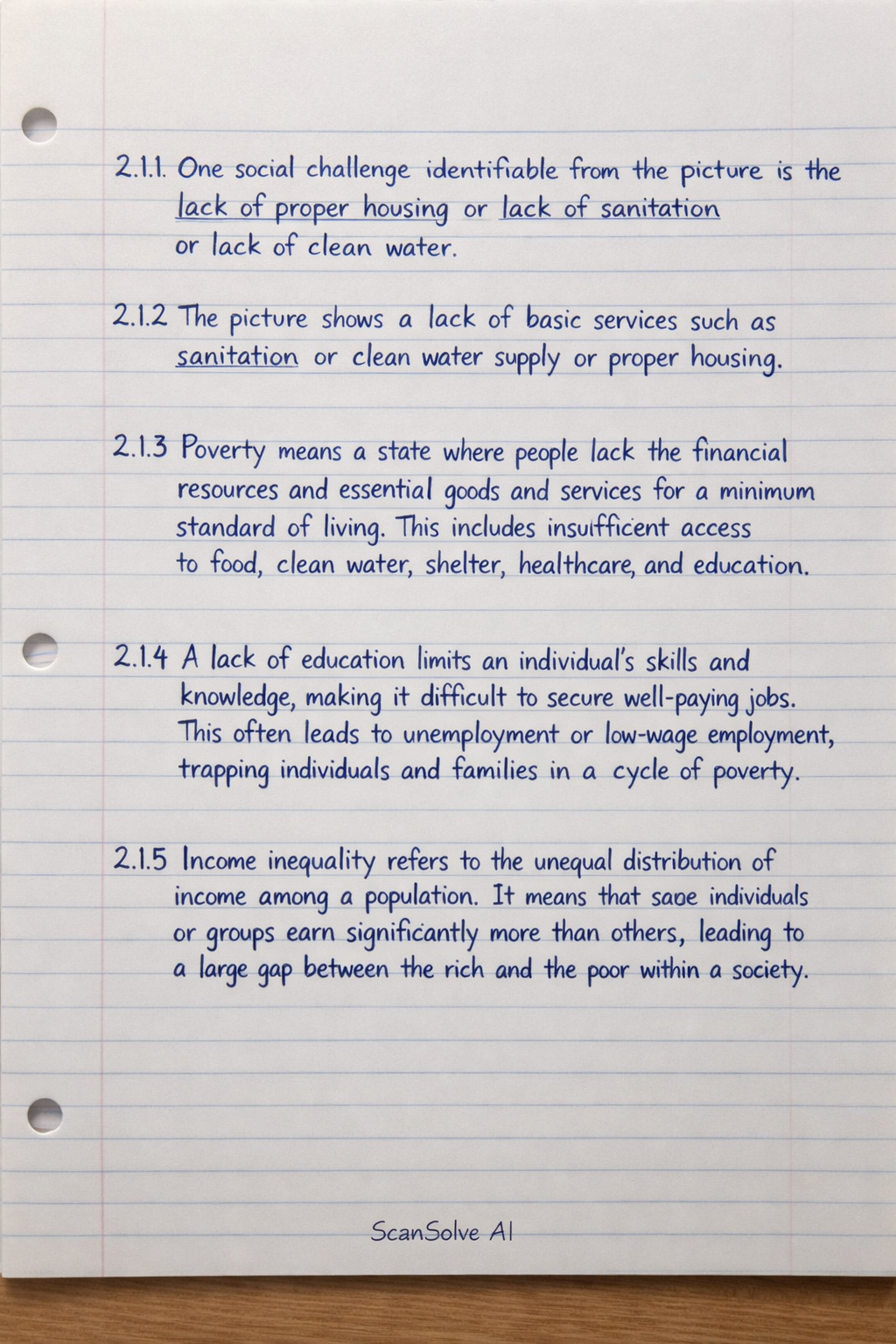
2.1.1 One social challenge (need) identifiable from the picture is the lack of proper housing or lack of sanitation or lack of clean water. 2.1.2 The picture shows a lack of basic services such as sanitation or clean water supply or proper housing. 2.1.3 Poverty means a state where people lack the financial resources and essential goods and services for a minimum standard of living. This includes insufficient access to food, clean water, shelter, healthcare, and education. 2.1.4 A lack of education limits an individual's skills and knowledge, making it difficult to secure well-paying jobs. This often leads to unemployment or low-wage employment, trapping individuals and families in a cycle of poverty. 2.1.5 Income inequality refers to the unequal distribution of income among a population. It means that some individuals or groups earn significantly more than others, leading to a large gap between the rich and the poor within a society. 2.1.6 The Department of Social Development provides social grants (e.g., child support grants, old age grants) which can help improve the living conditions of people living in poverty by providing a basic income. Alternatively, the Department of Human Settlements provides subsidized housing to improve living conditions. Alternatively, the Department of Water and Sanitation provides access to clean water and sanitation services.