
We read your photo as:
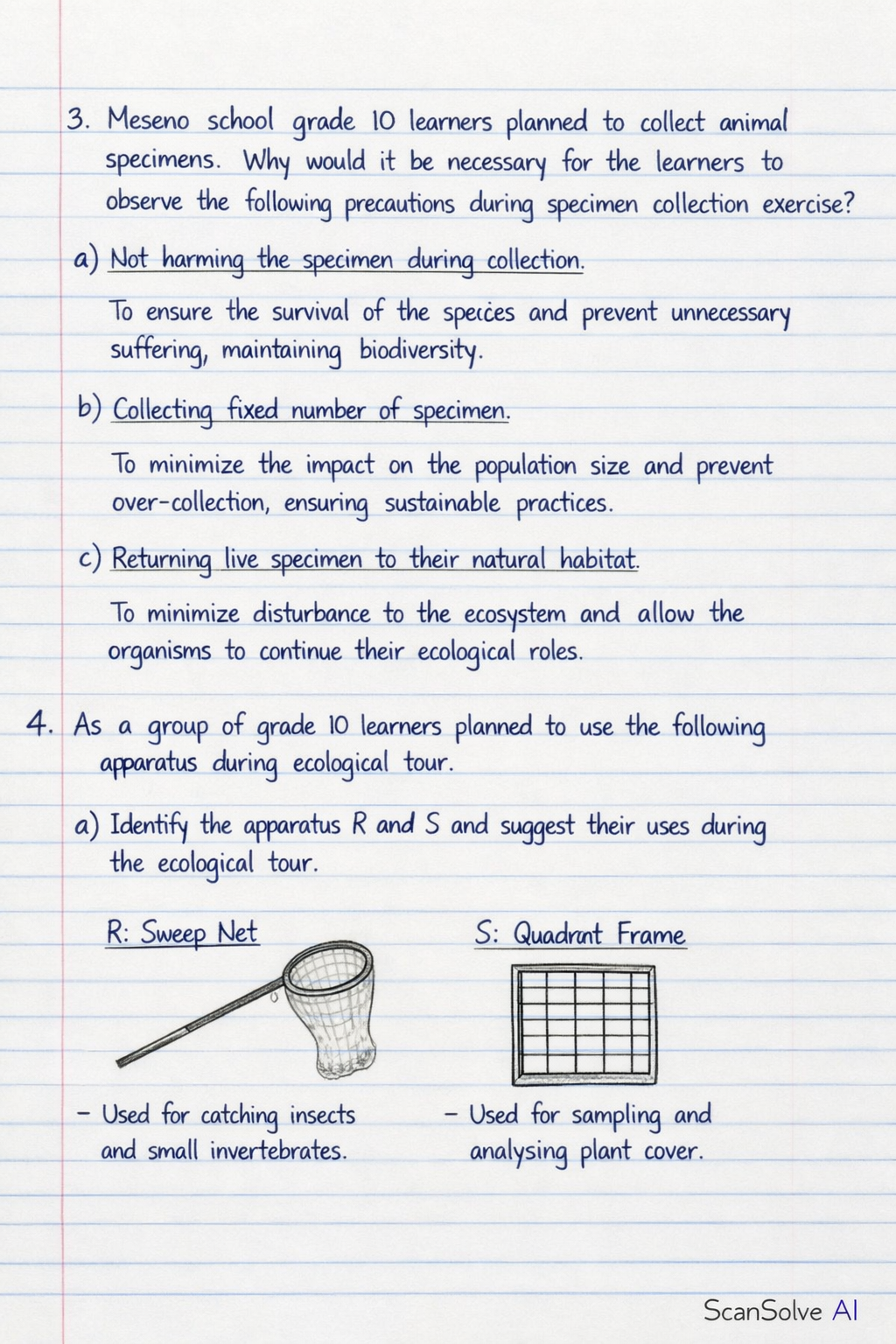
Meseno school grade 10 learners planned to collect animal specimens. Why would it be necessary for the learners to observe the following precautions during specimen collection exercise?
ScanSolve AI Answer
- Meseno school grade 10 learners planned to collect animal specimens. Why would it be necessary for the learners to observe the following precautions during specimen collection exercise?
a) Not harming the specimen during collection
To ensure the survival of the species and prevent unnecessary suffering, maintaining biodiversity.
b) Collecting fixed number of specimen
To minimize the impact on the population size and prevent over-collection, ensuring sustainable practices.
c) Returning live specimen to their natural habitat
To minimize disturbance to the ecosystem and allow the organisms to continue their ecological roles.
- As a group of grade 10 learners planned to use the following apparatus during ecological tour.
a) Identify the apparatus R and S and suggest their uses during the ecological tour.
| Apparatus | Name | Use |
|---|---|---|
| R | Tullgren funnel | To extract small invertebrates (e.g., mites, springtails) from soil or leaf litter samples. |
| S | Pitfall trap | To collect ground-dwelling invertebrates (e.g., beetles, spiders, ants). |
b) Give an example of specimen that the learners would collect using the apparatus P and Q.
P: Butterflies, dragonflies, or aquatic insects (collected with a net).
Q: Small mammals (e.g., mice, rats) or larger insects (collected with a cage/trap).
c) Name the chemicals the learners could use to immobilise highly mobile animals during tour.
Chloroform, Ether
Still stuck on this one?
Ask a follow-up, and the answer starts from this question.
More Biology Questions
Handwritten Step-by-Step Solution
Get this as a handwritten image on WhatsApp — like a tutor wrote it for you.
Try on WhatsApp