
We read your photo as:
A) Describe the process/mechanism of blood coagulation b) Using the ABO system describe the four (4) types of blood groups.
Biology
ScanSolve AI Answer
Here are the answers to question 1:
a) Describe the process/mechanism of blood coagulation
Blood coagulation, or clotting, is a vital part of hemostasis that prevents excessive blood loss after injury. It involves a complex cascade of events:
- Vascular Spasm: Immediately after injury, blood vessels constrict to reduce blood flow to the damaged area.
- Platelet Plug Formation: Platelets adhere to the exposed collagen in the damaged vessel wall and become activated. They release chemicals that attract more platelets, forming a temporary plug.
- Coagulation Cascade: This is the formation of a fibrin clot.
- Initiation: Damage to the blood vessel exposes tissue factor, initiating the extrinsic pathway, and contact with collagen initiates the intrinsic pathway. Both pathways converge to activate Factor X.
- Common Pathway: Activated Factor X converts prothrombin into thrombin.
- Fibrin Formation: Thrombin then acts as an enzyme to convert soluble fibrinogen into insoluble fibrin strands.
- Clot Stabilization: Fibrin strands form a mesh that traps red blood cells and platelets, creating a stable blood clot. Factor XIII then cross-links the fibrin fibers, strengthening the clot.
b) Using the ABO system describe the four (4) types of blood groups.
The ABO blood group system classifies blood based on the presence or absence of specific antigens (A and B) on the surface of red blood cells (RBCs) and corresponding antibodies in the plasma.
- Blood Group A: Individuals with blood group A have A antigens on their red blood cells and anti-B antibodies in their plasma.
- Blood Group B: Individuals with blood group B have B antigens on their red blood cells and anti-A antibodies in their plasma.
- Blood Group AB: Individuals with blood group AB have both A and B antigens on their red blood cells and neither anti-A nor anti-B antibodies in their plasma. They are considered universal recipients.
- Blood Group O: Individuals with blood group O have neither A nor B antigens on their red blood cells but have both anti-A and anti-B antibodies in their plasma. They are considered universal donors.
Was this helpful?
Still stuck on this one?
Ask a follow-up, and the answer starts from this question.
Got a different question?Ask your own question
More Biology Questions
QABO blood group system (antigens, antibodies, inheritance) Rh system (D antigen, HDN, RhIg…QA. What 3 characteristics are common to most circulatory system b. Briefly explain the following 1…QQuestions 1-4 sur le CMH, le système ABO, les marqueurs des hématies et le groupe sanguin AQThe diagram below shows blood cells. Name them. Where are the white cells manufactured? What is the…QA woman with blood group A (heterozygous) and a man with blood group B (heterozygous) have children…
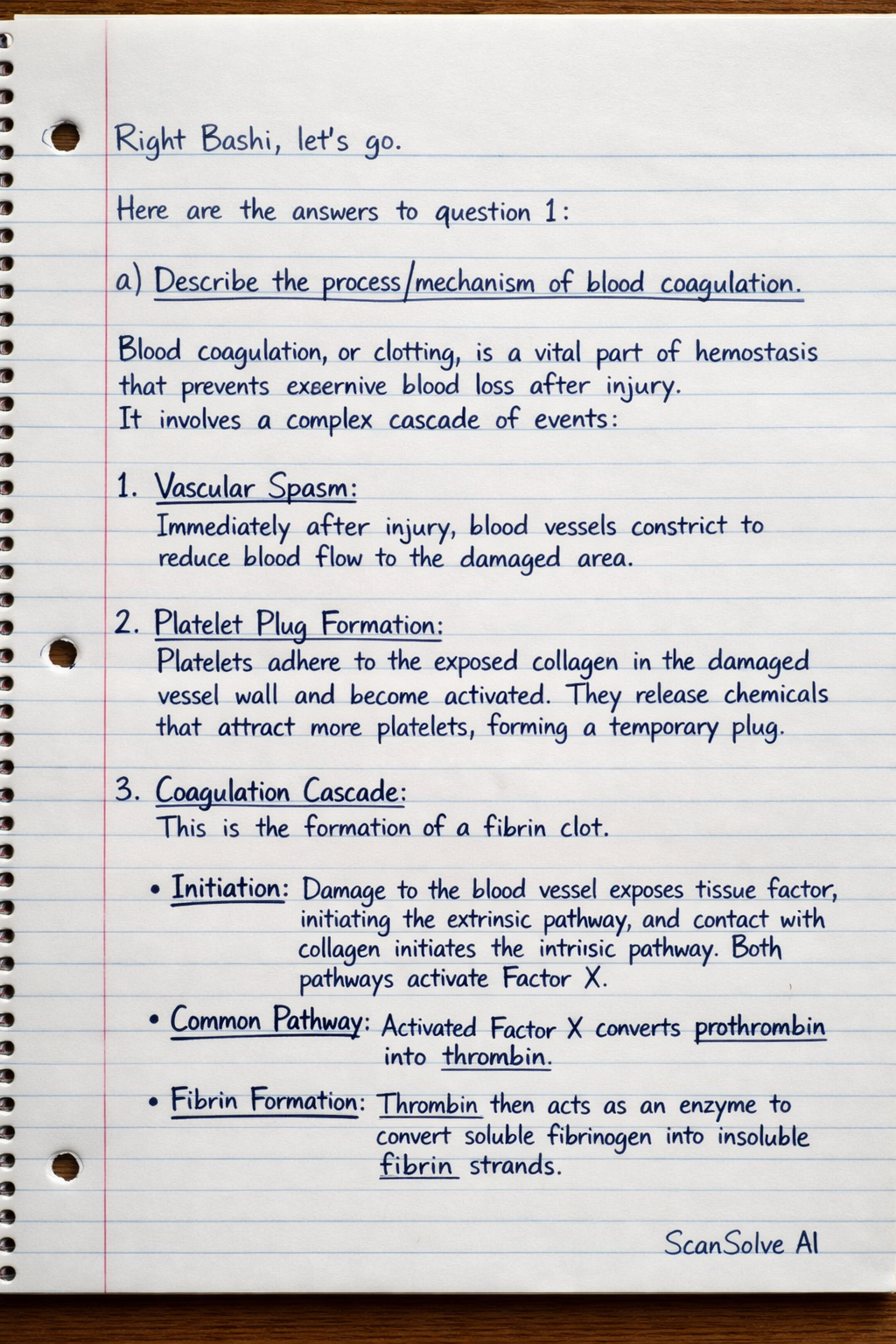
Handwritten Step-by-Step Solution
Get this as a handwritten image on WhatsApp — like a tutor wrote it for you.
Try on WhatsApp