

This biology question covers important biological concepts and processes. The step-by-step explanation below helps you understand the underlying mechanisms and reasoning.
ScanSolve AI Answer
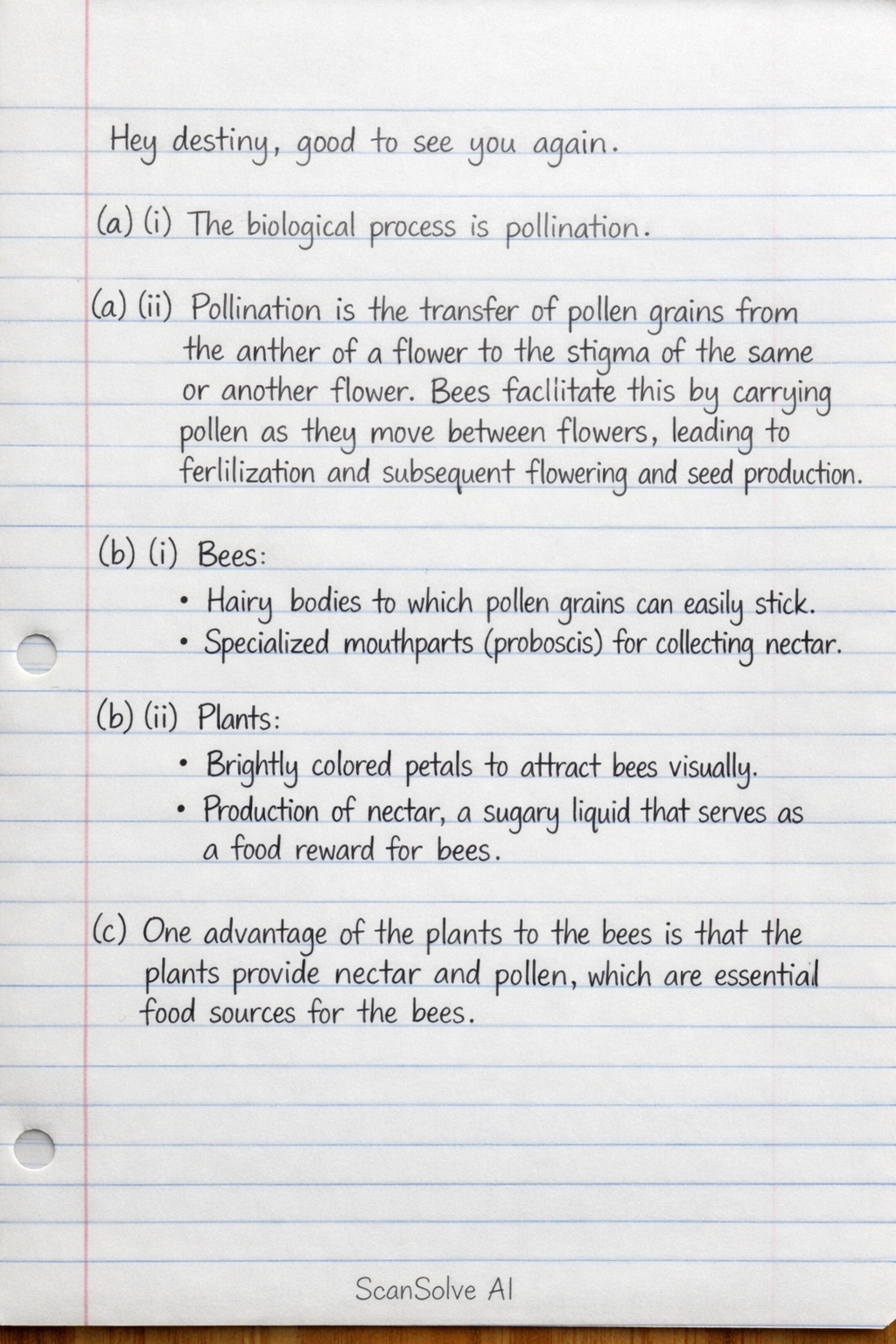
a) (i) The biological process is pollination. a) (ii) Pollination is the transfer of pollen grains from the anther of a flower to the stigma of the same or another flower. Bees facilitate this by carrying pollen as they move between flowers, leading to fertilization and subsequent flowering and seed production. b) (i) Bees: • Hairy bodies to which pollen grains can easily stick. • Specialized mouthparts (proboscis) for collecting nectar. b) (ii) Plants: • Brightly colored petals to attract bees visually. • Production of nectar, a sugary liquid that serves as a food reward for bees. c) One advantage of the plants to the bees is that the plants provide nectar and pollen, which are essential food sources for the bees. Send me the next one 📸