
We read your photo as:
What are accessory respiratory organs and what are some examples in different animal groups?
ScanSolve AI Answer
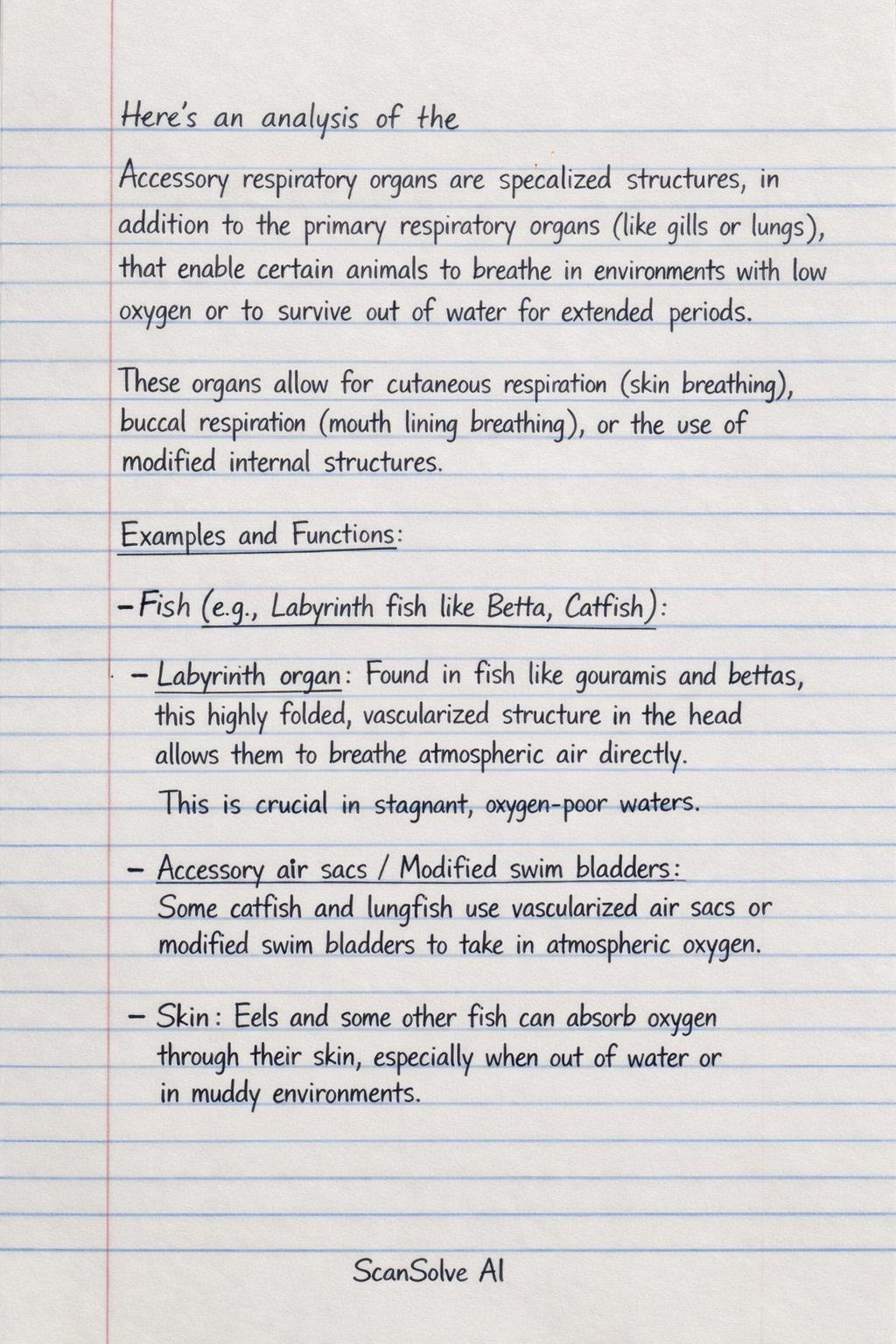
Accessory respiratory organs are specialized structures, in addition to the primary respiratory organs (like gills or lungs), that enable certain animals to breathe in environments with low oxygen or to survive out of water for extended periods. These organs allow for cutaneous respiration (skin breathing), buccal respiration (mouth lining breathing), or the use of modified internal structures.
Examples and Functions:
-
Fish (e.g., Labyrinth fish like Betta, Catfish):
- Labyrinth organ: Found in fish like gouramis and bettas, this highly folded, vascularized structure in the head allows them to breathe atmospheric air directly. This is crucial in stagnant, oxygen-poor waters.
- Accessory air sacs/Modified swim bladders: Some catfish and lungfish use vascularized air sacs or modified swim bladders to take in atmospheric oxygen.
- Skin: Eels and some other fish can absorb oxygen through their skin, especially when out of water or in muddy environments.
-
Amphibians (e.g., Frogs, Salamanders):
- Skin: Amphibians extensively use their moist, vascularized skin for cutaneous respiration, absorbing oxygen and releasing carbon dioxide, both in water and on land.
- Buccal cavity lining: The lining of the mouth and throat (buccal cavity) is also highly vascularized and contributes to gas exchange, especially when the animal is inactive.
-
Insects (e.g., Aquatic insects):
- Tracheal gills: Larvae of some aquatic insects (e.g., mayflies, dragonflies) possess external, leaf-like or feathery tracheal gills that extract oxygen from water.
- Siphons: Mosquito larvae use a breathing siphon that extends to the water surface to access atmospheric air.
-
Reptiles (e.g., Sea snakes):
- Tracheal lung: Some sea snakes have a highly vascularized trachea that functions as an accessory lung, allowing for additional gas exchange underwater.
These organs are vital for survival in diverse and challenging habitats, supplementing the primary respiratory system.
Still stuck on this one?
Ask a follow-up, and the answer starts from this question.
More Biology Questions
Handwritten Step-by-Step Solution
Get this as a handwritten image on WhatsApp — like a tutor wrote it for you.
Try on WhatsApp