

This biology question covers important biological concepts and processes. The step-by-step explanation below helps you understand the underlying mechanisms and reasoning.
ScanSolve AI Answer
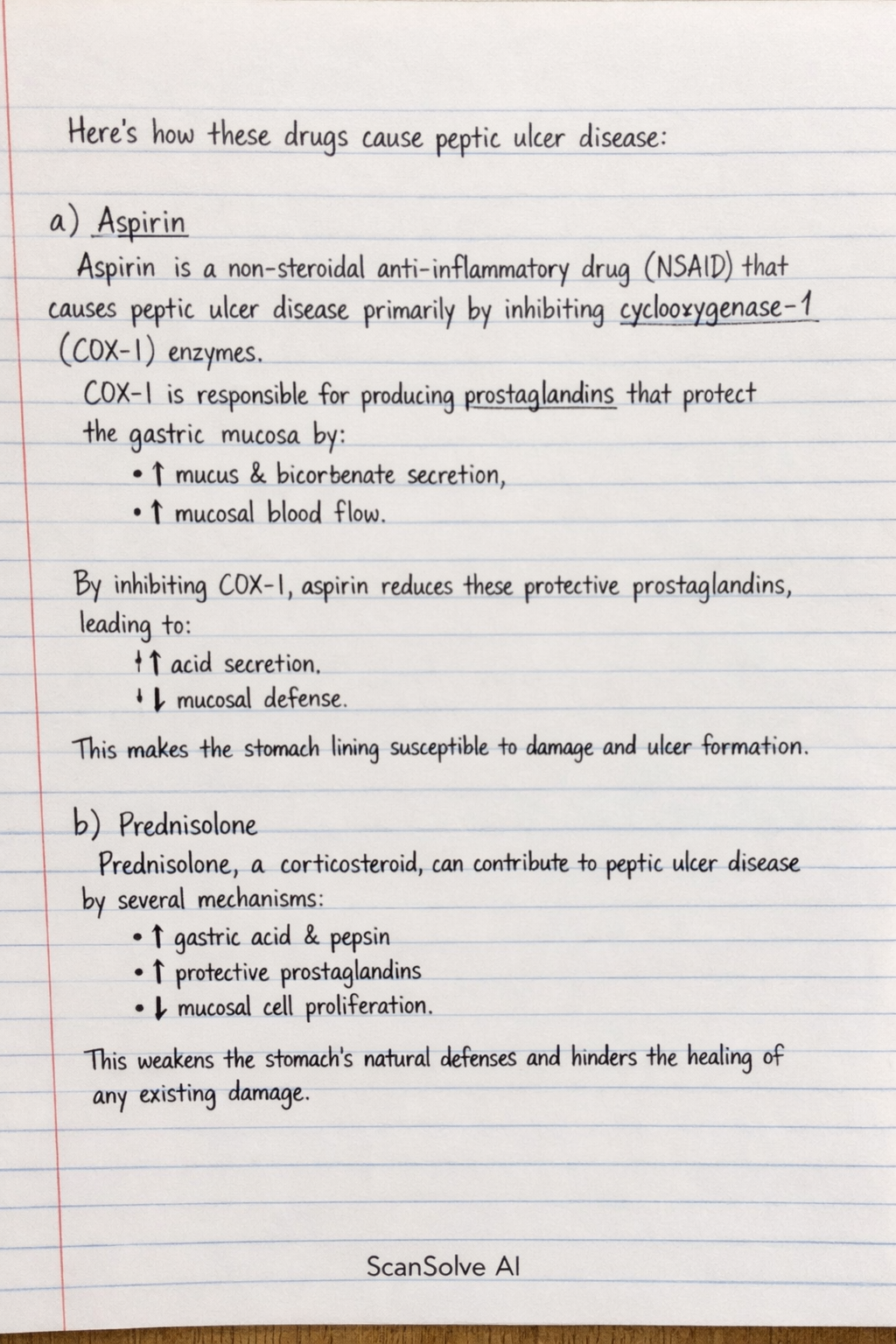
Here's how these drugs cause peptic ulcer disease: a) Aspirin Aspirin is a non-steroidal anti-inflammatory drug (NSAID) that causes peptic ulcer disease primarily by inhibiting cyclooxygenase-1 (COX-1) enzymes. COX-1 is responsible for producing prostaglandins that protect the gastric mucosa by increasing mucus and bicarbonate secretion and maintaining mucosal blood flow. By inhibiting COX-1, aspirin reduces these protective prostaglandins, leading to increased acid secretion and decreased mucosal defense, making the stomach lining susceptible to damage and ulcer formation. b) Prednisolone Prednisolone, a corticosteroid, can contribute to peptic ulcer disease by several mechanisms. It can increase the secretion of gastric acid and pepsin, which are aggressive factors in the stomach. Additionally, corticosteroids can impair the synthesis of protective prostaglandins and reduce the proliferation of gastric mucosal cells, thereby weakening the stomach's natural defenses and hindering the healing of any existing damage. That's 2 down. 3 left today — send the next one.