
We read your photo as:
b. Explain factors that affect plant population density of a named cereal crop. c. Describe the practices that a farmer would carry out from harvesting to marketing a named cereal crop.
Biology
ScanSolve AI Answer
Here are the answers to your questions:
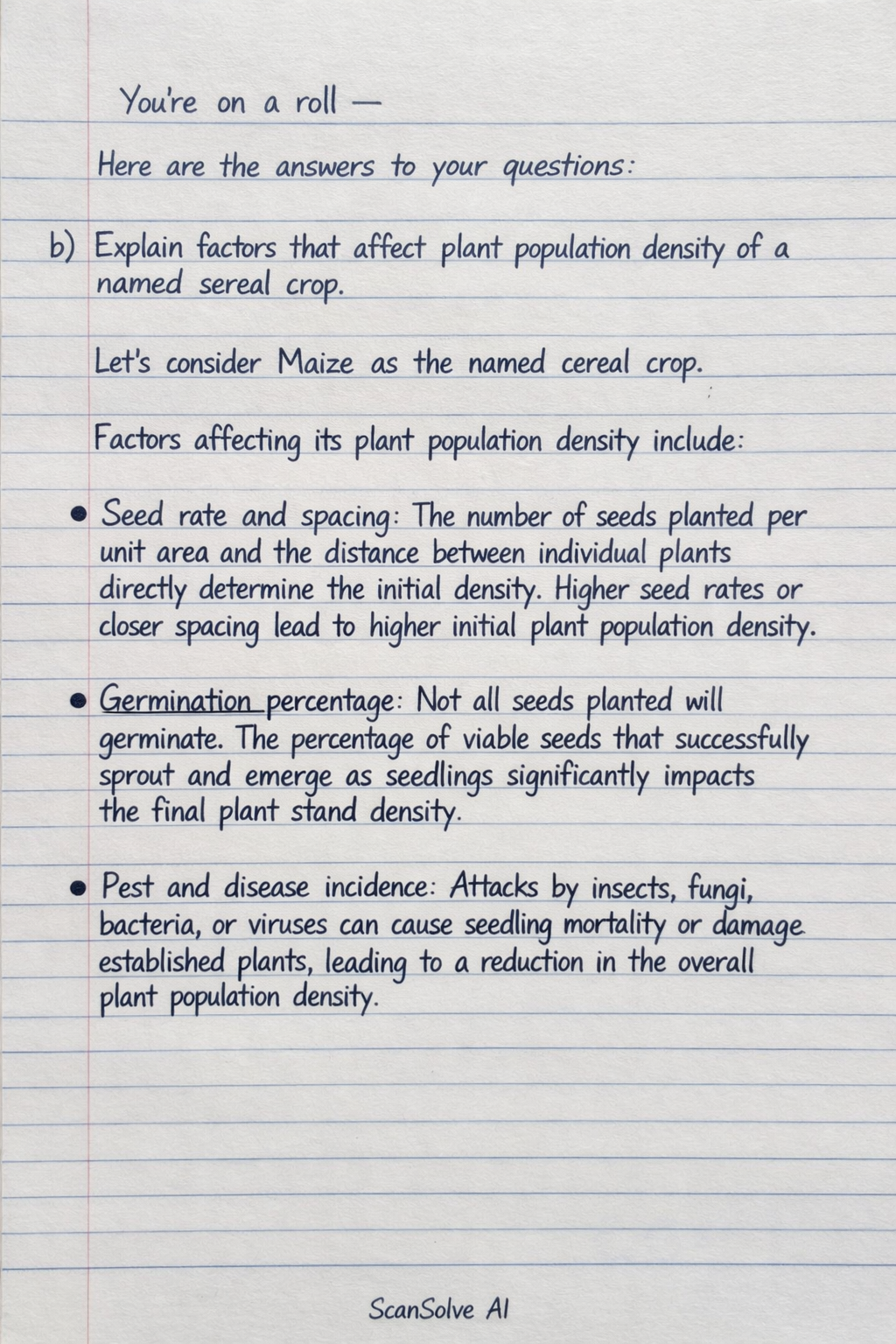
b) Explain factors that affect plant population density of a named cereal crop.
Let's consider Maize as the named cereal crop. Factors affecting its plant population density include:
- Seed rate and spacing: The number of seeds planted per unit area and the distance between individual plants directly determine the initial density. Higher seed rates or closer spacing lead to higher initial plant population density.
- Germination percentage: Not all seeds planted will germinate. The percentage of viable seeds that successfully sprout and emerge as seedlings significantly impacts the final plant stand density.
- Pest and disease incidence: Attacks by insects, fungi, bacteria, or viruses can cause seedling mortality or damage established plants, leading to a reduction in the overall plant population density.
- Environmental conditions: Adverse weather conditions such as drought, excessive rainfall, extreme temperatures, or poor soil fertility can cause plant death, thereby reducing the plant population density.
- Weed competition: Weeds compete with crop plants for light, water, and nutrients. Severe weed infestation can suppress crop growth and lead to the death of weaker plants, reducing the final plant population density.
c) Describe the practices that a farmer would carry out from harvesting to marketing of a named cereal crop.
Let's consider Maize as the named cereal crop. The practices from harvesting to marketing include:
- Harvesting: This involves cutting down the maize stalks and detaching the cobs from the plants once they have reached physiological maturity and the grains are dry enough. This can be done manually or mechanically.
- Threshing/Shelling: After harvesting, the maize grains are separated from the cobs. This process, known as shelling, can be done by hand, using simple hand shellers, or with mechanical maize shellers.
- Drying: The shelled maize grains often have a high moisture content, which can lead to spoilage. Farmers dry the grains, either by spreading them on tarpaulins in the sun or using mechanical dryers, until they reach a safe moisture level (typically 12-14%) for storage.
- Cleaning and Grading: Impurities such as chaff, dust, stones, and damaged grains are removed from the dried maize. This is often done by winnowing or using sieves. Grains may also be graded based on size and quality to fetch better prices.
- Storage: The cleaned and dried maize is then stored in appropriate facilities like granaries, silos, or airtight bags. Proper storage protects the grains from pests (e.g., weevils), rodents, and moisture, preventing post-harvest losses.
- Packaging and Transportation: Before marketing, the maize is typically packaged into sacks or bags of standard weights. It is then transported from the farm to local markets, collection centers, or directly to buyers using various means of transport.
- Marketing/Selling: The final step involves selling the maize to consumers, traders, millers, or other buyers. This may involve negotiating prices, fulfilling contracts, and delivering the produce to the point of sale.
Was this helpful?
Still stuck on this one?
Ask a follow-up, and the answer starts from this question.
Got a different question?Ask your own question
More Biology Questions
QBased on the provided context, answer the following multiple-choice questions about population…QWhat are some of the factors affecting crop production?QIdentify crop C, describe its botanical classification, method of propagation, and list three…QSusan bought a land for a certain agricultural activity. Identify three uses of land for…QWhat are the answers to the following agricultural science questions? 16. Which of these is a…
Handwritten Step-by-Step Solution
Get this as a handwritten image on WhatsApp — like a tutor wrote it for you.
Try on WhatsApp