
We read your photo as:
c. Complete the table below regarding the endocrine system
ScanSolve AI Answer
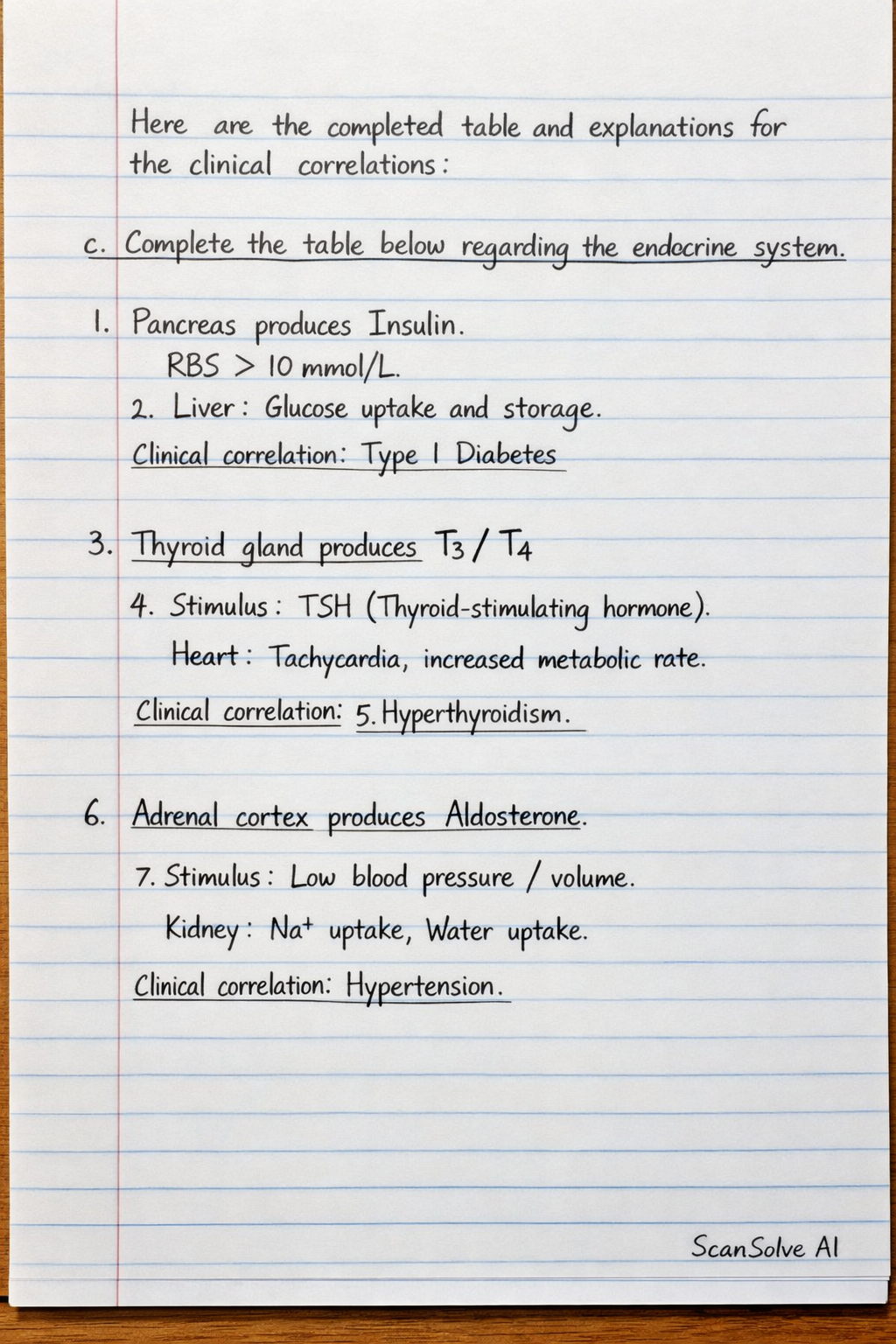
Here are the completed table and explanations for the clinical correlations:
c. Complete the table below regarding the endocrine system
| Gland | Hormone | Stimulus | Target organ | Function | Clinical correlation |
|---|---|---|---|---|---|
| Pancreas | 1. Insulin | RBS > 10 mmol/L | Liver | 2. Glucose uptake and storage | Type 1 Diabetes |
| 3. Thyroid gland | T3/T4 | 4. TSH (Thyroid-stimulating hormone) | Heart | Tachycardia, increased metabolic rate | 5. Hyperthyroidism |
| Adrenal cortex | 6. Aldosterone | 7. Low blood pressure/volume | Kidney | Na+ uptake, Water uptake | Hypertension |
| 8. Posterior pituitary | ADH (Vasopressin) | Thirst | 9. Kidney (collecting ducts) | Water uptake | 10. Diabetes insipidus |
d. Comment briefly on the following clinical correlations
-
Cushing syndrome Cushing syndrome is a disorder caused by prolonged exposure to high levels of cortisol, a hormone produced by the adrenal glands. It can result from an adrenal tumor, pituitary tumor (Cushing's disease), or long-term use of corticosteroid medications. Symptoms include weight gain, a rounded face ("moon face"), a fat pad between the shoulders ("buffalo hump"), and high blood pressure.
-
Pheochromocytoma Pheochromocytoma is a rare tumor of the adrenal medulla that leads to the overproduction of catecholamines (epinephrine and norepinephrine). This excess causes symptoms such as episodic or sustained high blood pressure, palpitations, sweating, and severe headaches.
-
Gigantism Gigantism is a condition characterized by excessive growth and height, caused by the overproduction of growth hormone (GH) during childhood or adolescence, before the growth plates in bones have fused. This leads to abnormally tall stature and enlarged organs.
-
Gynaecomastia Gynaecomastia is the benign enlargement of breast tissue in males. It is caused by an imbalance of estrogen and androgens, where estrogen levels are relatively higher. It can occur physiologically during infancy, puberty, or old age, or pathologically due to certain medical conditions or medications.
Still stuck on this one?
Ask a follow-up, and the answer starts from this question.
More Biology Questions
Handwritten Step-by-Step Solution
Get this as a handwritten image on WhatsApp — like a tutor wrote it for you.
Try on WhatsApp