
We read your photo as:
How can learners determine the pH of a soil sample (Soil X), and what steps should be taken if the soil is found to be acidic?
Biology
ScanSolve AI Answer
The soil type the learners collected is Soil X.
a) To determine soil pH, the learners would have assembled the following materials:
- Soil sample
- Distilled water
- pH indicator (e.g., universal indicator solution or pH paper/strips)
- Test tube or beaker
- Stirring rod
b) The learners would have carried out the activity as follows:
- Place a small amount of the soil sample into a test tube or beaker.
- Add distilled water to the soil and stir thoroughly with a stirring rod to create a soil-water suspension.
- Allow the soil particles to settle, leaving a clear liquid layer (supernatant) above.
- Dip a pH strip into the clear liquid or add a few drops of universal indicator solution.
- Compare the color of the pH strip or indicator solution to a standard pH color chart to determine the soil's pH value.
c) If the learners found that the soil sample was acidic, they would raise the soil pH in the garden by adding liming materials. Common liming materials include ground limestone (calcium carbonate), quicklime (calcium oxide), or slaked lime (calcium hydroxide). These substances neutralize the acidity in the soil, increasing its pH.
Was this helpful?
Still stuck on this one?
Ask a follow-up, and the answer starts from this question.
Got a different question?Ask your own question
More Biology Questions
QWhat are the effects of alkaline soil on crop growth, and how can acidic and alkaline soils be…QName four crops that could thrive in soils with the pH status and Using the illustrated diagram…QIdentify the chemical process that occurs when slaked lime is added to acidic soilQEvaluate the pH nature of each option.QConduct an investigation to determine the acidic, basic, or neutral nature of household substances…
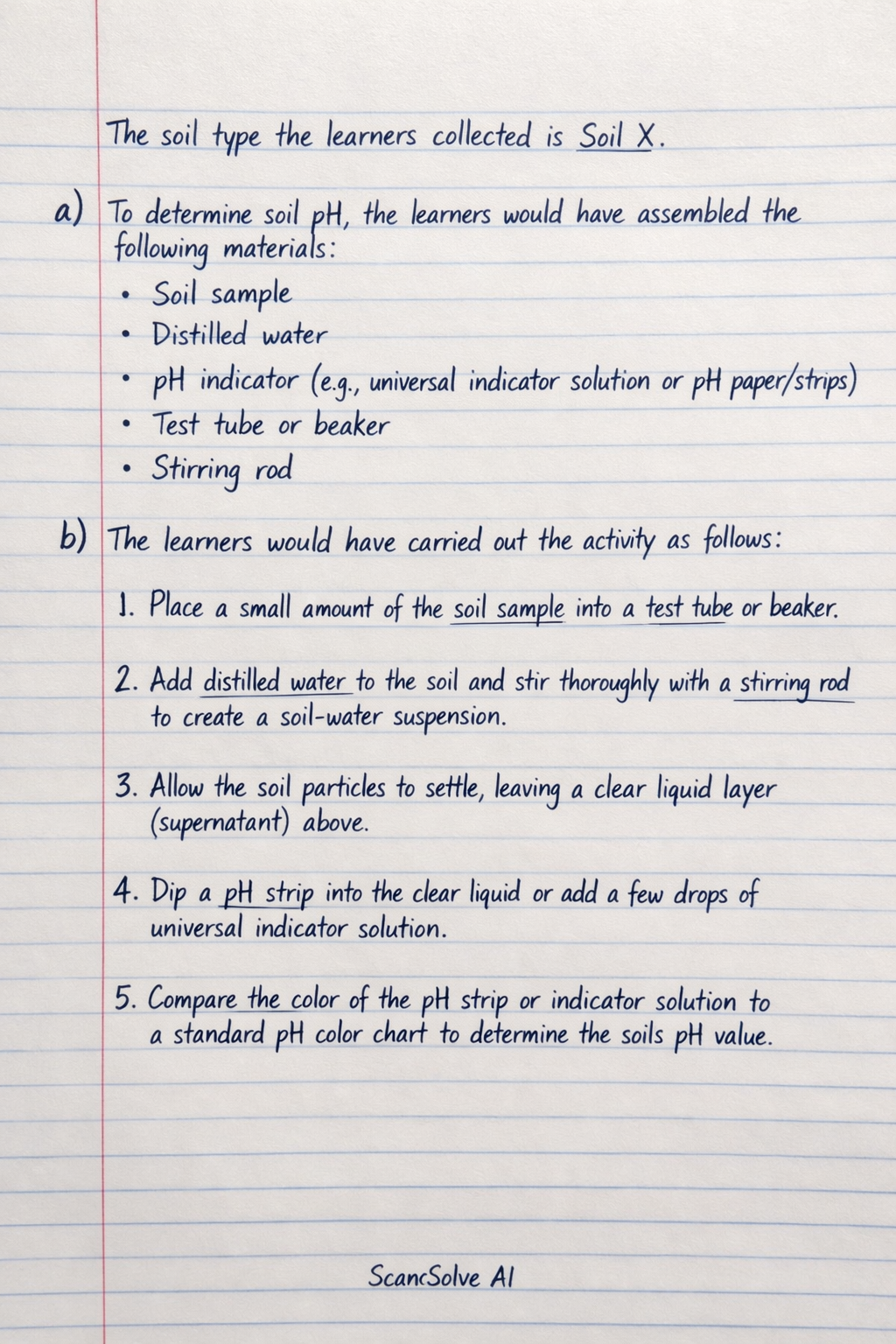
Handwritten Step-by-Step Solution
Get this as a handwritten image on WhatsApp — like a tutor wrote it for you.
Try on WhatsApp