
We read your photo as:
Explain the catabolism of phenylalanine to tyrosine, special products of tyrosine and tryptophan, and the biochemistry of PKU.
ScanSolve AI Answer
Here are the explanations for each point:
-
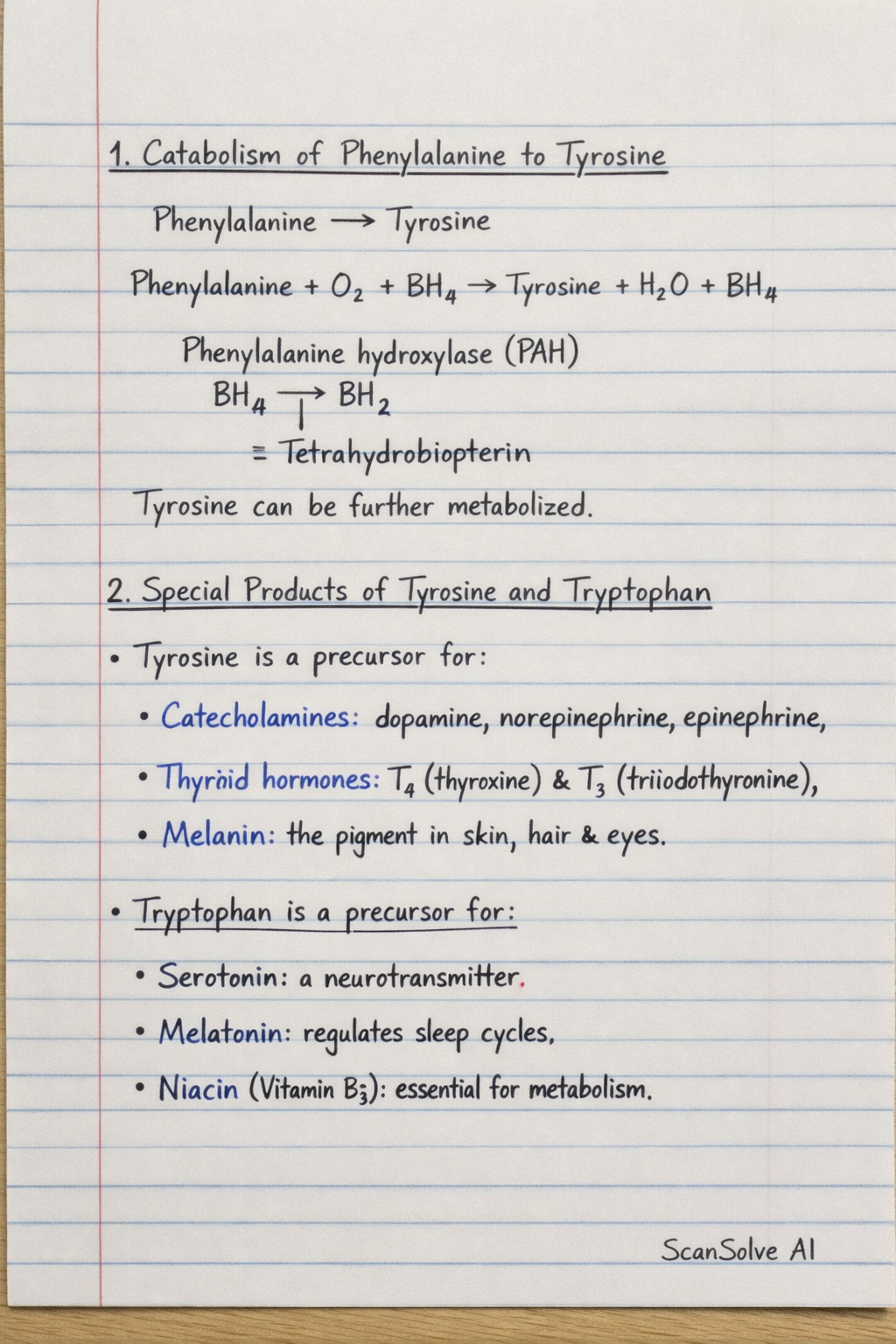
Catabolism of Phenylalanine to Tyrosine Phenylalanine is catabolized to tyrosine by the enzyme phenylalanine hydroxylase (PAH). This reaction is an irreversible hydroxylation that requires molecular oxygen and the coenzyme tetrahydrobiopterin (BH4). Tyrosine can then be further metabolized or used to synthesize other important molecules.
-
Special Products of Tyrosine and Tryptophan
- Tyrosine is a precursor for:
- Catecholamines: dopamine, norepinephrine, and epinephrine (adrenaline).
- Thyroid hormones: thyroxine (T4) and triiodothyronine (T3).
- Melanin: the pigment responsible for skin, hair, and eye color.
- Tryptophan is a precursor for:
- Serotonin: a neurotransmitter involved in mood, sleep, and appetite.
- Melatonin: a hormone regulating sleep-wake cycles.
- Niacin (Vitamin B3): a vitamin essential for metabolism.
- Tyrosine is a precursor for:
-
Biochemistry of Phenylketonuria (PKU) Phenylketonuria (PKU) is an inherited metabolic disorder caused by a deficiency in the enzyme phenylalanine hydroxylase (PAH). This enzyme is responsible for converting the essential amino acid phenylalanine to tyrosine. Without functional PAH, phenylalanine accumulates in the blood and tissues, leading to its conversion into toxic byproducts like phenylpyruvate, phenyllactate, and phenylacetate.
-
Symptoms of Phenylketonuria If left untreated, PKU can lead to severe symptoms, primarily affecting the brain. These include:
- Intellectual disability
- Seizures
- Behavioral problems (e.g., hyperactivity)
- Psychiatric disorders
- Microcephaly (small head size)
- Eczema
- A characteristic musty odor in breath, skin, or urine due to the accumulation of phenylacetate.
- Fair skin and hair due to impaired melanin synthesis from tyrosine.
-
Management of Phenylketonuria The primary management for PKU is a strict, lifelong low-phenylalanine diet. This involves:
- Limiting intake of high-protein foods (meat, dairy, nuts, legumes).
- Consuming special medical foods and formulas that are phenylalanine-free or low in phenylalanine.
- Regular monitoring of blood phenylalanine levels. In some cases, the medication sapropterin dihydrochloride (Kuvan), a synthetic form of BH4, can help improve phenylalanine metabolism in patients with residual PAH activity. Early diagnosis through newborn screening and consistent dietary management are crucial to prevent severe neurological damage.
Still stuck on this one?
Ask a follow-up, and the answer starts from this question.
More Biology Questions
Handwritten Step-by-Step Solution
Get this as a handwritten image on WhatsApp — like a tutor wrote it for you.
Try on WhatsApp