
We read your photo as:
Define conservation, biodiversity, and endangered species. List the main biomes and four physical factors affecting organism distribution.
ScanSolve AI Answer
here are the answers to your questions:
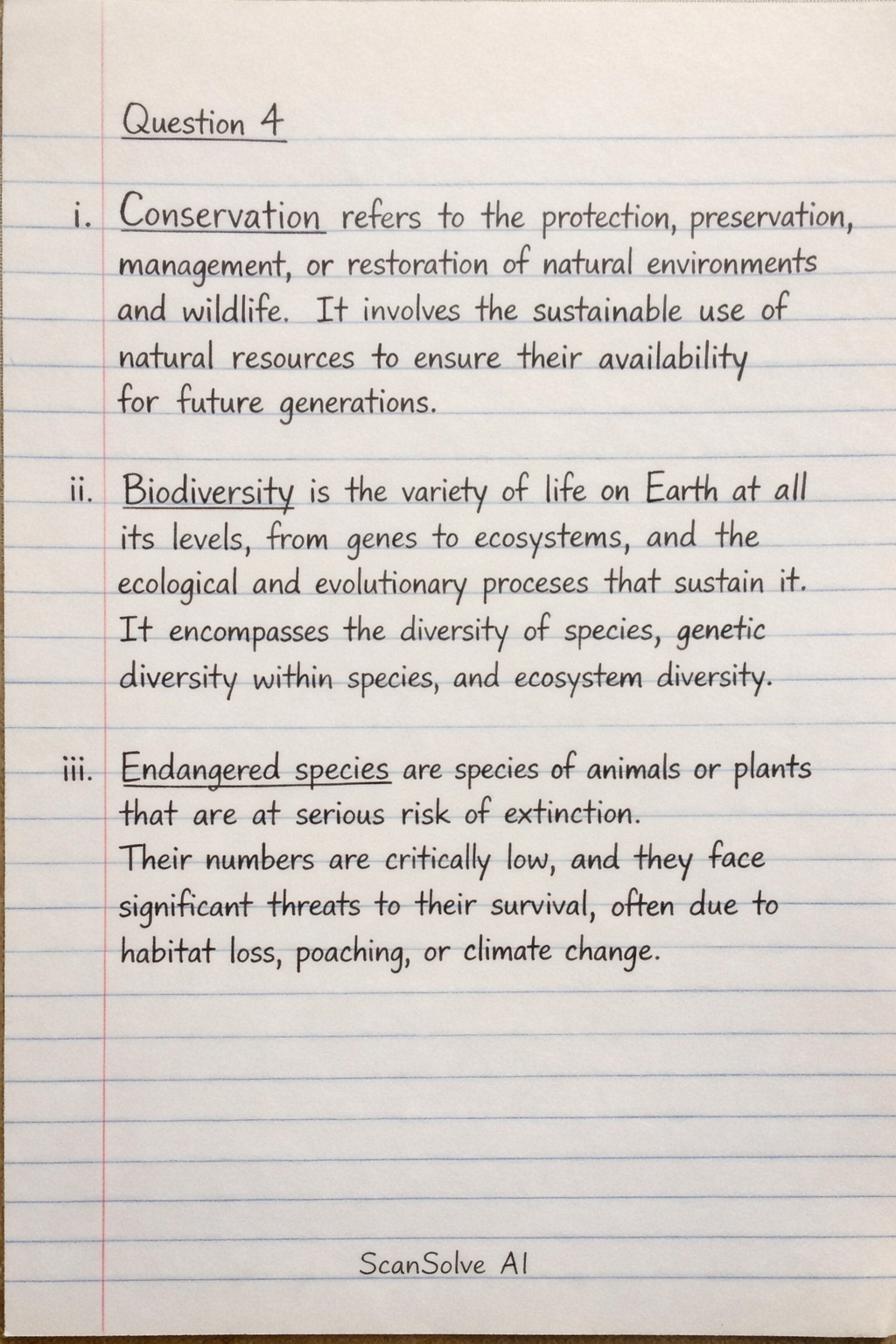
Question 4
a)
i. Conservation refers to the protection, preservation, management, or restoration of natural environments and wildlife. It involves the sustainable use of natural resources to ensure their availability for future generations.
ii. Biodiversity is the variety of life on Earth at all its levels, from genes to ecosystems, and the ecological and evolutionary processes that sustain it. It encompasses the diversity of species, genetic diversity within species, and ecosystem diversity.
iii. Endangered species are species of animals or plants that are at serious risk of extinction. Their numbers are critically low, and they face significant threats to their survival, often due to habitat loss, poaching, or climate change.
b)
i. The main Biomes in the universe (Earth) include:
- Terrestrial Biomes:
- Tropical Rainforest
- Savanna
- Desert
- Temperate Grassland
- Temperate Deciduous Forest
- Coniferous Forest (Taiga/Boreal Forest)
- Tundra
- Chaparral (Mediterranean Scrubland)
- Aquatic Biomes:
- Freshwater (Lakes, Ponds, Rivers, Streams, Wetlands)
- Marine (Oceans, Coral Reefs, Estuaries, Intertidal Zones)
ii. Four key physical factors that affect the distribution of organisms in an ecosystem are:
- Temperature: Organisms have specific temperature ranges within which they can survive and reproduce. Extreme temperatures can limit distribution.
- Water Availability: Water is essential for all life processes. The presence or absence of water (e.g., rainfall, humidity) significantly determines which organisms can thrive in an area.
- Sunlight: As the primary energy source for photosynthesis, sunlight intensity and duration dictate the distribution of photosynthetic organisms and, consequently, the entire food web.
- Soil Composition/Nutrients: The physical and chemical properties of soil, including its nutrient content, pH, and texture, influence the types of plants that can grow, which in turn affects the animals that feed on them.
c)
i. Factors that contribute to the extinction of a particular species include:
- Habitat Loss and Degradation: Destruction, fragmentation, or alteration of natural habitats due to human activities like deforestation, urbanization, and agriculture.
- Climate Change: Rapid changes in global temperatures and weather patterns can alter ecosystems faster than species can adapt, leading to habitat shifts or loss.
- Pollution: Contamination of air, water, and soil with toxic substances can directly harm organisms or degrade their food sources and habitats.
- Overexploitation: Unsustainable hunting, fishing, or harvesting of species for commercial or subsistence purposes can deplete populations beyond recovery.
- Invasive Species: Introduction of non-native species that outcompete native species for resources, prey on them, or introduce diseases.
ii. The extinction of species of organisms may be reduced by:
- Habitat Protection and Restoration: Establishing protected areas, national parks, and wildlife reserves, and actively restoring degraded habitats.
- Sustainable Resource Management: Implementing sustainable practices in forestry, fisheries, and agriculture to prevent overexploitation and minimize environmental impact.
- Controlling Pollution: Enforcing stricter regulations on industrial emissions, waste disposal, and pesticide use to reduce environmental contamination.
- Combating Climate Change: Reducing greenhouse gas emissions through renewable energy, energy efficiency, and carbon sequestration efforts.
- Controlling Invasive Species: Preventing the introduction of non-native species and managing existing invasive populations.
- Captive Breeding and Reintroduction Programs: Breeding endangered species in zoos or specialized facilities and reintroducing them into their natural habitats.
Question 5
a)
i. Isomeric growth refers to growth where all parts of an organism grow at the same rate, maintaining the same proportions throughout development. Allometric growth refers to growth where different parts of an organism grow at different rates, leading to changes in body proportions as the organism develops.
ii. Limited growth refers to growth that stops once an organism reaches a certain size or age, typical in many animals. Unlimited growth (or indeterminate growth) refers to growth that continues throughout an organism's life, often seen in plants and some animals like fish and reptiles.
b)
i. The growth of an individual is fundamentally related to genes because genes carry the genetic code that determines an organism's potential for growth and development. Genes control the production of proteins, enzymes, and hormones that regulate cell division, cell differentiation, and overall body size and structure. Genetic factors influence traits like maximum height, body shape, and the timing of developmental stages.
ii. Other factors that affect growth include:
- Nutrition: Adequate intake of calories, proteins, vitamins, and minerals is crucial for providing the building blocks and energy required for growth.
- Hormones: Endocrine hormones (e.g., growth hormone, thyroid hormones, sex hormones) regulate various aspects of growth, including bone development, metabolism, and maturation.
- Environmental Factors: Exposure to toxins, diseases, stress, and physical activity can all impact growth rates and overall development.
- Health and Disease: Chronic illnesses, infections, and genetic disorders can impair growth and lead to developmental delays.
c)
i. The Thyroid gland plays a crucial role in human growth by producing thyroid hormones (thyroxine, T4, and triiodothyronine, T3). These hormones are essential for regulating metabolism, which affects energy production and the rate of cell growth and differentiation. They are particularly vital for the normal development of the brain and nervous system, as well as for skeletal growth and maturation during childhood and adolescence.
ii. The Pituitary gland is often called the "master gland" because it produces and secretes several hormones that control other endocrine glands, including those directly involved in growth. Its most significant role in growth is the production of Growth Hormone (GH). GH directly stimulates cell growth and reproduction in many tissues, particularly bone and muscle, promoting overall body size. It also influences metabolism and the utilization of nutrients for growth.
Still stuck on this one?
Ask a follow-up, and the answer starts from this question.
More Biology Questions
Handwritten Step-by-Step Solution
Get this as a handwritten image on WhatsApp — like a tutor wrote it for you.
Try on WhatsApp