

This biology question covers important biological concepts and processes. The step-by-step explanation below helps you understand the underlying mechanisms and reasoning.
ScanSolve AI Answer
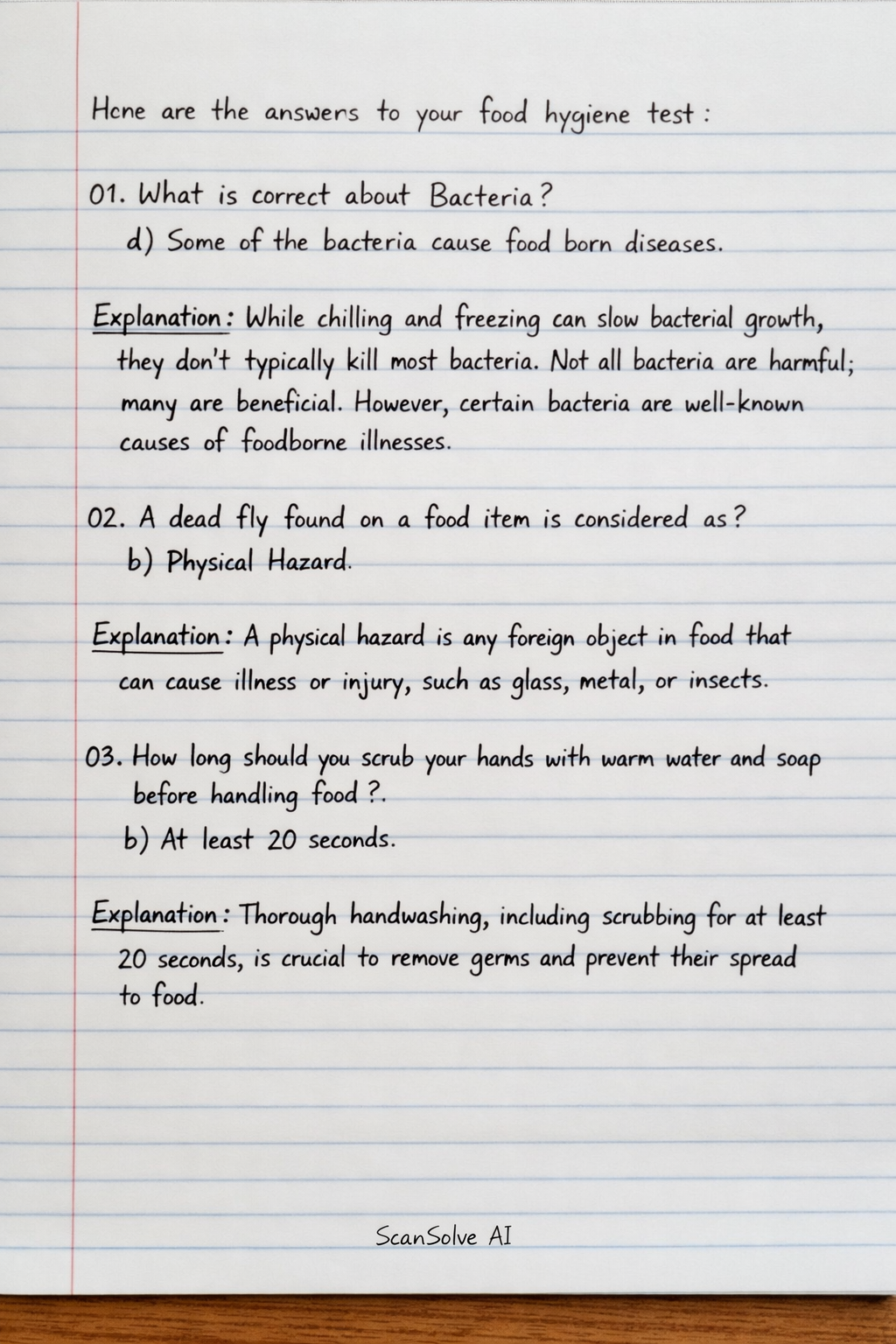
Here are the answers to your food hygiene test: 01. What is correct about Bacteria? d) Some of the bacteria cause food born diseases. Explanation: While chilling and freezing can slow bacterial growth, they don't typically kill most bacteria. Not all bacteria are harmful; many are beneficial. However, certain bacteria are well-known causes of foodborne illnesses. 02. A dead fly found on a food item is considered as? b) Physical Hazard Explanation: A physical hazard is any foreign object in food that can cause illness or injury, such as glass, metal, or insects. 03. How long should you scrub your hands with warm water and soap before handling food? b) At least 20 seconds. Explanation: Thorough handwashing, including scrubbing for at least 20 seconds, is crucial to remove germs and prevent their spread to food. 04. Which of the following illnesses must you report to your supervisor immediately before handling food? b) Diarrhea or vomiting. Explanation: Symptoms like diarrhea and vomiting indicate a potential contagious illness that could be transmitted through food, posing a significant risk to consumers. 05. What is the "Temperature Danger Zone" where harmful bacteria multiply the fastest? b) Between 5°C and 63°C. Explanation: The Temperature Danger Zone is the range in which foodborne bacteria can grow rapidly. Keeping food out of this range (either below 5°C or above 63°C) is essential for food safety. 06. Why is it important to use separate color-coded cutting boards (e.g., Yellow for raw Chicken, Green for Vegetables)? b) To prevent bacteria from raw chicken transferring to ready-to-eat foods. Explanation: Color-coded cutting boards help prevent cross-contamination, which is the transfer of harmful bacteria from raw foods (like chicken) to foods that will be eaten without further cooking. 07. What is the primary reason for disinfecting high-risk food contact surfaces? b) To reduce harmful microorganisms (bacteria) to safe levels. Explanation: Disinfection specifically aims to kill or significantly reduce the number of disease-causing microorganisms on surfaces, ensuring they are safe for food contact. 08. Which of the following surfaces is considered "High-Risk"? c) Chopping board board used for raw chicken. Explanation: Surfaces that come into contact with raw, potentially contaminated foods (like raw chicken) are considered high-risk because they can harbor pathogens if not properly cleaned and sanitized. 09. Which of the following food is "High Risk"? b) Cooked Rice Explanation: Cooked rice, if left at room temperature, can be a high-risk food due to the potential for Bacillus cereus bacteria to grow and produce toxins. Foods that are moist, protein-rich, and have a neutral pH are generally high-risk. 10. Who is responsible for Food Safety? d) All Explanation: Food safety is a collective responsibility. Everyone involved in handling, preparing, and serving food, from food handlers to supervisors and managers, must adhere to safety practices. Send me the next one 📸