
We read your photo as:
How does HIV cause AIDS? Illustrate the epidemiological triad for Mr ZK's possible HIV positive status.
ScanSolve AI Answer
Here are the answers to your questions:
Workbook activity 2:
-
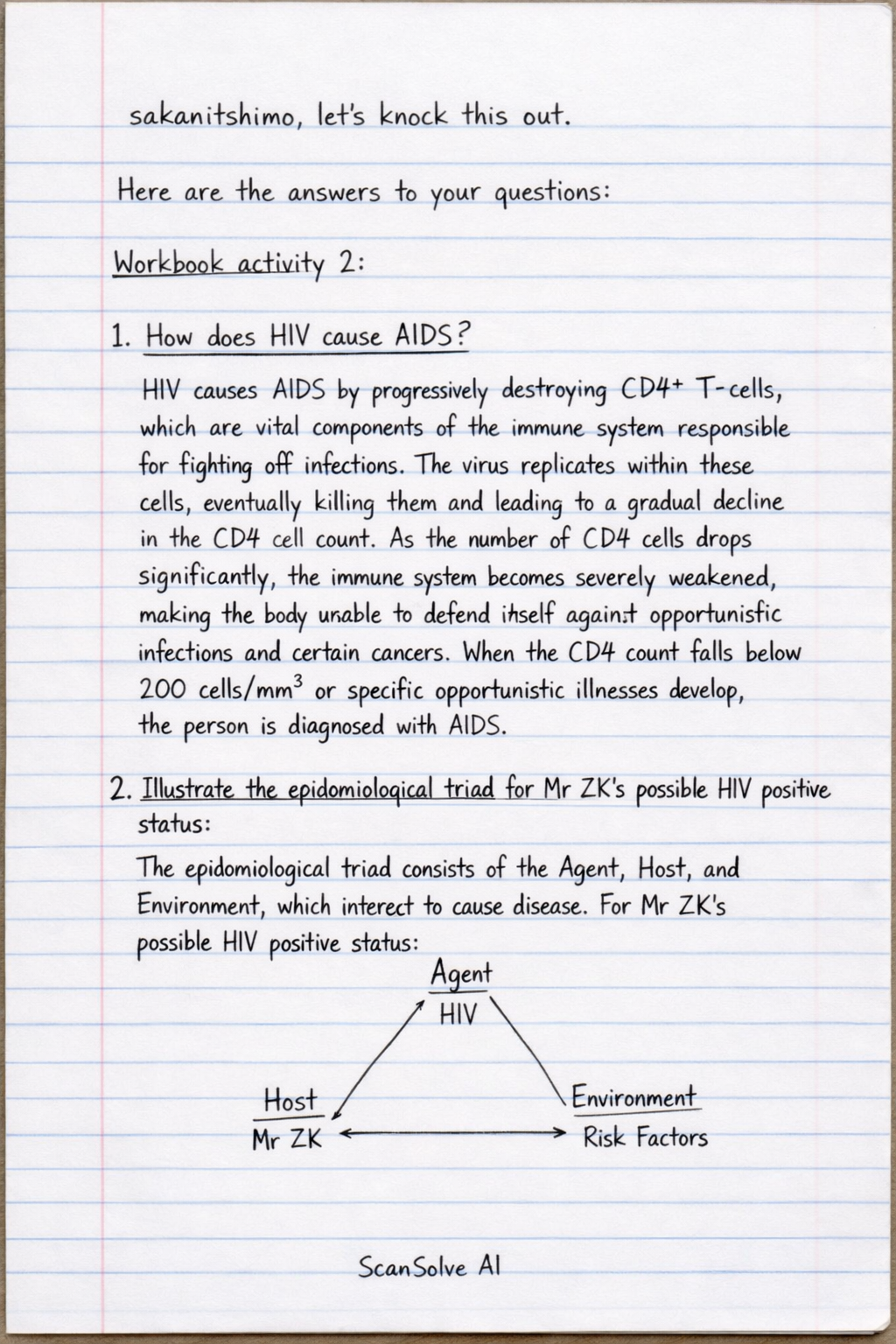
How does HIV cause AIDS? HIV causes AIDS by progressively destroying CD4+ T-cells, which are vital components of the immune system responsible for fighting off infections. The virus replicates within these cells, eventually killing them and leading to a gradual decline in the CD4 cell count. As the number of CD4 cells drops significantly, the immune system becomes severely weakened, making the body unable to defend itself against opportunistic infections and certain cancers. When the CD4 count falls below 200 cells/mm³ or specific opportunistic illnesses develop, the person is diagnosed with AIDS.
-
Illustrate the epidemiological triad for Mr ZK's possible HIV positive status. The epidemiological triad consists of the Agent, Host, and Environment, which interact to cause disease. For Mr ZK's possible HIV positive status:
- Agent: The Human Immunodeficiency Virus (HIV) itself. This is the pathogen responsible for the infection.
- Host: Mr ZK. The host is the individual who is susceptible to the infection. Factors related to the host can include their immune status, genetic predisposition, and behaviors (e.g., engaging in unprotected sex, sharing needles).
- Environment: The external factors that influence the interaction between the agent and the host. For HIV, this includes social, economic, and behavioral contexts such as access to healthcare, availability of prevention methods (condoms, PrEP), cultural norms around sexual health, poverty, drug use practices, and the prevalence of HIV in the community.
Still stuck on this one?
Ask a follow-up, and the answer starts from this question.
More Biology Questions
Handwritten Step-by-Step Solution
Get this as a handwritten image on WhatsApp — like a tutor wrote it for you.
Try on WhatsApp