
We read your photo as:
State FIVE functions of water in the human body and enumerate the recommended daily water intake for adults, pregnant, and lactating women. Mention THREE types of carbohydrates with examples and expla
ScanSolve AI Answer
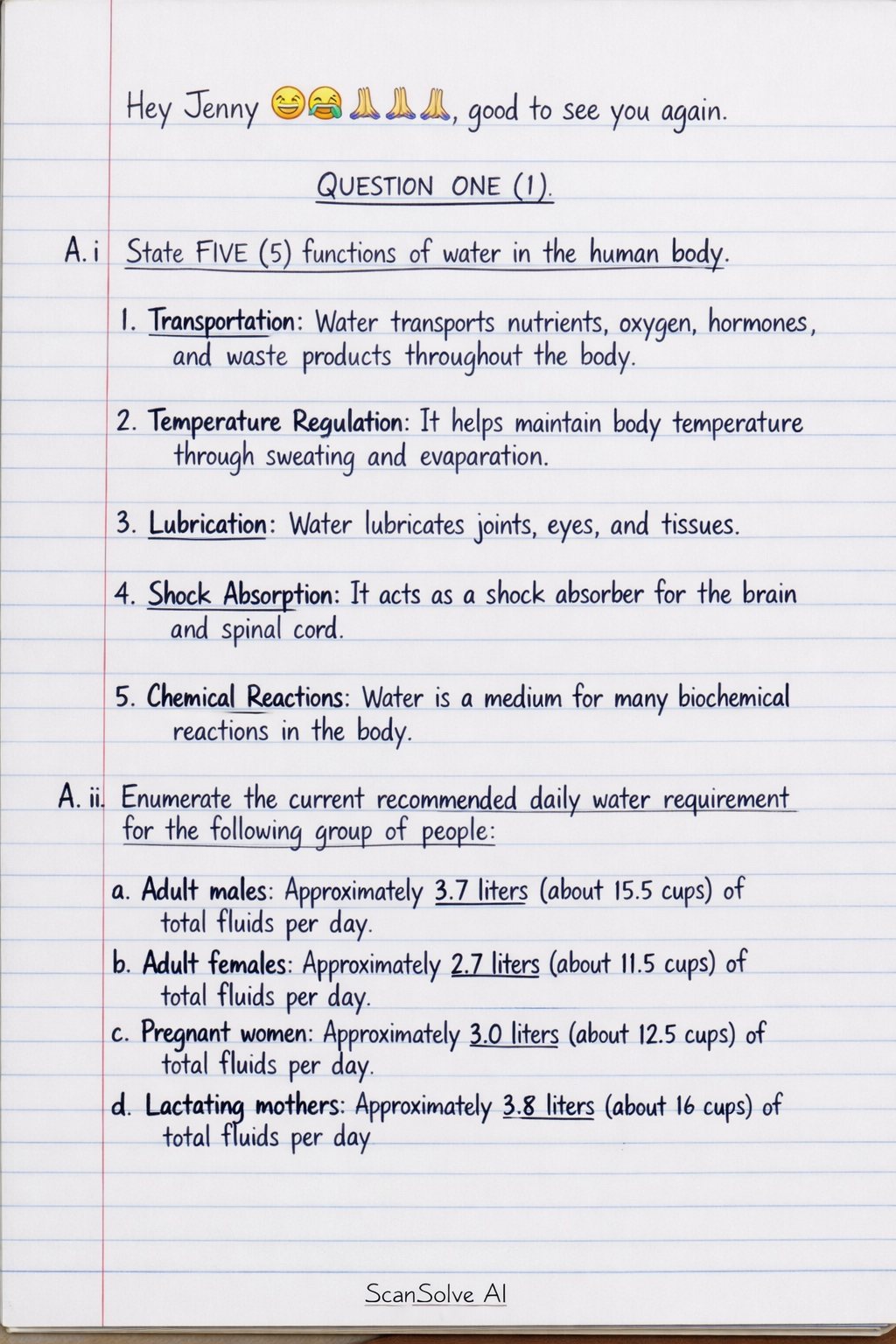
QUESTION ONE (1)
A. i. State FIVE (5) functions of water in the human body.
- Transportation: Water transports nutrients, oxygen, hormones, and waste products throughout the body.
- Temperature Regulation: It helps maintain body temperature through sweating and evaporation.
- Lubrication: Water lubricates joints, eyes, and tissues.
- Shock Absorption: It acts as a shock absorber for the brain and spinal cord.
- Chemical Reactions: Water is a medium for many biochemical reactions in the body.
A. ii. Enumerate the current recommended daily water requirement for the following group of people:
a. Adult males: Approximately 3.7 liters (about 15.5 cups) of total fluids per day.
b. Adult females: Approximately 2.7 liters (about 11.5 cups) of total fluids per day.
c. Pregnant women: Approximately 3.0 liters (about 12.5 cups) of total fluids per day.
d. Lactating mothers: Approximately 3.8 liters (about 16 cups) of total fluids per day.
B. i. Mention the THREE (3) types of carbohydrates and give an example each.
- Monosaccharides: Simple sugars like glucose.
- Disaccharides: Two monosaccharides linked together, like sucrose (table sugar).
- Polysaccharides: Complex carbohydrates made of many sugar units, like starch.
B. ii. Explain FIVE (5) functions of Cellulose Fibre.
- Promotes Bowel Regularity: Cellulose adds bulk to stool, aiding in regular bowel movements and preventing constipation.
- Supports Digestive Health: It helps maintain a healthy gut microbiome by providing substrate for beneficial gut bacteria.
- Weight Management: Fibre-rich foods, including those with cellulose, can increase feelings of fullness, which may help with weight control.
- Blood Sugar Control: It can slow down the absorption of sugar, helping to stabilize blood glucose levels.
- Cholesterol Reduction: Some types of fibre, including cellulose, can help lower blood cholesterol levels.
QUESTION TWO (2)
A. i. Explain the FOUR STAR DIET to their parents with emphasis on the name of each star, group and TWO examples.
The Four Star Diet is a simple, visual guide to help parents ensure their children receive a balanced and nutritious diet, especially in areas where malnutrition is prevalent.
- First Star: Energy-Giving Foods
- Group: Carbohydrates and Fats
- Examples: Maize, Rice
- Second Star: Body-Building Foods
- Group: Proteins
- Examples: Beans, Fish
- Third Star: Protective Foods
- Group: Vitamins and Minerals (Fruits and Vegetables)
- Examples: Mangoes, Spinach
- Fourth Star: Micronutrient-Rich Foods
- Group: Foods fortified with essential vitamins and minerals, or foods naturally rich in specific micronutrients.
- Examples: Iodized salt, Vitamin A-fortified oil
A. ii. Define the term Nutritionally Adequate Diet.
A nutritionally adequate diet is one that provides all the essential nutrients (carbohydrates, proteins, fats, vitamins, minerals, and water) in the correct amounts and proportions required to meet an individual's physiological needs for growth, maintenance, and repair, without excess or deficiency.
B. Discuss FIVE (5) methods of preserving food in Ghana.
- Smoking: This method involves exposing food, especially fish and meat, to smoke from burning wood. The smoke contains compounds that inhibit microbial growth, and the heat dries the food, reducing its water content. It's widely used for tilapia and herring.
- Salting: Adding salt to food draws out moisture through osmosis, creating an environment unsuitable for microbial growth. It's commonly used for preserving fish and meat in Ghana, often combined with drying.
- Drying (Sun Drying): This is one of the oldest and most common methods, especially in tropical climates like Ghana. Food items like cassava chips, garden eggs, okro, and fish are spread out in the sun to remove moisture, which prevents spoilage.
- Canning: Food is sealed in airtight containers and then heated to high temperatures to kill microorganisms and inactivate enzymes. This method is used for various products, including tomato paste and fruit juices, allowing for long-term storage.
- Fermentation: This process uses beneficial microorganisms (like bacteria or yeast) to convert carbohydrates into acids, alcohols, or gases, which preserves the food and often enhances its flavor and nutritional value. Examples in Ghana include kenkey (fermented maize dough) and dawadawa (fermented African locust beans).
Still stuck on this one?
Ask a follow-up, and the answer starts from this question.
More Biology Questions
Handwritten Step-by-Step Solution
Get this as a handwritten image on WhatsApp — like a tutor wrote it for you.
Try on WhatsApp