
We read your photo as:
Explain four reasons it is important to study human diseases and four effects human diseases can have on life.
ScanSolve AI Answer
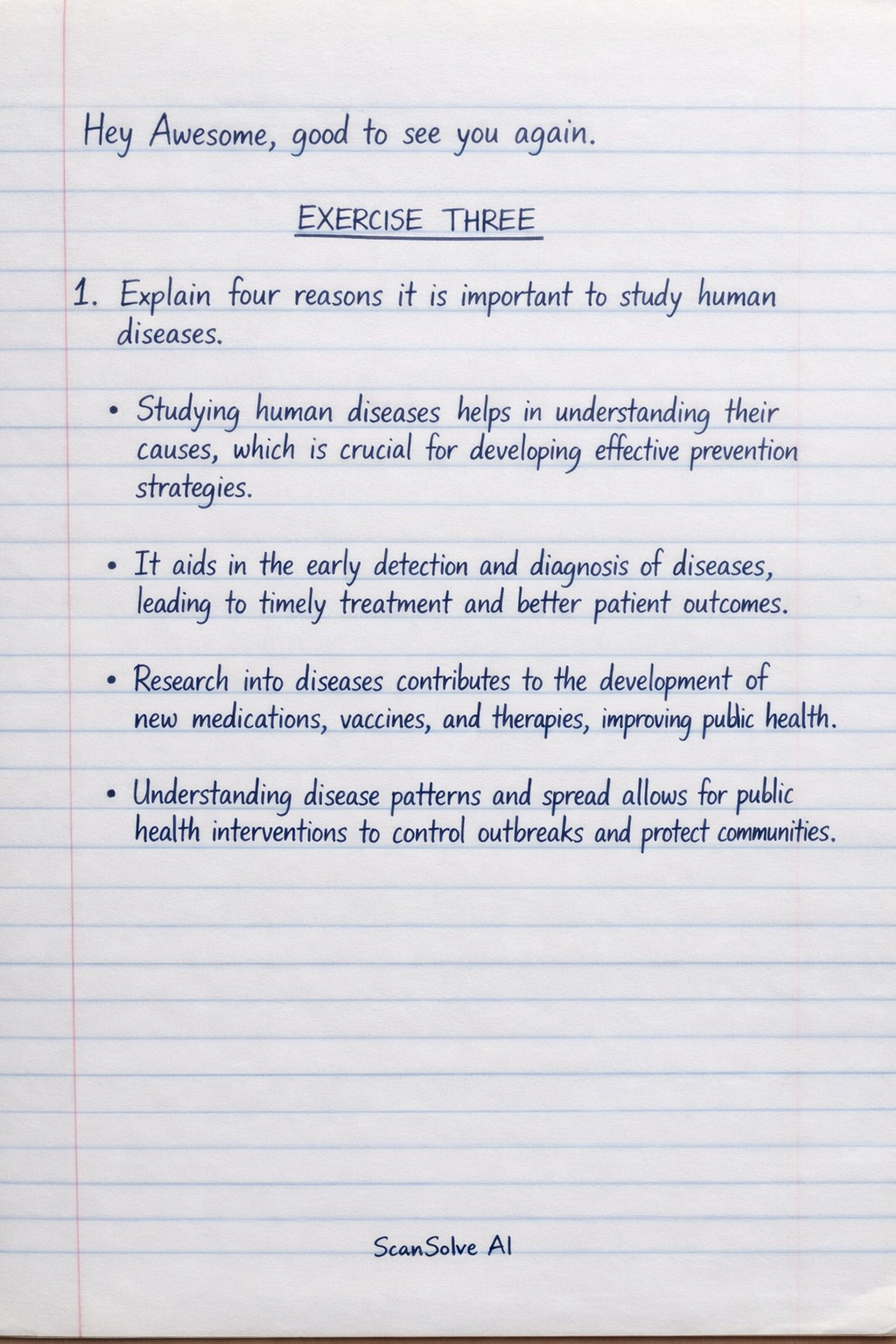
EXERCISE THREE
-
Explain four reasons it is important to study human diseases.
- Studying human diseases helps in understanding their causes, which is crucial for developing effective prevention strategies.
- It aids in the early detection and diagnosis of diseases, leading to timely treatment and better patient outcomes.
- Research into diseases contributes to the development of new medications, vaccines, and therapies, improving public health.
- Understanding disease patterns and spread allows for public health interventions to control outbreaks and protect communities.
-
Explain four effects of human diseases can have on life.
- Diseases can lead to physical impairment and chronic pain, significantly reducing an individual's quality of life and ability to perform daily activities.
- They often cause emotional distress such as anxiety, depression, and fear, impacting mental well-being for both patients and their families.
- Diseases can result in economic burden due to healthcare costs, lost wages from inability to work, and reduced productivity.
- Severe diseases can lead to premature death, causing immense personal loss and affecting family structures and community demographics.
-
Design a poster to create awareness on two of the diseases learnt in this lesson in your community. To design an effective awareness poster, you should include:
- A clear, catchy title related to disease awareness.
- Names of the two diseases you are focusing on (e.g., Malaria and Hypertension).
- Key symptoms for each disease, presented simply with icons.
- Prevention methods for each disease (e.g., for Malaria: use mosquito nets, clear stagnant water; for Hypertension: healthy diet, regular exercise).
- Treatment options or advice on seeking medical help (e.g., "See a doctor if you experience symptoms").
- Contact information for local health services or clinics.
- Visually appealing graphics and a clear, readable font to attract attention.
EXERCISE FOUR
-
Differentiate between infectious and non-infectious diseases with three examples each.
- Infectious diseases are caused by pathogenic microorganisms like bacteria, viruses, fungi, or parasites and can be transmitted from one person to another. Examples include Malaria, Tuberculosis, and Influenza.
- Non-infectious diseases are not caused by pathogens and cannot be transmitted from person to person. They often result from genetic factors, lifestyle choices, or environmental factors. Examples include Diabetes, Asthma, and Heart Disease.
-
Describe one infectious and non-infectious diseases and their causal agents, mode of transmission and symptoms.
- Infectious Disease: Malaria
- Causal Agent: Plasmodium parasite.
- Mode of Transmission: Transmitted through the bite of an infected Anopheles mosquito.
- Symptoms: Fever, chills, headache, muscle aches, fatigue, nausea, vomiting.
- Non-infectious Disease: Type 2 Diabetes
- Causal Agent: A combination of genetic predisposition and lifestyle factors such as poor diet, lack of physical activity, and obesity, leading to insulin resistance or insufficient insulin production.
- Mode of Transmission: Not transmissible.
- Symptoms: Increased thirst, frequent urination, increased hunger, unexplained weight loss, blurred vision, slow-healing sores, fatigue.
- Infectious Disease: Malaria
-
Describe two examples of non-communicable disease.
- Cancer is a non-communicable disease characterized by the uncontrolled growth and spread of abnormal cells in the body. It can affect various organs and tissues.
- Stroke is a non-communicable disease that occurs when the blood supply to part of the brain is interrupted or reduced, depriving brain tissue of oxygen and nutrients.
-
Why are non-communicable diseases often called lifestyle diseases? Non-communicable diseases (NCDs) are often called lifestyle diseases because many of their primary risk factors are directly linked to an individual's daily habits and choices. These include unhealthy diets, lack of physical activity, tobacco use, and excessive alcohol consumption, which significantly increase the likelihood of developing conditions like heart disease, diabetes, and certain cancers.
EXERCISE FIVE
- Discuss the social and economic impact of infectious diseases outbreaks on communities. Use specific examples to illustrate points that may be raised. Infectious disease outbreaks can have profound social and economic impacts on communities. Socially, outbreaks can lead to fear and panic, causing social disruption, stigmatization of affected individuals, and a breakdown of trust in public institutions. For example, during the Ebola outbreak in West Africa, communities experienced widespread fear, leading to social isolation and difficulty in implementing public health measures due to mistrust. Economically, outbreaks result in significant healthcare costs for treatment, prevention, and public health responses. They also cause loss of productivity due to illness, absenteeism from work, and restrictions on movement, which can cripple local economies. The COVID-19 pandemic is a prime example, causing global economic recession due to lockdowns, supply chain disruptions, and massive job losses, alongside overwhelming healthcare systems worldwide.
Still stuck on this one?
Ask a follow-up, and the answer starts from this question.
More Biology Questions
Handwritten Step-by-Step Solution
Get this as a handwritten image on WhatsApp — like a tutor wrote it for you.
Try on WhatsApp