
We read your photo as:
Explain hypertension, its types, and contributing factors.
ScanSolve AI Answer
Here are the explanations for each point regarding hypertension:
-
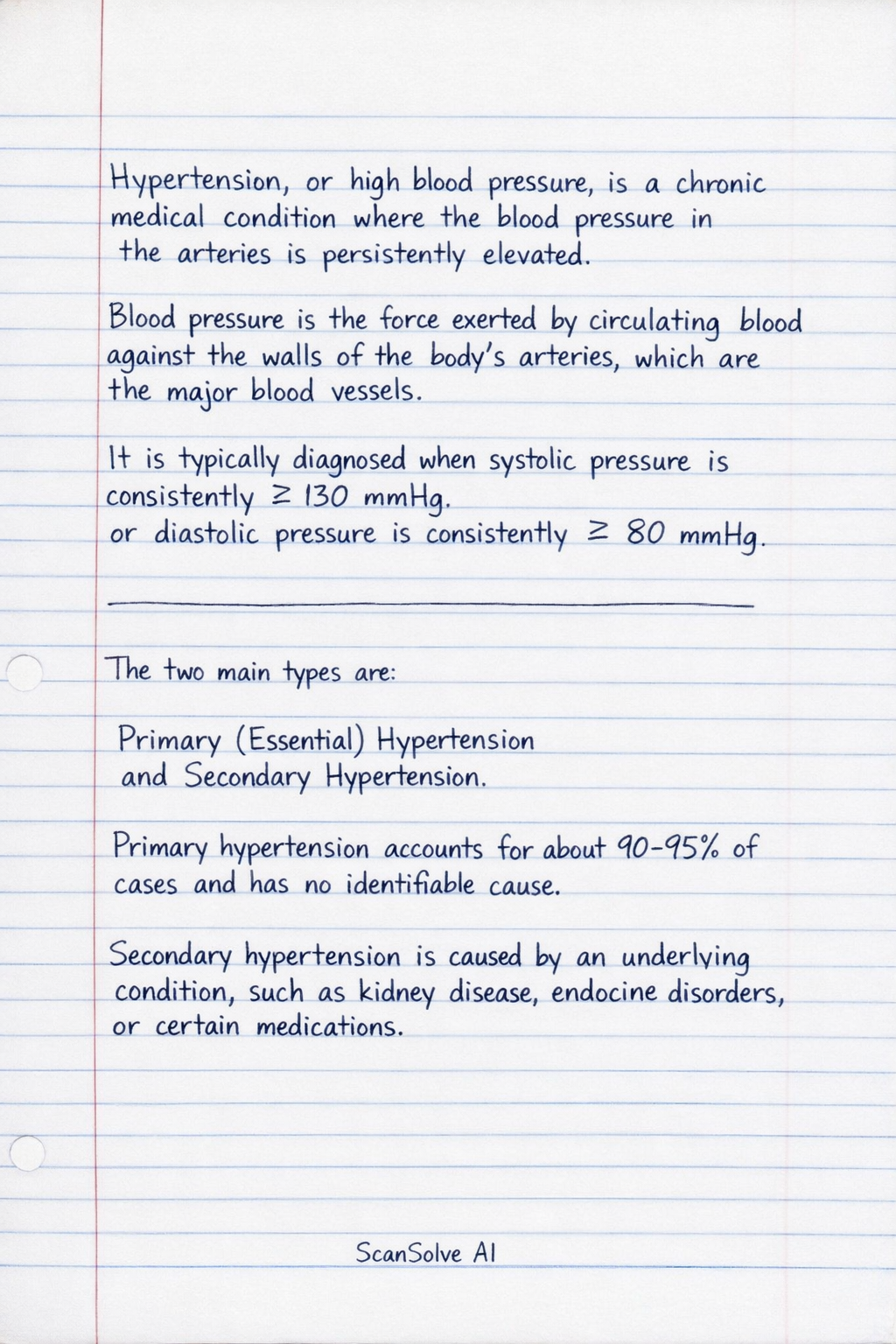
Define and explain what hypertension is. Hypertension, or high blood pressure, is a chronic medical condition where the blood pressure in the arteries is persistently elevated. Blood pressure is the force exerted by circulating blood against the walls of the body's arteries, which are the major blood vessels. It is typically diagnosed when systolic pressure is consistently mmHg or diastolic pressure is consistently mmHg.
-
Identify the various types of hypertension (e.g., primary vs. secondary). The two main types are Primary (Essential) Hypertension and Secondary Hypertension. Primary hypertension accounts for about 90-95% of cases and has no identifiable cause. Secondary hypertension is caused by an underlying condition, such as kidney disease, endocrine disorders, or certain medications.
-
Discuss aetiologic factors involved in different types of the condition. Aetiologic factors for Primary Hypertension include genetic predisposition, age, obesity, high sodium intake, excessive alcohol consumption, physical inactivity, and stress. For Secondary Hypertension, common causes include chronic kidney disease, renal artery stenosis, hyperaldosteronism, Cushing's syndrome, pheochromocytoma, thyroid disorders, and obstructive sleep apnea.
-
Explain the pathogenetic mechanisms behind how hypertension develops. Hypertension development involves complex interactions. Key mechanisms include increased activity of the Renin-Angiotensin-Aldosterone System (RAAS), leading to vasoconstriction and sodium/water retention. Overactivity of the Sympathetic Nervous System increases heart rate, cardiac contractility, and peripheral vascular resistance. Endothelial dysfunction impairs vasodilation, and altered renal sodium excretion contributes to increased blood volume.
-
Describe morphologic changes—the structural alterations in organs and tissues—caused by high blood pressure. Sustained high blood pressure causes structural changes in various organs. The heart develops left ventricular hypertrophy (LVH) as it works harder. Blood vessels undergo arteriosclerosis, characterized by thickening and hardening of arterial walls, and accelerated atherosclerosis. Kidneys can develop nephrosclerosis, leading to impaired function. In the brain, there's an increased risk of microaneurysms and lacunar infarcts, while the eyes can show hypertensive retinopathy.
-
Describe clinical features and symptoms, explaining the underlying reasons for why they occur. Hypertension is often asymptomatic, earning it the name "silent killer." When symptoms do occur, they are usually due to target organ damage. These can include headaches (especially severe hypertension), dizziness, blurred vision (due to retinal damage), nosebleeds, chest pain or shortness of breath (due to heart damage like LVH or heart failure), and fatigue or confusion (due to brain or kidney involvement).
Still stuck on this one?
Ask a follow-up, and the answer starts from this question.
More Biology Questions
Handwritten Step-by-Step Solution
Get this as a handwritten image on WhatsApp — like a tutor wrote it for you.
Try on WhatsApp