
We read your photo as:
Identify the factors that can: a. Increase the CD4 cell count. b. Increase the viral load. c. Decrease the CD4 cell count.
ScanSolve AI Answer
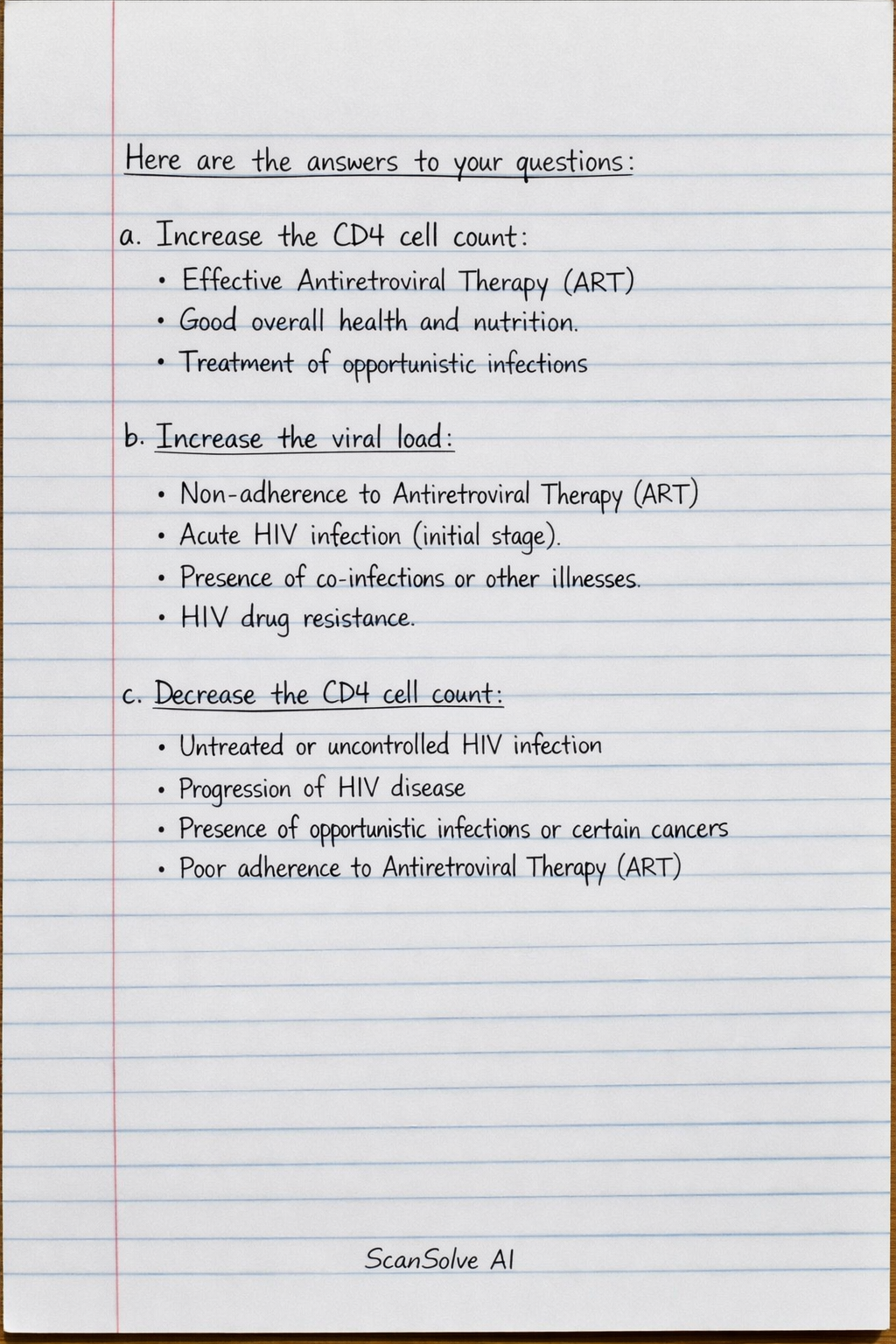
Here are the answers to your questions:
Identify the factors that can:
-
a. Increase the CD4 cell count.
- Effective Antiretroviral Therapy (ART)
- Good overall health and nutrition
- Treatment of opportunistic infections
-
b. Increase the viral load.
- Non-adherence to Antiretroviral Therapy (ART)
- Acute HIV infection (initial stage)
- Presence of co-infections or other illnesses
- HIV drug resistance
-
c. Decrease the CD4 cell count.
- Untreated or uncontrolled HIV infection
- Progression of HIV disease
- Presence of opportunistic infections or certain cancers
- Poor adherence to Antiretroviral Therapy (ART)
In your opinion what is the main factor responsible for the development of HIV-related symptoms and opportunistic diseases?
The main factor is the progressive destruction of CD4+ T-cells by the Human Immunodeficiency Virus (HIV). This leads to a severely weakened immune system, making the body unable to fight off infections and diseases that a healthy immune system would normally control.
Different people respond differently to HIV infection. Highlight the main reasons why HIV infection may progress rapidly in some individuals than in others.
Several factors contribute to the varied progression of HIV infection:
- Viral strain virulence: Some strains of HIV are more aggressive than others.
- Host genetics: Certain genetic factors in the individual can influence how quickly the disease progresses.
- Co-infections: The presence of other infections (e.g., tuberculosis, hepatitis C) can accelerate HIV progression.
- Overall health status: Pre-existing health conditions, nutritional status, and general immune health play a role.
- Age: Very young children and older adults may experience more rapid progression.
- Access to and adherence to treatment: Consistent use of Antiretroviral Therapy (ART) significantly slows progression.
How many sexual contacts with an HIV infected person are necessary before one becomes infected oneself?
There is no fixed number of sexual contacts necessary for HIV transmission. Infection can occur after a single exposure, although the risk varies depending on several factors.
Highlight several factors that may contribute to the vulnerability to infection of an HIV-negative person during sexual contact with an HIV infected individual.
Factors contributing to vulnerability include:
- High viral load in the HIV-positive partner: The higher the viral load, the greater the risk of transmission.
- Presence of other sexually transmitted infections (STIs): STIs can cause inflammation or lesions, increasing susceptibility.
- Unprotected sexual intercourse: Lack of condom use significantly increases risk.
- Type of sexual act: Receptive anal intercourse carries a higher risk than vaginal intercourse.
- Trauma or lesions: Any cuts, sores, or inflammation in the genital or rectal area can provide entry points for the virus.
- Lack of male circumcision: For males, being uncircumcised can increase vulnerability.
- Genetic susceptibility: Some individuals may be genetically more susceptible to infection.
Still stuck on this one?
Ask a follow-up, and the answer starts from this question.
More Biology Questions
Handwritten Step-by-Step Solution
Get this as a handwritten image on WhatsApp — like a tutor wrote it for you.
Try on WhatsApp