
We read your photo as:
Identify the problems your researched biotechnological process will solve. Justify the problem with statistical or empirical evidence.
Biology
ScanSolve AI Answer
continuing with the "Milk to yoghurt" transformation:
-
3. Identify the problems this biotechnological process you are researching on will solve. You can justify the problem with statistical or empirical evidence.
-
c. Scientific problem
- Problem: Optimizing fermentation conditions to enhance probiotic viability and functional properties of yoghurt.
- Justification: While yoghurt production is well-established, ensuring high viability of specific probiotic strains throughout fermentation and storage, and maximizing their health benefits, remains a scientific challenge. Factors like temperature, starter culture concentration, and milk composition significantly impact the growth and survival of beneficial bacteria. Research is needed to identify the precise parameters that yield yoghurt with optimal probiotic counts and desired functional attributes (e.g., specific organic acid profiles, texture). Empirical evidence from food microbiology studies consistently shows variability in probiotic survival rates depending on the fermentation protocol and matrix, highlighting the need for scientific optimization.
-
d. Others
- Problem: Addressing consumer demand for natural, healthy, and locally sourced food products.
- Justification: There is a growing global trend towards consuming natural, minimally processed foods with perceived health benefits. Yoghurt, especially when produced using traditional or optimized biotechnological methods, aligns with this demand. Utilizing local milk sources further appeals to consumers interested in supporting local economies and reducing food miles. This process helps meet the market need for functional foods that are both nutritious and align with consumer preferences for transparency and naturalness. Market research data consistently indicates a preference for products with clear health claims and local origins.
-
-
4. State your research objectives
- Objective 1: To determine the optimal fermentation temperature and starter culture concentration for maximizing the viability of Lactobacillus bulgaricus and Streptococcus thermophilus in yoghurt produced from local milk.
- Objective 2: To evaluate the physicochemical properties (pH, titratable acidity, viscosity) and sensory attributes (taste, texture, aroma) of yoghurt produced under optimized fermentation conditions.
- Objective 3: To assess the shelf life and probiotic survival of the optimized yoghurt product during refrigerated storage.
- Objective 4: To analyze the nutritional composition (protein, fat, lactose content) of the fermented yoghurt compared to raw milk.
-
5. Which biological organisms and processes are involved in the food transformation process you are studying?
-
a. Living Organisms
- Lactobacillus bulgaricus (a type of lactic acid bacteria)
- Streptococcus thermophilus (a type of lactic acid bacteria)
- Other potential probiotic strains if added: Lactobacillus acidophilus, Bifidobacterium lactis.
-
b. Biological processes
- Lactic Acid Fermentation: This is the primary process where bacteria convert lactose (milk sugar) into lactic acid.
- Proteolysis: Bacterial enzymes break down milk proteins, contributing to texture and flavor development.
- Lipolysis: Bacterial enzymes can break down milk fats, also influencing flavor.
- Exopolysaccharide Production: Some bacteria produce exopolysaccharides, which contribute to the viscosity and texture of yoghurt.
-
Was this helpful?
Still stuck on this one?
Ask a follow-up, and the answer starts from this question.
Got a different question?Ask your own question
More Biology Questions
QIdentify the problems this biotechnological process of cassava to garri transformation will solve…QFormulate a research project title and identify the social and economic problems it solves, using…QPlease complete the table for our biotechnological project on milk transformation into yogurt or…QFor a research project on transforming milk into yogurt, identify scientific and environmental…QWhat should be included in the "Interpretation of results" section of a biotechnology project…
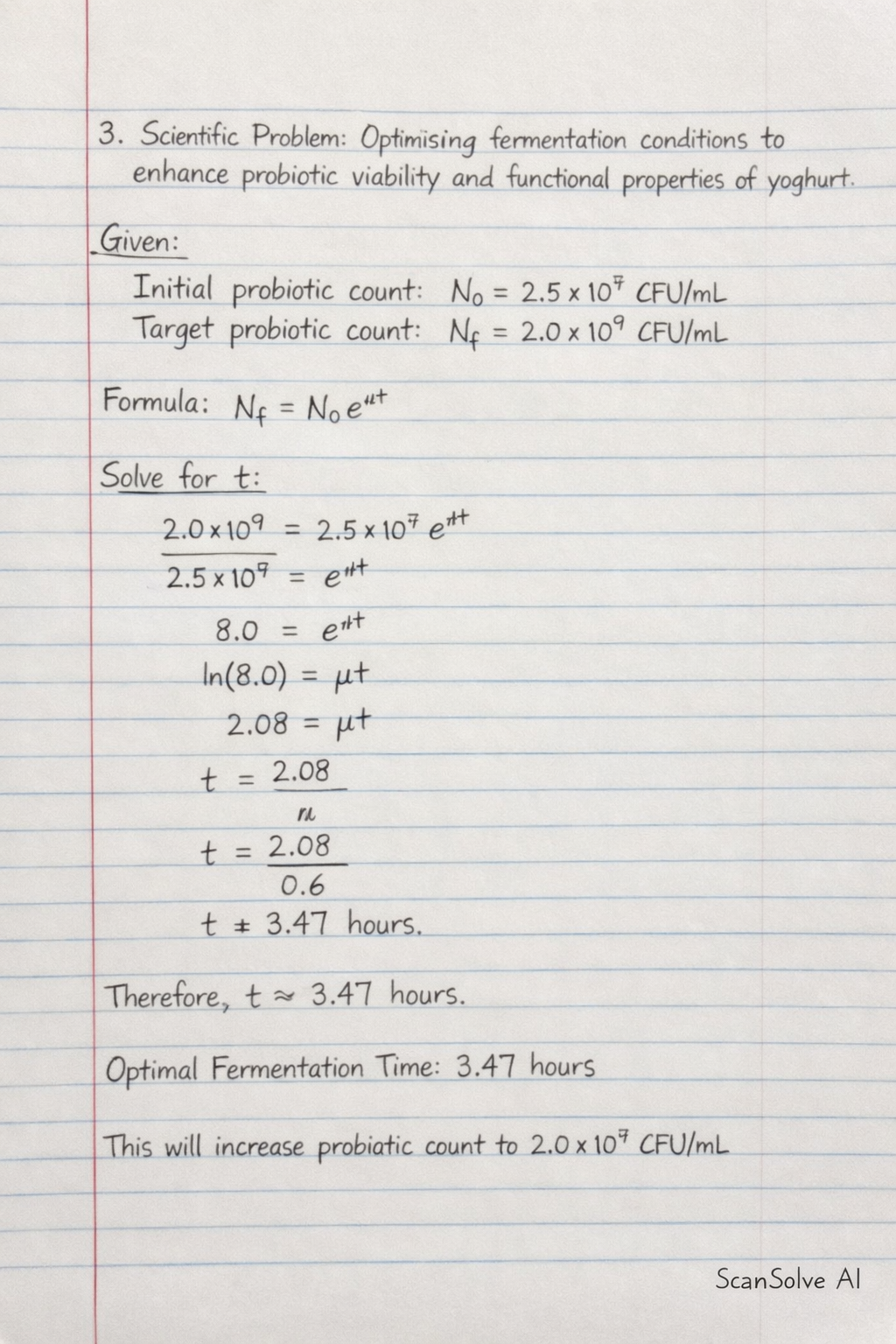
Handwritten Step-by-Step Solution
Get this as a handwritten image on WhatsApp — like a tutor wrote it for you.
Try on WhatsApp