
We read your photo as:
Abena, aged 14, refuses meals, exercises secretly at night and says she is 'too fat' although her clothes are loose. Her mother praises her discipline and asks the nurse for vitamins to improve her concentration. Which assessment priority is MOST appropriate?
ScanSolve AI Answer
Answer
Step-by-step solution
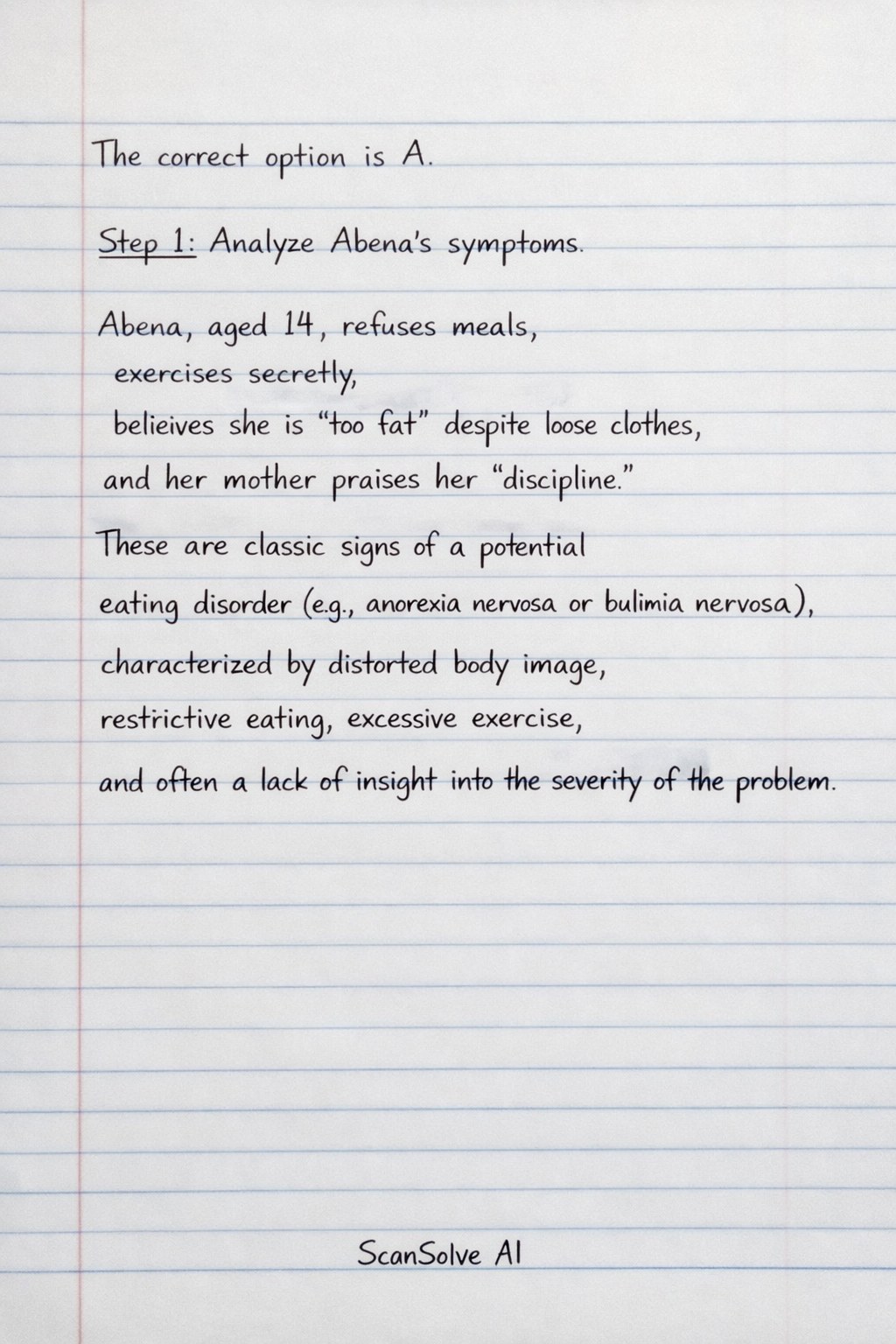
3 stepsThe correct option is A.
Analyze Abena's symptoms.
Abena, aged 14, refuses meals, exercises secretly, believes she is "too fat" despite loose clothes, and her mother praises her "discipline." These are classic signs of a potential eating disorder (e.g., anorexia nervosa or bulimia nervosa), characterized by distorted body image, restrictive eating, excessive exercise, and often a lack of insight into the severity of the problem.
Evaluate the given options.
- A. Assess for disordered eating, body image distortion, medical instability, menstrual changes and psychosocial triggers before treating the problem as simple vitamin deficiency. This option directly addresses all the concerning symptoms, including the psychological aspects (body image distortion, psychosocial triggers) and potential physical complications (medical instability, menstrual changes, which are common in eating disorders due to malnutrition). It correctly prioritizes a comprehensive assessment over a superficial treatment like vitamin deficiency.
- B. Give multivitamins and encourage the mother to continue praising Abena's weight control because discipline is protective in adolescence. This is incorrect and harmful. Giving multivitamins does not address the underlying eating disorder, and praising "weight control" reinforces the unhealthy behaviors. Discipline in this context is a symptom of the disorder, not a protective factor.
- C. Focus mainly on obesity prevention because body dissatisfaction at age 14 usually indicates excessive body fat and poor self-control. This is incorrect. Abena's loose clothes suggest she is not obese. Her body dissatisfaction is likely a symptom of body dysmorphia, not actual excessive body fat. Focusing on obesity prevention would be a misdiagnosis and could worsen her condition.
- D. Delay assessment until Abena requests help because eating behaviours are private lifestyle choices unless the adolescent complains. This is incorrect and dangerous. Eating disorders are serious medical conditions that often require intervention, especially in adolescents, even if the individual does not recognize the problem or seek help. Delaying assessment can lead to severe health consequences.
Conclude the most appropriate assessment priority.
Option A provides the most comprehensive and appropriate approach, recognizing the severity of the symptoms and the need for a thorough evaluation of disordered eating, body image, medical status, and psychosocial factors.
The final answer is
Try one yourself
A new problem that tests the same skill.
Still stuck on this one?
Ask a follow-up, and the answer starts from this question.
More Biology Questions
Handwritten Step-by-Step Solution
Get this as a handwritten image on WhatsApp — like a tutor wrote it for you.
Try on WhatsApp