
We read your photo as:
In a tabular form state the sources, functions, deficiency in deficiency of mineral salts, deficiency diseases and what vitamins are found in them.
Biology
ScanSolve AI Answer
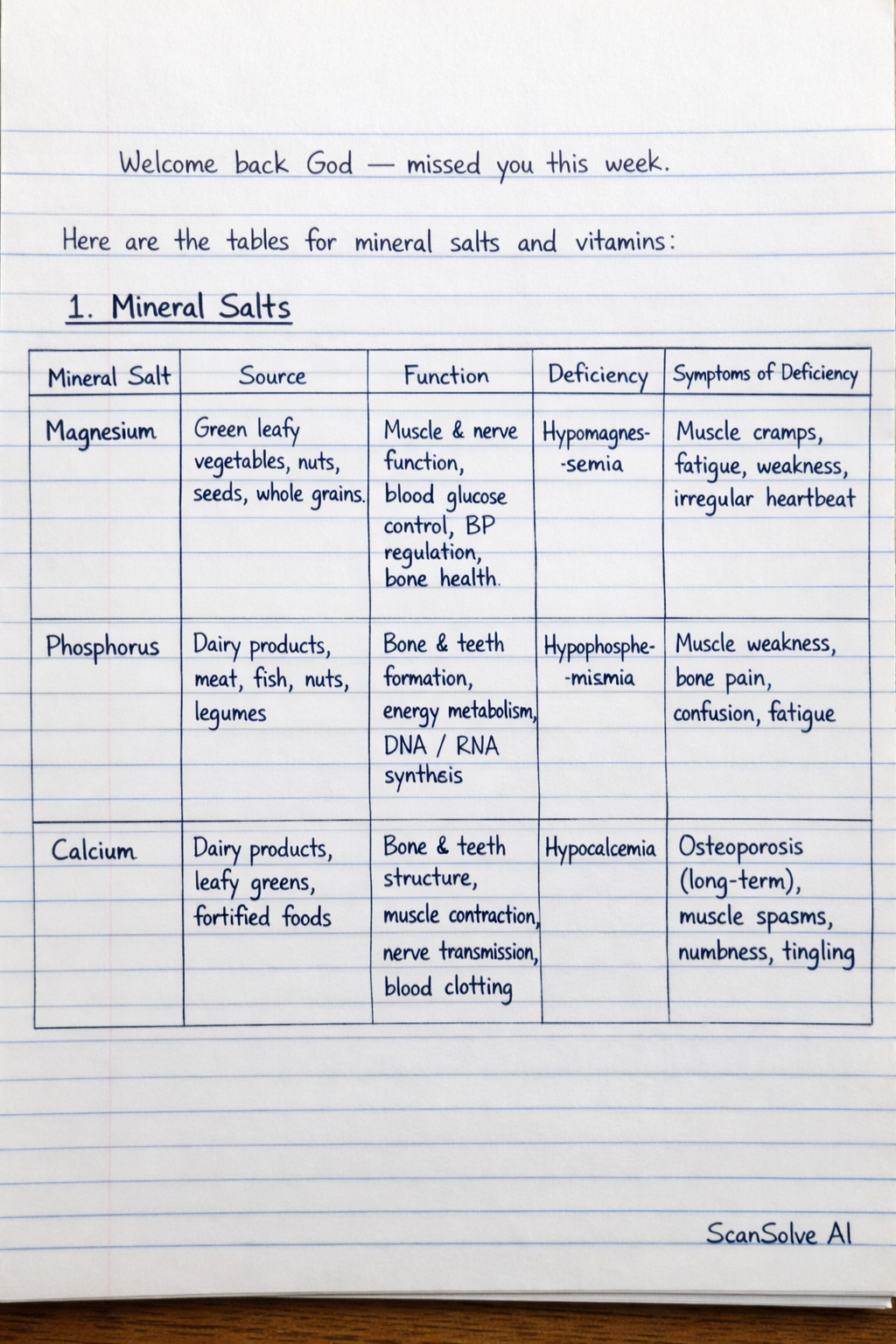
Here are the tables for mineral salts and vitamins:
1. Mineral Salts
| Mineral Salt | Source | Function | Deficiency | Symptoms of Deficiency |
|---|---|---|---|---|
| Magnesium | Green leafy vegetables, nuts, seeds, whole grains | Muscle and nerve function, blood glucose control, blood pressure regulation, bone health | Hypomagnesemia | Muscle cramps, fatigue, weakness, irregular heartbeat |
| Phosphorus | Dairy products, meat, fish, nuts, legumes | Bone and teeth formation, energy metabolism, DNA/RNA synthesis | Hypophosphatemia | Muscle weakness, bone pain, confusion, fatigue |
| Calcium | Dairy products, leafy greens, fortified foods | Bone and teeth structure, muscle contraction, nerve transmission, blood clotting | Hypocalcemia | Osteoporosis (long-term), muscle spasms, numbness, tingling |
| Potassium | Fruits (bananas, oranges), vegetables (spinach, potatoes), legumes | Fluid balance, nerve signals, muscle contractions, blood pressure regulation | Hypokalemia | Muscle weakness, fatigue, cramps, irregular heart rhythm |
| Iodine | Iodized salt, seafood, dairy products | Thyroid hormone production (regulates metabolism) | Iodine deficiency | Goiter (enlarged thyroid), hypothyroidism, developmental issues in children |
| Sulphur | Protein-rich foods (meat, fish, eggs, legumes) | Component of amino acids and vitamins, detoxification, collagen synthesis | Rare, usually with severe protein deficiency | Impaired growth, skin lesions, brittle hair/nails |
2. Vitamins
| Vitamin | Source | Function | Deficiency | Symptoms of Deficiency |
|---|---|---|---|---|
| Vitamin A | Carrots, sweet potatoes, leafy greens, liver, eggs | Vision, immune function, cell growth, skin health | Hypovitaminosis A | Night blindness, dry eyes, impaired immune function, dry skin |
| Vitamin B (complex) | Whole grains, meat, fish, eggs, dairy, legumes, leafy greens | Energy metabolism, nerve function, red blood cell formation | Varies by specific B vitamin (e.g., Beriberi for B1, Pellagra for B3, Anemia for B12) | Fatigue, weakness, nerve damage, skin issues, digestive problems |
| Vitamin C | Citrus fruits, berries, bell peppers, broccoli | Antioxidant, collagen synthesis, immune function, iron absorption | Scurvy | Fatigue, gum bleeding, joint pain, poor wound healing, bruising |
| Vitamin D | Sunlight exposure, fatty fish, fortified milk, eggs | Calcium absorption, bone health, immune function | Rickets (children), Osteomalacia (adults) | Bone deformities, muscle weakness, bone pain, increased fracture risk |
| Vitamin K | Leafy green vegetables, broccoli, cabbage, some oils | Blood clotting, bone metabolism | Vitamin K deficiency | Easy bruising, prolonged bleeding, nosebleeds, internal bleeding |
Was this helpful?
Still stuck on this one?
Ask a follow-up, and the answer starts from this question.
Got a different question?Ask your own question
More Biology Questions
QDiscuss the functions, sources, deficiency diseases, and symptoms of key minerals like iron, zinc…QMatch the following columns: Carbohydrates, Vitamins, Vitamin C, Roughage, Proteins, Sugar, Vitamin…QState the deficiency diseases of each of the following vitamins (B1, B2, B6) and explain the role of…QGive me some foods minerals and their functionsQCreate a nutrient chart listing foods rich in carbohydrates, proteins, and vitamins, including…
Browse by topic:Nutrition
Handwritten Step-by-Step Solution
Get this as a handwritten image on WhatsApp — like a tutor wrote it for you.
Try on WhatsApp