
We read your photo as:
Explain iron deficiency anemia and list its causes and symptoms.
ScanSolve AI Answer
Here is the answer to Question 1:
a) Iron deficiency anemia is a condition where the body lacks sufficient iron to produce adequate hemoglobin, which is essential for red blood cells to carry oxygen. This leads to a reduced number of healthy red blood cells and consequently, decreased oxygen delivery to the body's tissues.
b)
i. Five causes of Iron deficiency anemia:
- Inadequate dietary iron intake: This can occur due to poor nutrition, vegetarian or vegan diets without proper iron supplementation, or restrictive eating patterns.
- Increased iron requirements: Periods of rapid growth, such as adolescence (as in Mwanza's case) and pregnancy, significantly increase the body's demand for iron.
- Chronic blood loss: Common causes include heavy menstrual bleeding (menorrhagia), gastrointestinal bleeding from ulcers, hemorrhoids, inflammatory bowel disease, or prolonged use of non-steroidal anti-inflammatory drugs (NSAIDs).
- Impaired iron absorption: Conditions like celiac disease, Crohn's disease, gastric bypass surgery, or the use of certain medications (e.g., antacids) can reduce the body's ability to absorb iron from food.
- Parasitic infections: Hookworm infestations, particularly in endemic areas, can cause chronic blood loss from the intestines, leading to iron deficiency.
ii. Five signs and symptoms of anemia:
- Pallor: Pale skin, conjunctiva, and nail beds due to reduced hemoglobin.
- Fatigue and weakness: A common symptom resulting from decreased oxygen supply to muscles and tissues.
- Dyspnea: Shortness of breath, especially during physical exertion, as the body tries to compensate for low oxygen levels.
- Dizziness or lightheadedness: Caused by insufficient oxygen reaching the brain.
- Tachycardia or palpitations: The heart beats faster to try and circulate more oxygen-rich blood.
c)
Five Nursing problems and a nursing care plan:
-
Nursing Problem: Fatigue related to decreased oxygen-carrying capacity of the blood.
- Nursing Interventions:
- Assess the level of fatigue and its impact on daily activities.
- Encourage frequent rest periods throughout the day.
- Assist with activities of daily living (ADLs) as needed to conserve energy.
- Encourage light physical activity as tolerated to improve endurance gradually.
- Nursing Interventions:
-
Nursing Problem: Imbalanced Nutrition: Less than Body Requirements related to inadequate iron intake or absorption.
- Nursing Interventions:
- Educate Mwanza and her family on iron-rich foods (e.g., red meat, poultry, fish, beans, lentils, spinach, fortified cereals).
- Advise on consuming vitamin C-rich foods (e.g., oranges, tomatoes) with iron sources to enhance absorption.
- Administer prescribed oral iron supplements and educate on proper timing (e.g., on an empty stomach if tolerated, or with food to reduce GI upset).
- Monitor dietary intake and provide nutritional counseling.
- Nursing Interventions:
-
Nursing Problem: Activity Intolerance related to generalized weakness and dyspnea on exertion.
- Nursing Interventions:
- Plan activities with adequate rest periods in between.
- Monitor vital signs (heart rate, respiratory rate, oxygen saturation) before, during, and after activity.
- Assist with ambulation and provide assistive devices if necessary to ensure safety.
- Encourage a gradual increase in activity level as Mwanza's energy improves.
- Nursing Interventions:
-
Nursing Problem: Risk for Impaired Skin Integrity related to pallor and poor tissue perfusion.
- Nursing Interventions:
- Assess skin color, turgor, and presence of any lesions regularly.
- Ensure adequate hydration and nutrition to support skin health.
- Provide regular skin care and encourage repositioning to prevent pressure injuries.
- Educate Mwanza and family on signs of skin breakdown.
- Nursing Interventions:
-
Nursing Problem: Deficient Knowledge regarding disease process, treatment, and self-care related to new diagnosis.
- Nursing Interventions:
- Provide clear and concise education about iron deficiency anemia, its causes, and its management.
- Explain the importance of adherence to iron supplementation and dietary modifications.
- Teach Mwanza and her family to recognize signs of worsening anemia and when to seek medical attention.
- Provide written materials for reinforcement and answer any questions they may have.
- Nursing Interventions:
d)
Five IEC points for Mwanza and her family in the management of Iron deficiency anemia:
- Dietary Modifications: Emphasize the importance of consuming a balanced diet rich in iron. Explain that iron from animal sources (heme iron, e.g., red meat, poultry, fish) is better absorbed than iron from plant sources (non-heme iron, e.g., beans, lentils, spinach). Advise them to pair iron-rich foods with vitamin C sources (e.g., oranges, bell peppers) to significantly enhance iron absorption.
- Iron Supplementation Adherence: Explain that iron supplements are crucial for replenishing iron stores and must be taken consistently as prescribed, even if symptoms improve. Discuss potential side effects like constipation or dark stools and strategies to manage them (e.g., increasing fiber and fluid intake). Advise against taking iron with milk, calcium supplements, or antacids, as these can inhibit absorption.
- Monitoring for Improvement and Worsening: Educate Mwanza and her family on what signs indicate improvement (e.g., increased energy, better skin color) and what signs might suggest worsening anemia (e.g., increased fatigue, severe pallor, persistent shortness of breath). Instruct them to report any concerning symptoms to a healthcare provider promptly.
- Importance of Follow-up Care: Stress the necessity of attending all scheduled follow-up appointments for blood tests (e.g., hemoglobin, ferritin levels). These tests are vital for monitoring the effectiveness of treatment and adjusting the care plan as needed to ensure full recovery.
- Avoidance of Iron Absorption Inhibitors: Inform the family that certain substances, such as tea, coffee, and some herbal remedies, can interfere with iron absorption. Advise them to avoid consuming these beverages or substances around the time of iron-rich meals or when taking iron supplements.
Still stuck on this one?
Ask a follow-up, and the answer starts from this question.
More Biology Questions
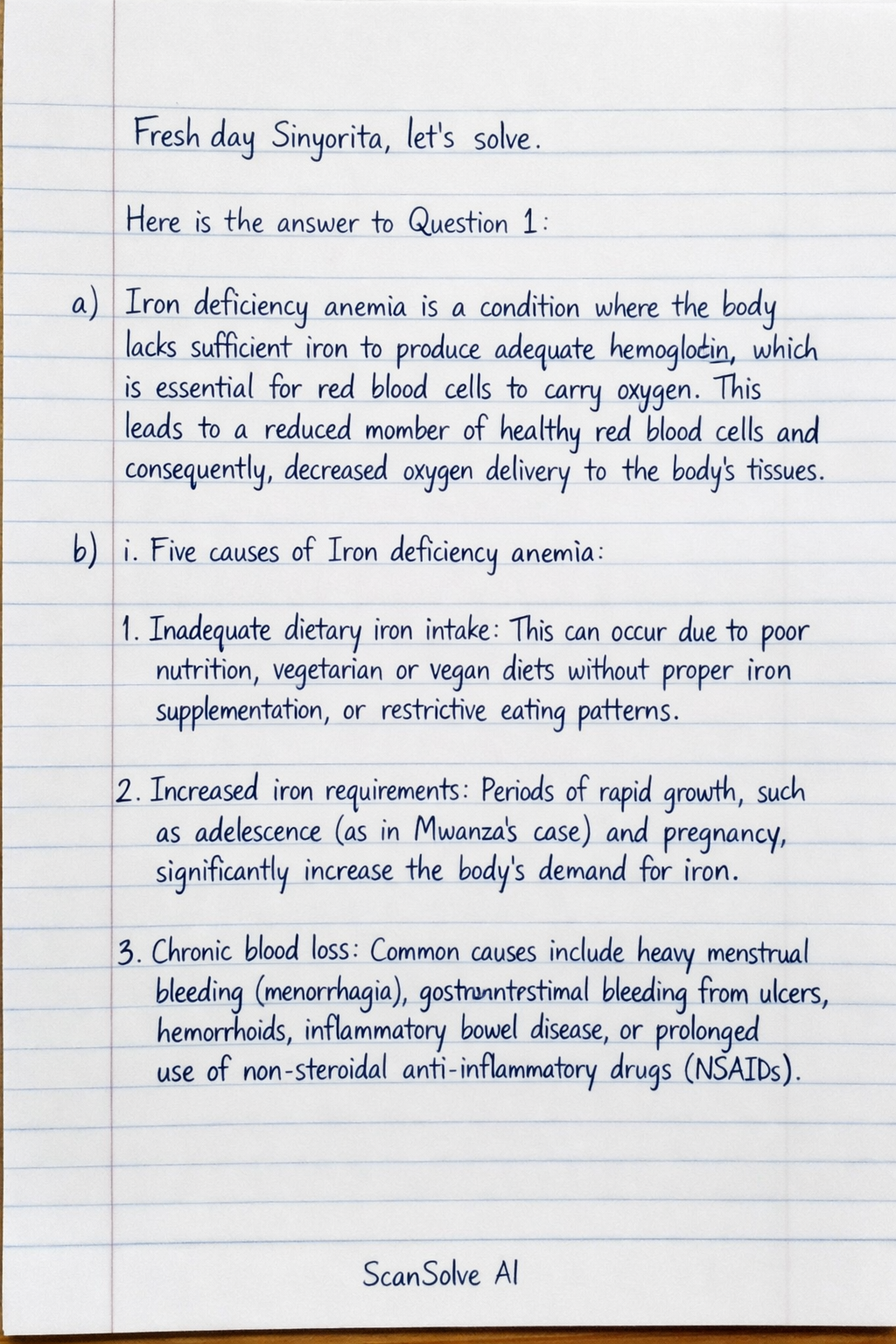
Handwritten Step-by-Step Solution
Get this as a handwritten image on WhatsApp — like a tutor wrote it for you.
Try on WhatsApp