
We read your photo as:
What are laboratory animals and what is their role in the diagnosis of pathogens?
Biology
ScanSolve AI Answer
Step-by-step solution
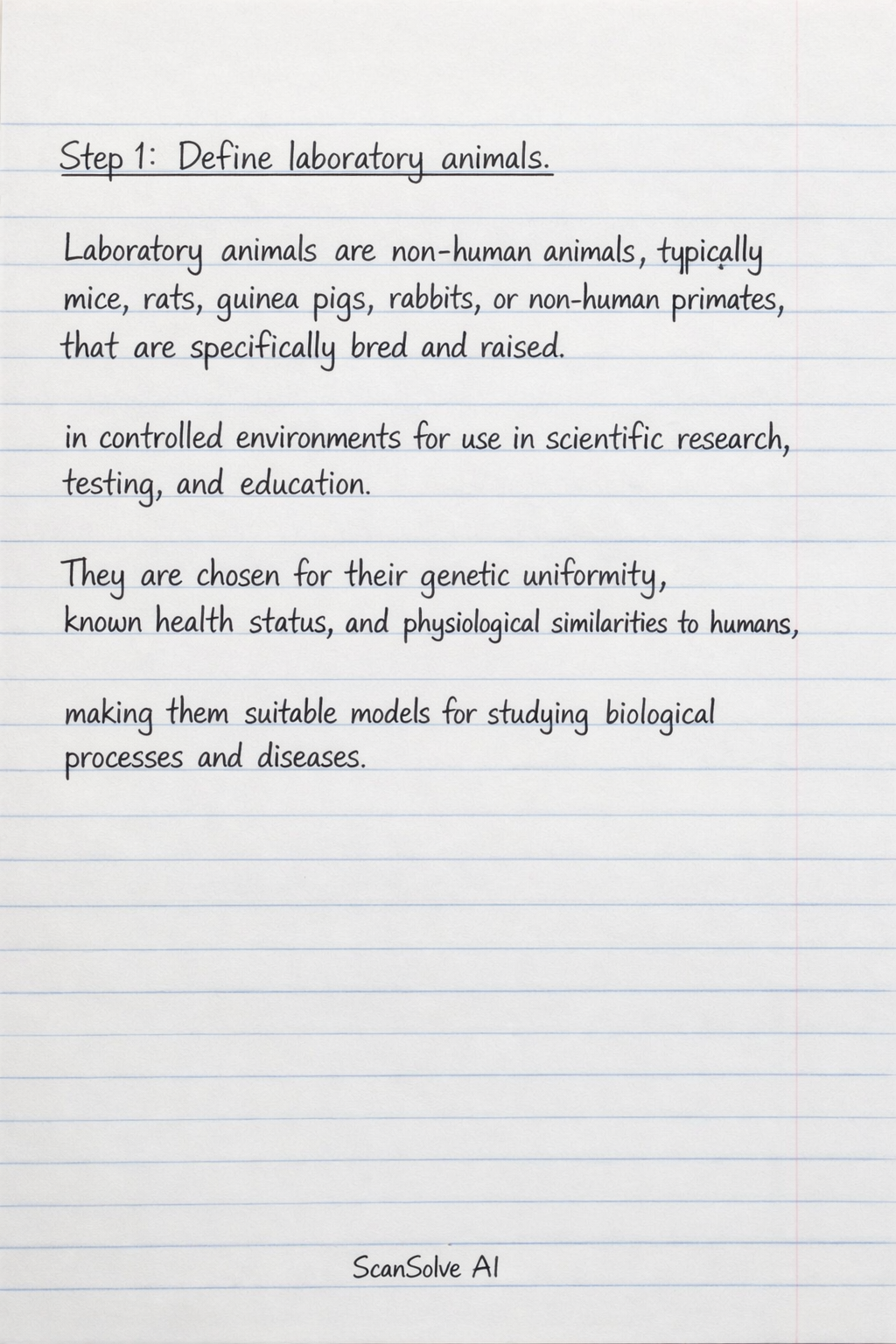
2 stepsDefine laboratory animals.
Laboratory animals are non-human animals, typically mice, rats, guinea pigs, rabbits, or non-human primates, that are specifically bred and raised in controlled environments for use in scientific research, testing, and education. They are chosen for their genetic uniformity, known health status, and physiological similarities to humans, making them suitable models for studying biological processes and diseases.
Discuss the role of laboratory animals in the diagnosis of pathogens.
Laboratory animals play several crucial roles in the diagnosis of pathogens:
- Pathogen Isolation and Identification: For certain fastidious or difficult-to-culture pathogens, inoculation into susceptible animals can facilitate their isolation and subsequent identification. The pathogen may multiply in the animal, making it easier to detect or culture from animal tissues or fluids.
- Antibody Production: Animals are immunized with specific pathogens or their antigens to produce polyclonal or monoclonal antibodies. These antibodies are then harvested and used as diagnostic reagents in various immunoassays (e.g., ELISA, immunofluorescence) to detect the presence of pathogens or their antigens in patient samples.
- Virulence and Pathogenicity Testing: Animals can be used to assess the virulence (disease-causing ability) and pathogenicity of a newly isolated or suspected pathogen. Observing the disease progression in an animal model helps confirm if an organism is indeed pathogenic and to what extent.
- Diagnosis of Undetectable Pathogens: In cases where direct detection of a pathogen in a patient sample is challenging, the sample can be inoculated into a susceptible animal. If the animal develops the disease, it indicates the presence of the pathogen, which can then be isolated and identified from the animal.
- Vaccine and Drug Efficacy Studies: While not direct diagnosis, animals are used to test the efficacy of vaccines and antimicrobial drugs against specific pathogens. This research indirectly supports diagnostic efforts by providing effective treatments that reduce the burden of disease.
Was this helpful?
Still stuck on this one?
Ask a follow-up, and the answer starts from this question.
Got a different question?Ask your own question
More Biology Questions
QWhat are laboratory animals? Discuss the role of Laboratory animals in diagnosis of pathogens.QLaboratory Analysis (Biological Samples) This section focuses on identifying pathogens or parasites…QIdentify and describe the function and economic importance of common farm parasites and laboratory…QDescribe the laboratory diagnosis of malaria parasites (10 marks)
Browse by topic:Microbiology
Handwritten Step-by-Step Solution
Get this as a handwritten image on WhatsApp — like a tutor wrote it for you.
Try on WhatsApp