
We read your photo as:
List 4 microscopic features of bronchiectasis, and state one microscopic feature important in the clinical diagnosis of embolic pneumonia, catarrhal rhinitis, fibrinous sinusitis, granulomatous pneumo
ScanSolve AI Answer
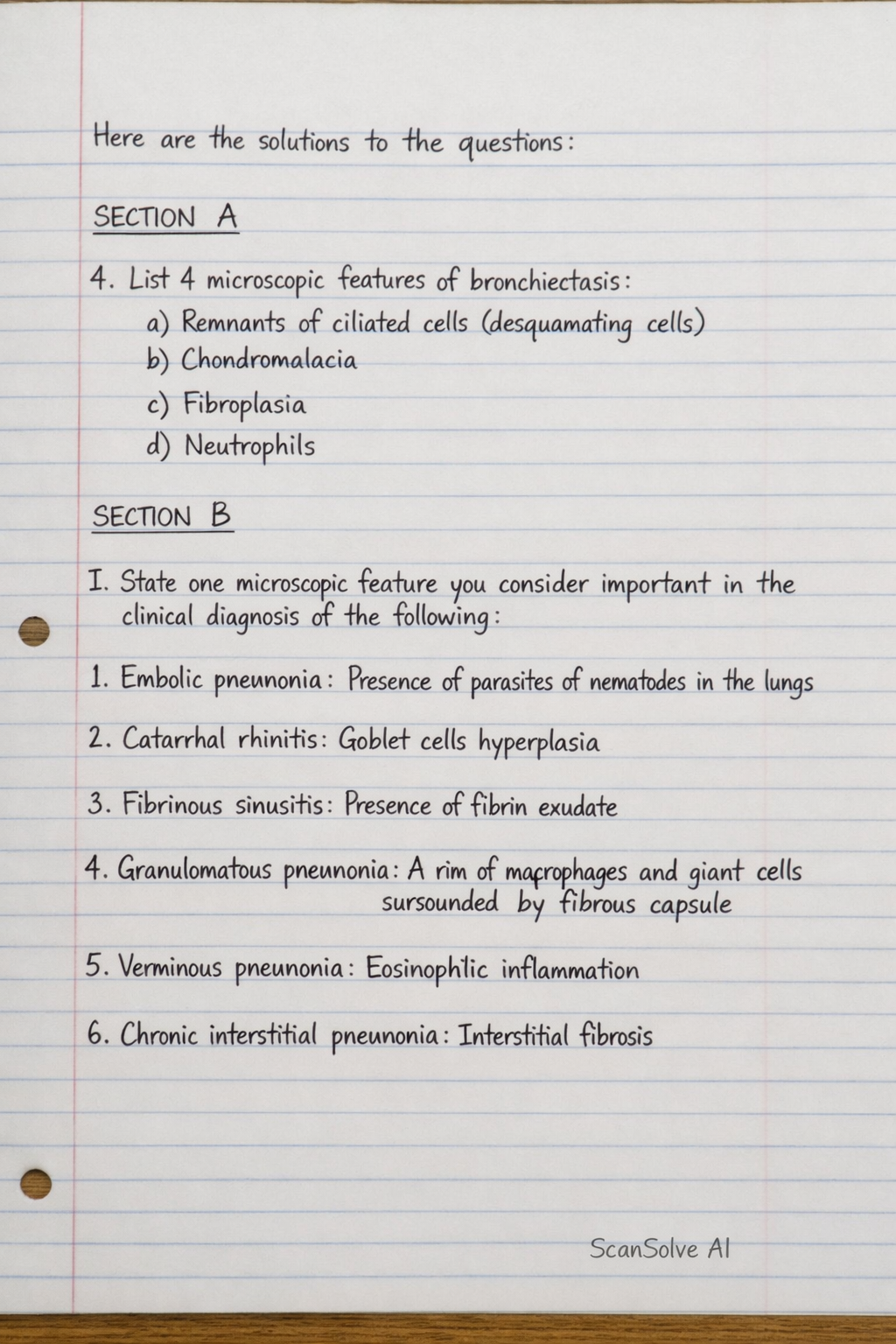
Here are the solutions to the questions:
SECTION A
- List 4 microscopic features of bronchiectasis:
- a) Remnants of ciliated cells (desquamating cells)
- b) Chondromalacia
- c) Fibroplasia
- d) Neutrophils
SECTION B
I. State one microscopic feature you consider important in the clinical diagnosis of the following:
- Embolic pneumonia: Presence of parasites of nematodes in the lungs
- Catarrhal rhinitis: Goblet cells hyperplasia
- Fibrinous sinusitis: Presence of fibrin exudate
- Granulomatous pneumonia: A rim of macrophages and giant cells surrounded by fibrous capsule
- Verminous pneumonia: Eosinophilic inflammation
- Chronic interstitial pneumonia: Interstitial fibrosis
II. State one gross feature of each of the following diseases of the respiratory system:
- CBPP: The lungs' interlobular connective tissues are thickened due to oedema and fibrin, giving the lungs a marbling appearance.
- Bovine tuberculosis: The lungs are hard on palpation.
- Anthracosis: Dark colouration of the lungs.
- Atrophic rhinitis: Atrophy of nasal turbinates.
SECTION C
-
A priced exotic pet was placed on antibiotics for a prolonged period in a bid to get rid of a nagging nasal irritation. Unfortunately, the dog developed bacterial pneumonia. Briefly trace the pathogenesis in the space below:
Prolonged antibiotic use disrupts the normal respiratory microbiota, leading to dysbiosis and the selection and overgrowth of antibiotic-resistant opportunistic bacteria, such as Bordetella bronchiseptica. The dog's compromised immunity, potentially exacerbated by chronic nasal irritation, further predisposes it to infection. These opportunistic bacteria then colonize and proliferate in the lower respiratory tract, leading to bacterial pneumonia. The resulting inflammation in the lungs is characterized by an exudate containing mucus, neutrophils, and bacteria.
Still stuck on this one?
Ask a follow-up, and the answer starts from this question.
More Biology Questions
Handwritten Step-by-Step Solution
Get this as a handwritten image on WhatsApp — like a tutor wrote it for you.
Try on WhatsApp