
We read your photo as:
Describe the main ways cells can respond to injury or stress, including adaptations, reversible and irreversible injury, accumulations, and aging.
ScanSolve AI Answer
Answer
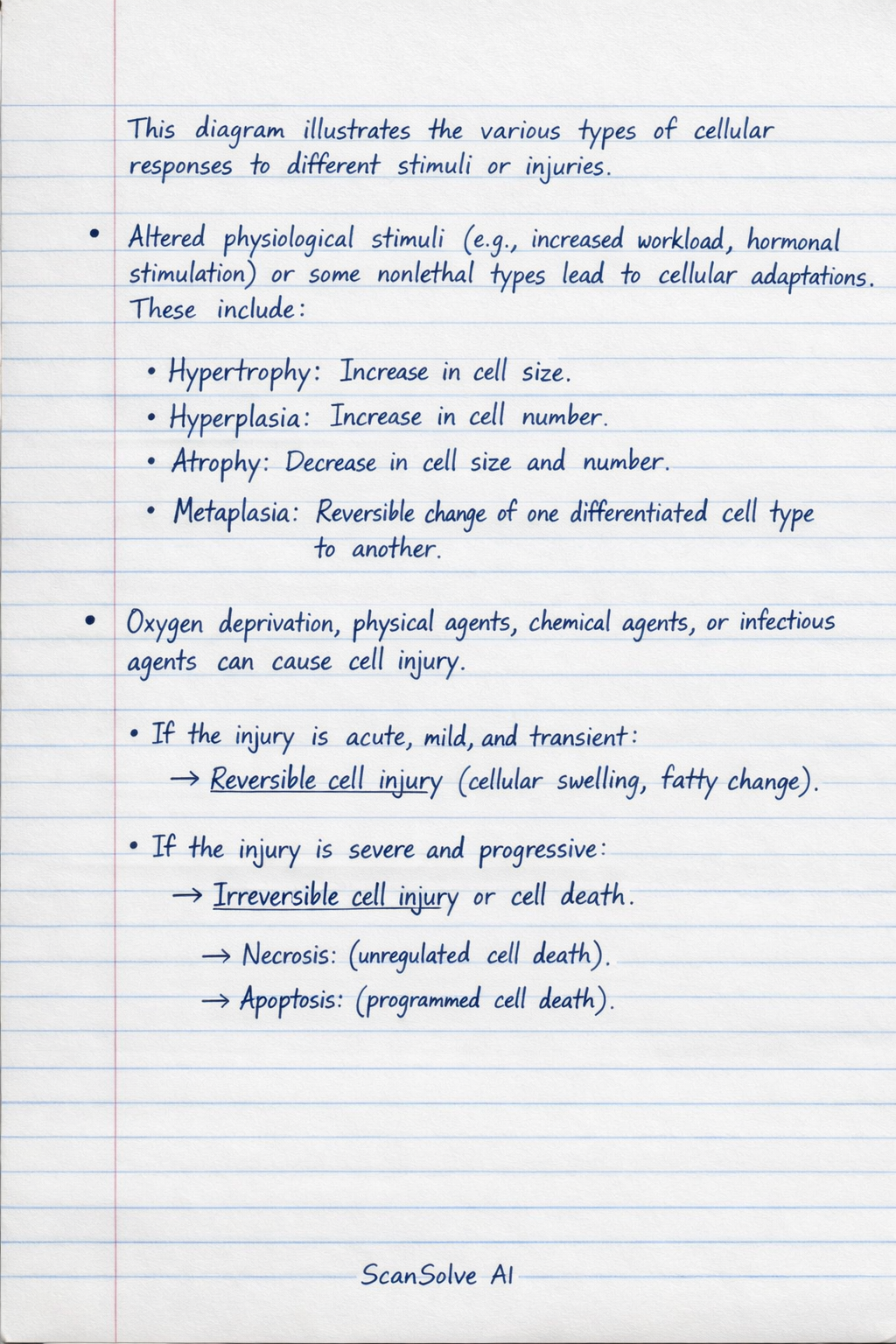
This diagram illustrates the various types of cellular responses to different stimuli or injuries.
-
Altered physiological stimuli (e.g., increased workload, hormonal stimulation) or some nonlethal types lead to cellular adaptations. These include:
- Hypertrophy: Increase in cell size.
- Hyperplasia: Increase in cell number.
- Atrophy: Decrease in cell size and number.
- Metaplasia: Reversible change of one differentiated cell type to another.
-
Oxygen deprivation, physical agents, chemical agents, or infectious agents can cause cell injury.
- If the injury is acute, mild, and transient, it results in reversible cell injury, characterized by cellular swelling and fatty change.
- If the injury is severe and progressive, it leads to irreversible cell injury or cell death, which can manifest as necrosis (unregulated cell death) or apoptosis (programmed cell death).
-
Genetic or acquired metabolic defects and chronic injury can lead to intracellular accumulations of substances like glycogen, proteins, or pigments. They can also cause pathological calcification, which can be dystrophic (in damaged tissues) or metastatic (due to high calcium levels).
-
Cumulative long sublethal injury contributes to cellular aging.
A normal cell maintains a steady state called homeostasis. The cellular response to injury is influenced by the type of injury, its duration, and its severity.
Still stuck on this one?
Ask a follow-up, and the answer starts from this question.
More Biology Questions
Handwritten Step-by-Step Solution
Get this as a handwritten image on WhatsApp — like a tutor wrote it for you.
Try on WhatsApp