
We read your photo as:
Define and explain key terms in food and nutrition including metabolism, balanced diet, malnutrition, macronutrients, cutlery, catabolism, anabolism, diet therapy, and under-nutrition.
Biology
ScanSolve AI Answer
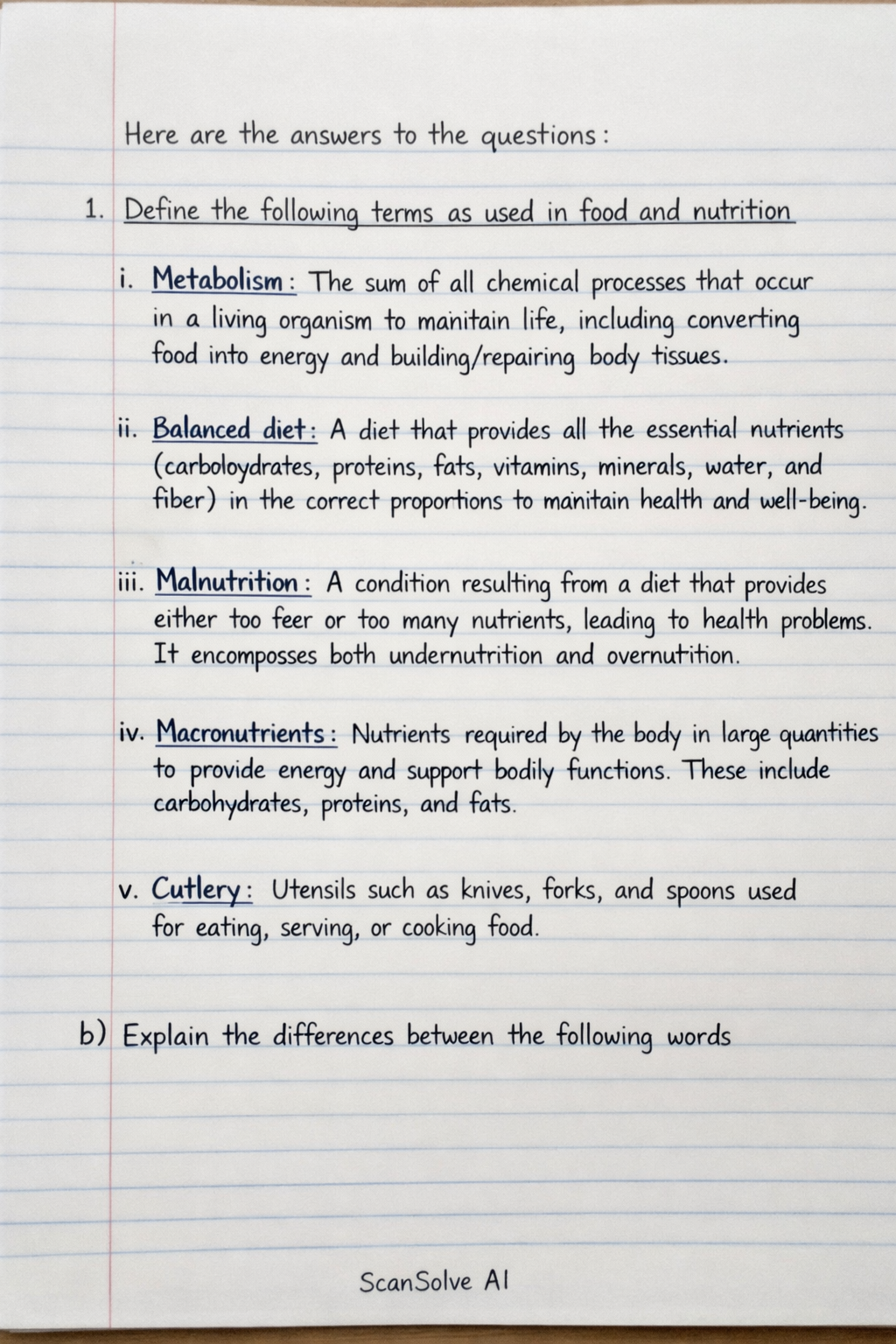
Here are the answers to the questions:
1. Define the following terms as used in food and nutrition
- i. Metabolism: The sum of all chemical processes that occur in a living organism to maintain life, including converting food into energy and building/repairing body tissues.
- ii. Balanced diet: A diet that provides all the essential nutrients (carbohydrates, proteins, fats, vitamins, minerals, water, and fiber) in the correct proportions to maintain health and well-being.
- iii. Malnutrition: A condition resulting from a diet that provides either too few or too many nutrients, leading to health problems. It encompasses both undernutrition and overnutrition.
- iv. Macronutrients: Nutrients required by the body in large quantities to provide energy and support bodily functions. These include carbohydrates, proteins, and fats.
- v. Cutlery: Utensils such as knives, forks, and spoons used for eating, serving, or cooking food.
b) Explain the differences between the following words
- i. Catabolism and Anabolism:
- Catabolism refers to metabolic processes that break down complex molecules into simpler ones, releasing energy (e.g., digestion).
- Anabolism refers to metabolic processes that build complex molecules from simpler ones, requiring energy (e.g., protein synthesis).
- ii. Diet therapy and Under-nutrition:
- Diet therapy is the use of specific dietary modifications to treat or prevent diseases and manage health conditions.
- Under-nutrition is a form of malnutrition caused by insufficient intake of energy and essential nutrients, leading to nutrient deficiencies, weight loss, or stunted growth.
c) List three (3) functions of protein
-
- Growth and repair of body tissues.
-
- Production of enzymes, hormones, and other body chemicals.
-
- Transport of nutrients and oxygen throughout the body.
Functions of the following vitamins:
- i. Vitamin D: Essential for the absorption of calcium and phosphorus, crucial for bone health and immune function.
- ii. Vitamin B1 (Thiamine): Plays a vital role in energy metabolism, converting carbohydrates into energy, and supporting nerve function.
- iii. Folic acid (Vitamin B9): Crucial for cell division, DNA synthesis, and the formation of red blood cells, especially important during pregnancy.
- iv. Vitamin C (Ascorbic acid): An antioxidant essential for collagen synthesis, wound healing, immune function, and iron absorption.
Was this helpful?
Still stuck on this one?
Ask a follow-up, and the answer starts from this question.
Got a different question?Ask your own question
More Biology Questions
QDefine and explain the differences between the following terms as used in food and nutrition…QDefine the following: Oxidation, Nutrition, Metabolism, Malnutrition, Balanced diet. Differentiate…QWhat are the key processes and definitions related to digestion and nutrition, including mechanical…QDefine malnutrition and describe its main types.QDefine the following terms as used in Food Science and Nutrition: quality control, quality…
Handwritten Step-by-Step Solution
Get this as a handwritten image on WhatsApp — like a tutor wrote it for you.
Try on WhatsApp