

This biology question covers important biological concepts and processes. The step-by-step explanation below helps you understand the underlying mechanisms and reasoning.
ScanSolve AI Answer
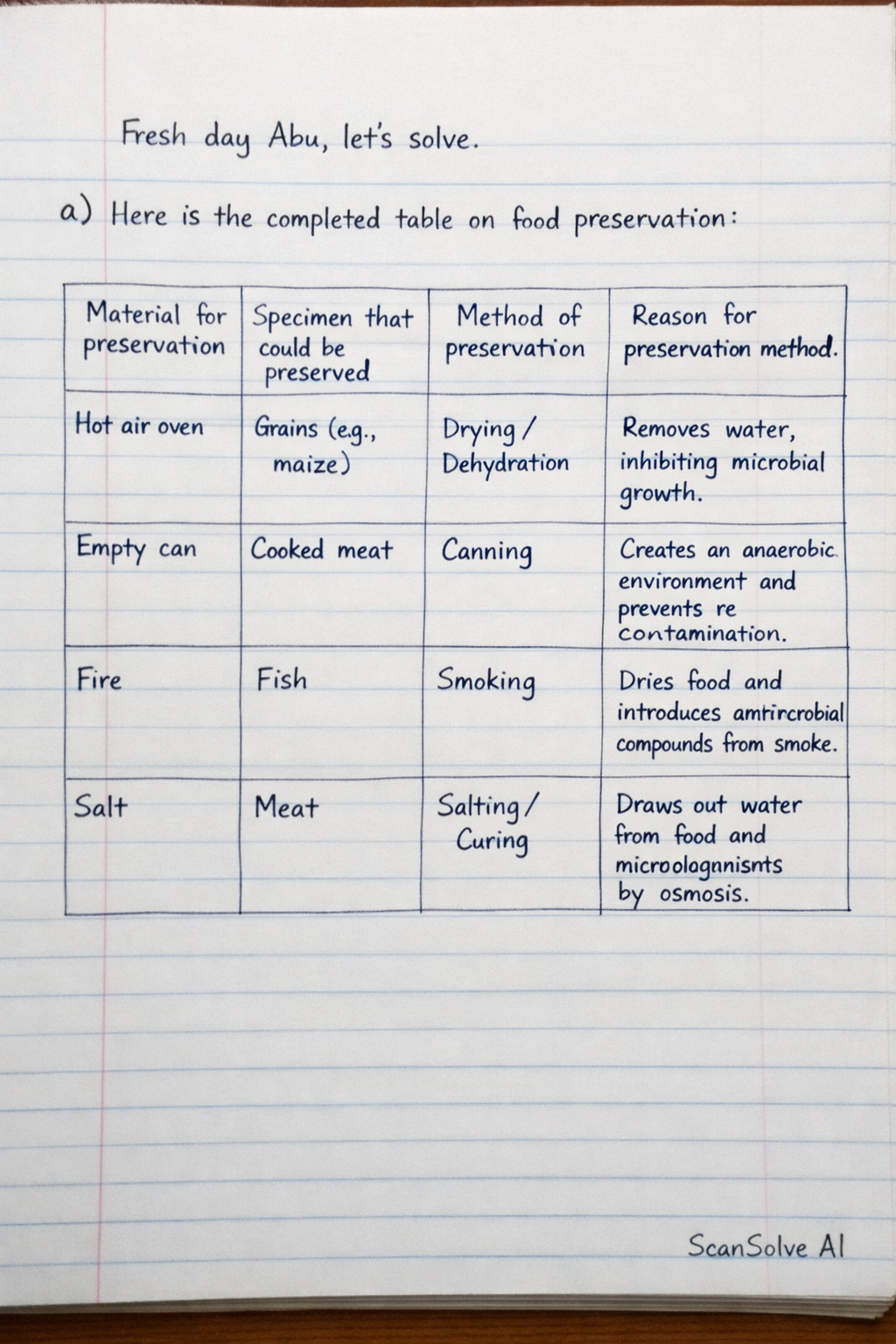
a) Here is the completed table on food preservation: | Material for preservation | One specimen that could be preserved with material | Name of method of preservation | One reason for preservation method | | :------------------------ | :------------------------------------------------ | :----------------------------- | :--------------------------------- | | Hot air oven | Grains (e.g., maize) | Drying/Dehydration | Removes water, inhibiting microbial growth. | | Empty can | Cooked meat | Canning | Creates an anaerobic environment and prevents re-contamination. | | Fire | Fish | Smoking | Dries food and introduces antimicrobial compounds from smoke. | | Salt | Meat | Salting/Curing | Draws out water from food and microorganisms by osmosis. | | Refrigerator | Fresh vegetables | Refrigeration/Chilling | Low temperature slows down microbial growth and enzyme activity. | b) Assuming "specimen P" refers to a spoiled food item, two groups of microorganisms responsible for its state are: • Bacteria • Fungi (Moulds and Yeasts) c) Assuming "specimen L" refers to a stored food item like grains or dried produce, two storage pests are: • Weevils (e.g., grain weevils) • Rats/Mice (Rodents) Drop the next question.