
We read your photo as:
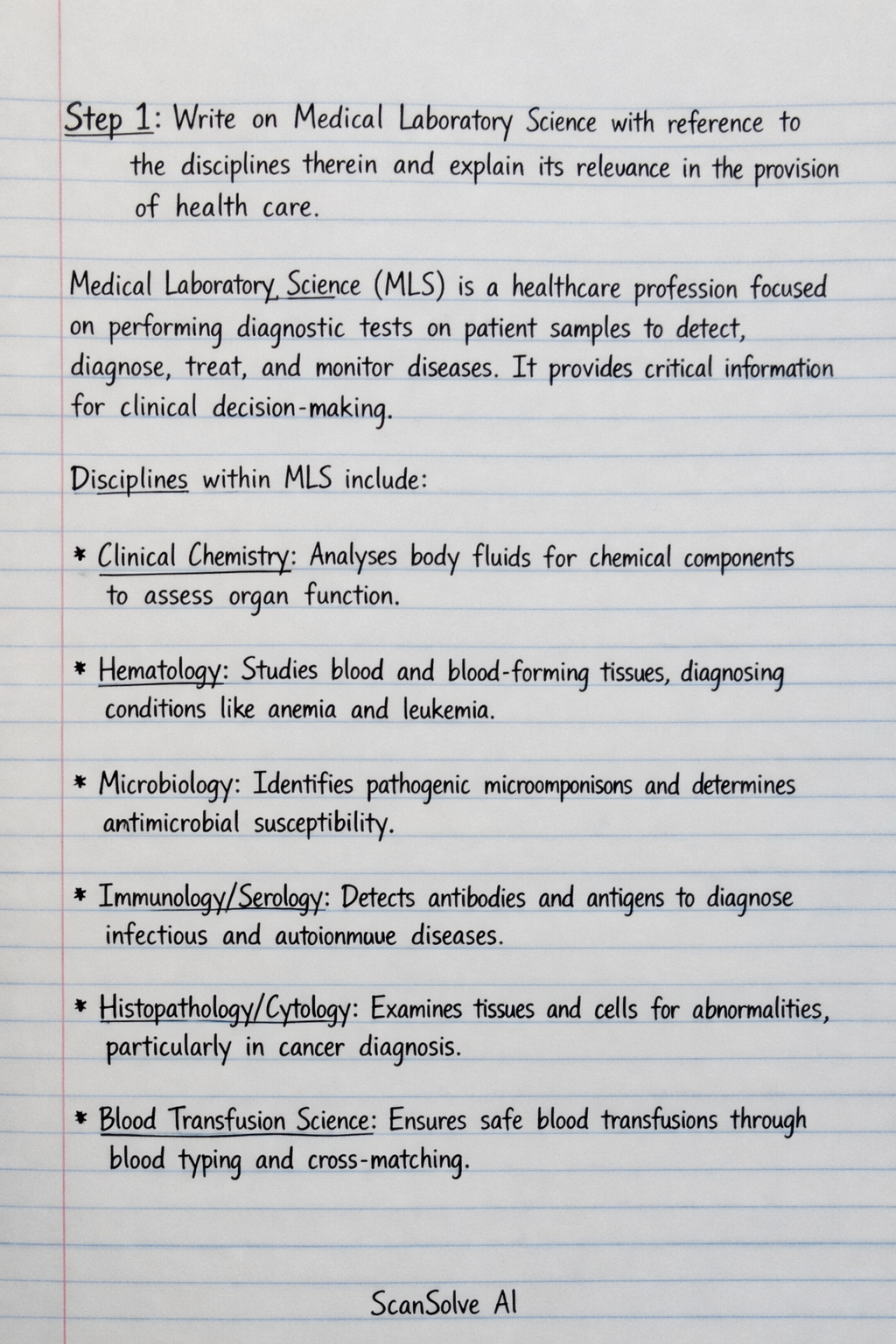
Write on Medical Laboratory Science with reference to the disciplines therein and explain its relevance in the provision of healthcare.
ScanSolve AI Answer
Step-by-step solution
2 stepsWrite on Medical Laboratory Science with reference to the disciplines therein and explain its relevance in the provision of health care.
Medical Laboratory Science (MLS) is a healthcare profession focused on performing diagnostic tests on patient samples to detect, diagnose, treat, and monitor diseases. It provides critical information for clinical decision-making.
Disciplines within MLS include:
- Clinical Chemistry: Analyzes body fluids for chemical components to assess organ function.
- Hematology: Studies blood and blood-forming tissues, diagnosing conditions like anemia and leukemia.
- Microbiology: Identifies pathogenic microorganisms and determines antimicrobial susceptibility.
- Immunology/Serology: Detects antibodies and antigens to diagnose infectious and autoimmune diseases.
- Histopathology/Cytology: Examines tissues and cells for abnormalities, particularly in cancer diagnosis.
- Blood Transfusion Science: Ensures safe blood transfusions through blood typing and cross-matching.
- Molecular Diagnostics: Uses molecular techniques to detect genetic mutations and infectious agents.
Relevance in Healthcare: MLS is fundamental to healthcare, guiding approximately 70% of all medical decisions. It enables early disease detection, informs treatment selection, monitors disease progression, and supports public health initiatives by providing accurate and timely diagnostic data.
Define Hematology and write short note on the branches of hematology.
Hematology is the branch of medical science concerned with the study of blood, blood-forming organs, and blood diseases. It involves the diagnosis, treatment, and prevention of disorders related to blood components and their production.
Branches of Hematology:
- General Hematology: Focuses on routine blood tests like complete blood count (CBC) to diagnose common blood disorders such as anemia and infections.
- Coagulation/Hemostasis: Specializes in blood clotting mechanisms, diagnosing and managing bleeding disorders (e.g., hemophilia) and thrombotic conditions.
- Immunohematology/Blood Transfusion Science: Deals with blood group antigens and antibodies
Still stuck on this one?
Ask a follow-up, and the answer starts from this question.
More Biology Questions
Handwritten Step-by-Step Solution
Get this as a handwritten image on WhatsApp — like a tutor wrote it for you.
Try on WhatsApp