
We read your photo as:
Write on Medical Laboratory Science with reference to the disciplines therein and explain its relevance in the provision of health care.
ScanSolve AI Answer
Answer
Q1. Write on Medical Laboratory Science with reference to the disciplines therein and explain its relevance in the provision of health care.
Medical Laboratory Science (MLS) is a healthcare profession that involves performing diagnostic analyses on patient samples (blood, urine, tissues, etc.) to detect, diagnose, monitor, and treat diseases. It encompasses various specialized disciplines, each focusing on specific aspects of laboratory testing.
-
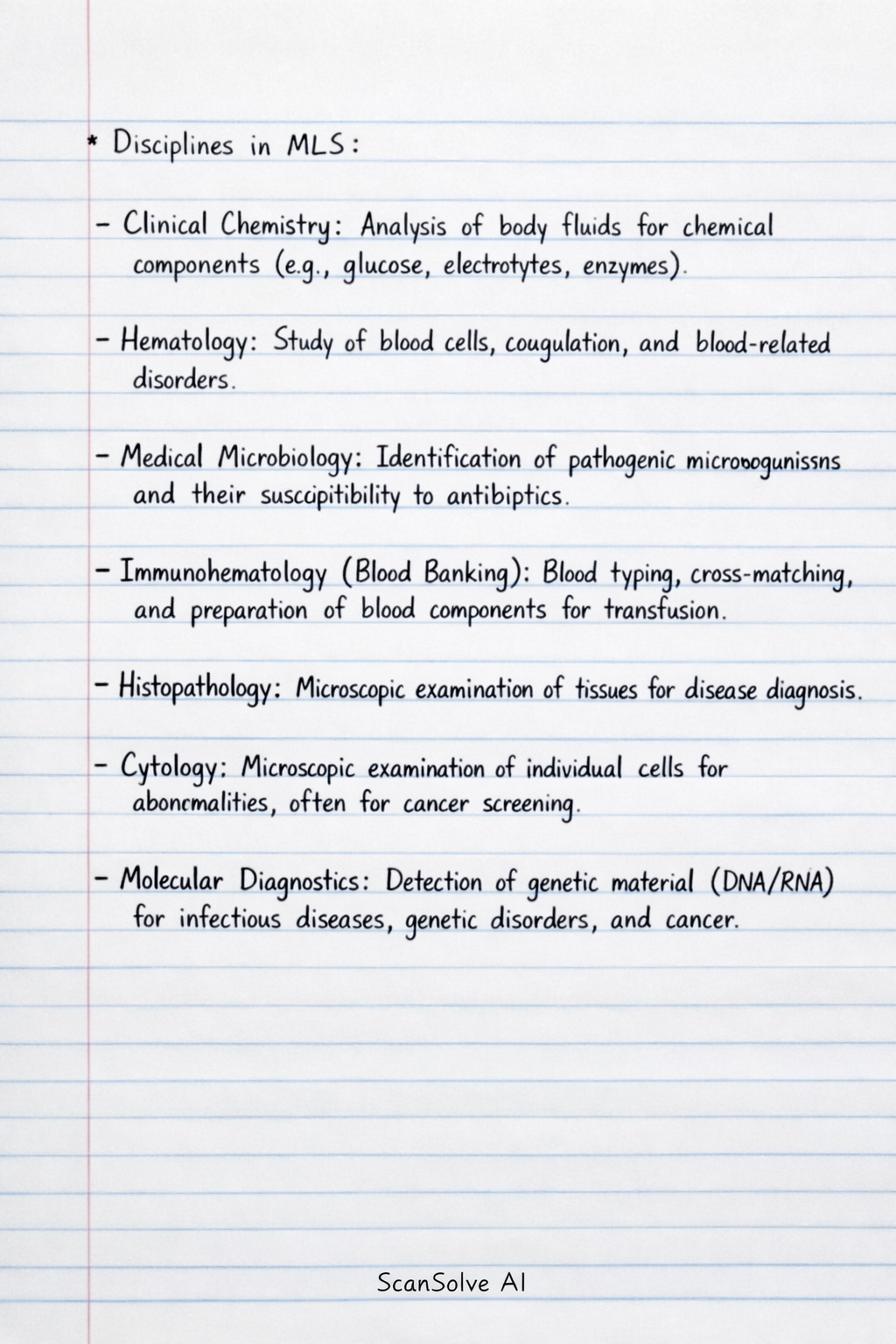
Disciplines in MLS:
- Clinical Chemistry: Analysis of body fluids for chemical components (e.g., glucose, electrolytes, enzymes).
- Hematology: Study of blood cells, coagulation, and blood-related disorders.
- Medical Microbiology: Identification of pathogenic microorganisms and their susceptibility to antibiotics.
- Immunohematology (Blood Banking): Blood typing, cross-matching, and preparation of blood components for transfusion.
- Histopathology: Microscopic examination of tissues for disease diagnosis.
- Cytology: Microscopic examination of individual cells for abnormalities, often for cancer screening.
- Molecular Diagnostics: Detection of genetic material (DNA/RNA) for infectious diseases, genetic disorders, and cancer.
-
Relevance in Healthcare: Medical Laboratory Science is crucial for evidence-based medicine. Laboratory results provide essential information for:
- Diagnosis: Identifying the cause of a patient's symptoms.
- Prognosis: Predicting the likely course of a disease.
- Treatment Monitoring: Assessing the effectiveness of therapies and adjusting dosages.
- Disease Prevention: Screening for early detection of diseases.
- Public Health: Monitoring disease outbreaks and population health trends. Without accurate and timely laboratory results, effective patient care would be severely compromised.
Q2. Define Hematology and write short note on the branches of hematology.
-
Hematology: Hematology is the branch of medical science concerned with the study of blood, blood-forming organs (bone marrow, spleen, lymph nodes), and blood diseases. It involves the analysis of blood components, their formation, function, and disorders.
-
Branches of Hematology:
- General Hematology: Focuses on routine blood tests like complete blood count (CBC), erythrocyte sedimentation rate (ESR), and peripheral blood smear examination to diagnose common blood disorders such as anemia, infections, and inflammatory conditions.
- Coagulation: Deals with the study of blood clotting mechanisms, bleeding disorders (e.g., hemophilia), and thrombotic conditions (e.g., deep vein thrombosis). Tests include prothrombin time (PT) and activated partial thromboplastin time (APTT).
- Hemato-oncology: Specializes in the diagnosis and management of blood cancers, including leukemias, lymphomas, and multiple myeloma. This branch often involves bone marrow biopsies and specialized genetic testing.
- Transfusion Medicine (Immunohematology): Involves blood typing, cross-matching, antibody screening, and the safe administration of blood and blood components to patients. It ensures compatibility and prevents transfusion reactions.
- Molecular Hematology: Utilizes molecular techniques to diagnose and monitor hematological disorders, particularly genetic conditions and cancers, by analyzing DNA and RNA.
Q3. In a tabular form, differentiate between the following: Histology, Histopathology, Histochemistry, Oncology and Cytology.
| Term | Definition
Still stuck on this one?
Ask a follow-up, and the answer starts from this question.
More Biology Questions
Handwritten Step-by-Step Solution
Get this as a handwritten image on WhatsApp — like a tutor wrote it for you.
Try on WhatsApp