
We read your photo as:
Outline THREE social concerns regarding Genetically Modified Organisms (GMOs). Give TWO implications of the use of GMO technology to improve plants in South Africa. Identify the genetic modification t
ScanSolve AI Answer
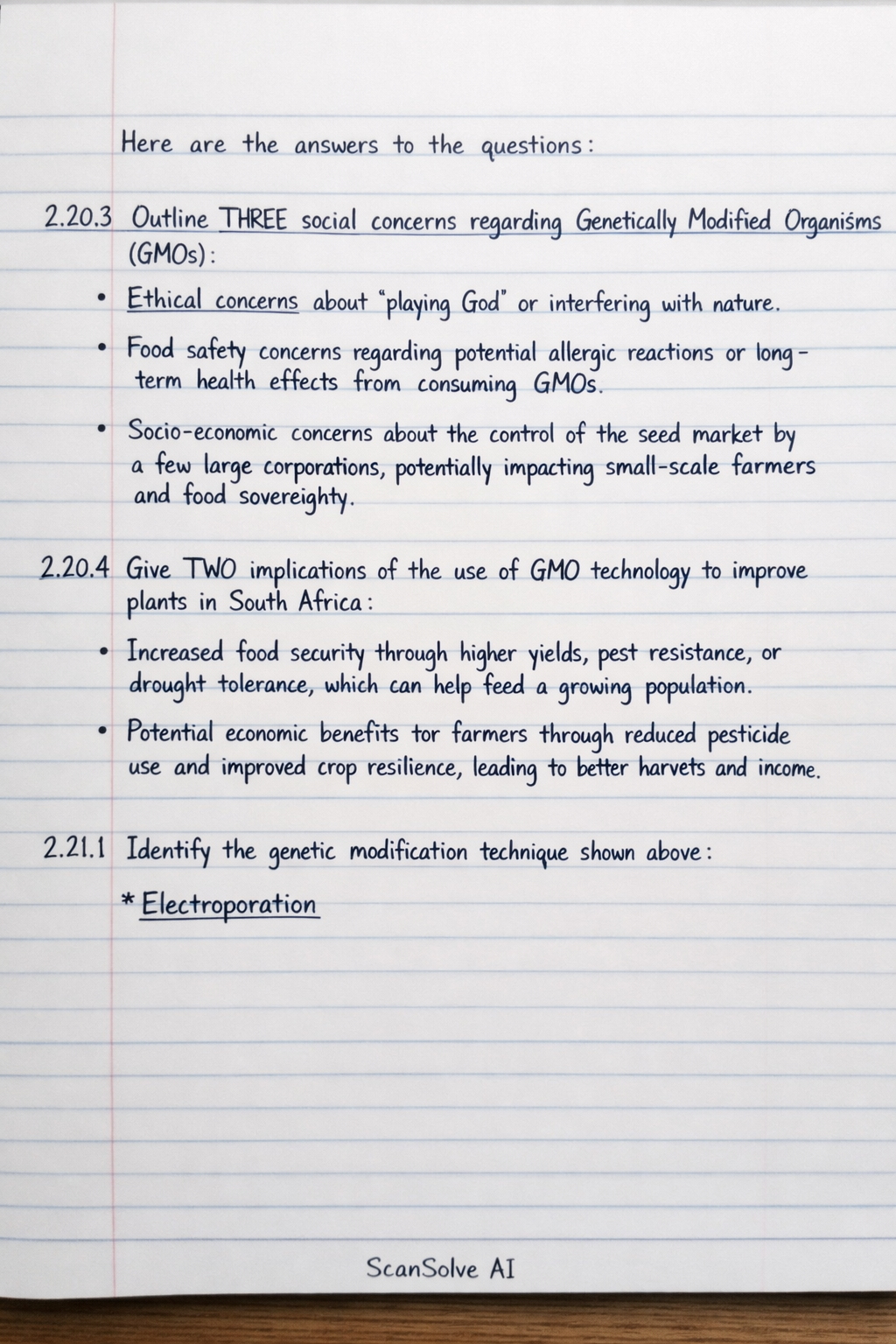
Here are the answers to the questions:
2.20.3 Outline THREE social concerns regarding Genetically Modified Organisms (GMOs).
- Ethical concerns about "playing God" or interfering with nature.
- Food safety concerns regarding potential allergic reactions or long-term health effects from consuming GMOs.
- Socio-economic concerns about the control of the seed market by a few large corporations, potentially impacting small-scale farmers and food sovereignty.
2.20.4 Give TWO implications of the use of GMO technology to improve plants in South Africa.
- Increased food security through higher yields, pest resistance, or drought tolerance, which can help feed a growing population.
- Potential economic benefits for farmers through reduced pesticide use and improved crop resilience, leading to better harvests and income.
2.21.1 Identify the genetic modification technique shown above.
- Electroporation
2.21.2 Motivate your answer.
- The diagram clearly shows the application of an "Electric shock" to cells, which is the defining characteristic of electroporation used to create temporary pores in cell membranes for the uptake of foreign DNA.
2.21.3 Comment on the suitability of plant improvement methods such as the one above for use in African countries.
- These methods are potentially suitable for African countries as they can address critical issues like food security, malnutrition, and crop losses due to pests and harsh environmental conditions. However, their implementation faces challenges such as the high cost of technology, the need for specialized expertise, and concerns about intellectual property rights and dependence on foreign companies.
2.21.4 Describe TWO aims of such methods.
- To introduce desirable traits into plants, such as resistance to pests, diseases, or herbicides.
- To enhance the nutritional value of crops or improve their tolerance to environmental stresses like drought or salinity.
2.21.5 Classify the potential risks associated with the plant improvement methods like the one depicted above into THREE.
- Environmental risks: Potential for gene flow to wild relatives, leading to the creation of "superweeds" or affecting biodiversity.
- Health risks: Possible allergic reactions in consumers or the creation of new toxins in genetically modified foods.
- Socio-economic risks: Increased dependence of farmers on specific seed companies and potential loss of traditional crop varieties.
2.22.1 Name TWO potential risks of genetically modified crops to the environment.
- Gene flow from GM crops to wild relatives or conventional crops, potentially leading to herbicide-resistant weeds or altered ecosystems.
- Harm to non-target organisms, such as beneficial insects, if the GM crop produces toxins (e.g., Bt toxins) that affect them.
2.22.2 Indicate TWO benefits of genetically modified crops.
- Increased crop yields and reduced crop losses due to enhanced resistance to pests and diseases.
- Improved nutritional content of food, such as Golden Rice engineered to produce Vitamin A, addressing deficiencies.
Still stuck on this one?
Ask a follow-up, and the answer starts from this question.
More Biology Questions
Handwritten Step-by-Step Solution
Get this as a handwritten image on WhatsApp — like a tutor wrote it for you.
Try on WhatsApp