
We read your photo as:
Ovulation, the release of an egg, is a rapid event. The egg is typically viable for fertilization for approximately 12-24 hours after its release.
Biology
ScanSolve AI Answer
Here are the answers to your questions:
- Ovulation, the release of an egg, is a rapid event. The egg is typically viable for fertilization for approximately 12-24 hours after its release.
- Menstruation is the monthly shedding of the uterine lining (endometrium) through the vagina. This process occurs when a fertilized egg does not implant in the uterus, marking the beginning of a new menstrual cycle.
- Menstruation is regulated by hormones. Specifically, the cycle is controlled by the interplay of Follicle-Stimulating Hormone (FSH), Luteinizing Hormone (LH), estrogen, and progesterone.
Was this helpful?
Still stuck on this one?
Ask a follow-up, and the answer starts from this question.
Got a different question?Ask your own question
More Biology Questions
QA female sex cell before it is fertilized is called an ovum or egg cell.QWhat are the roles of ovulation timing and the factors that affect itQExplain the significance of cervical mucus changes during the fertile window and why male awareness…QIdentify all roles played by that ovulation timing and all factors affect itQWhat is ovulation, menstruation, and the hormones involved in the menstrual cycle?
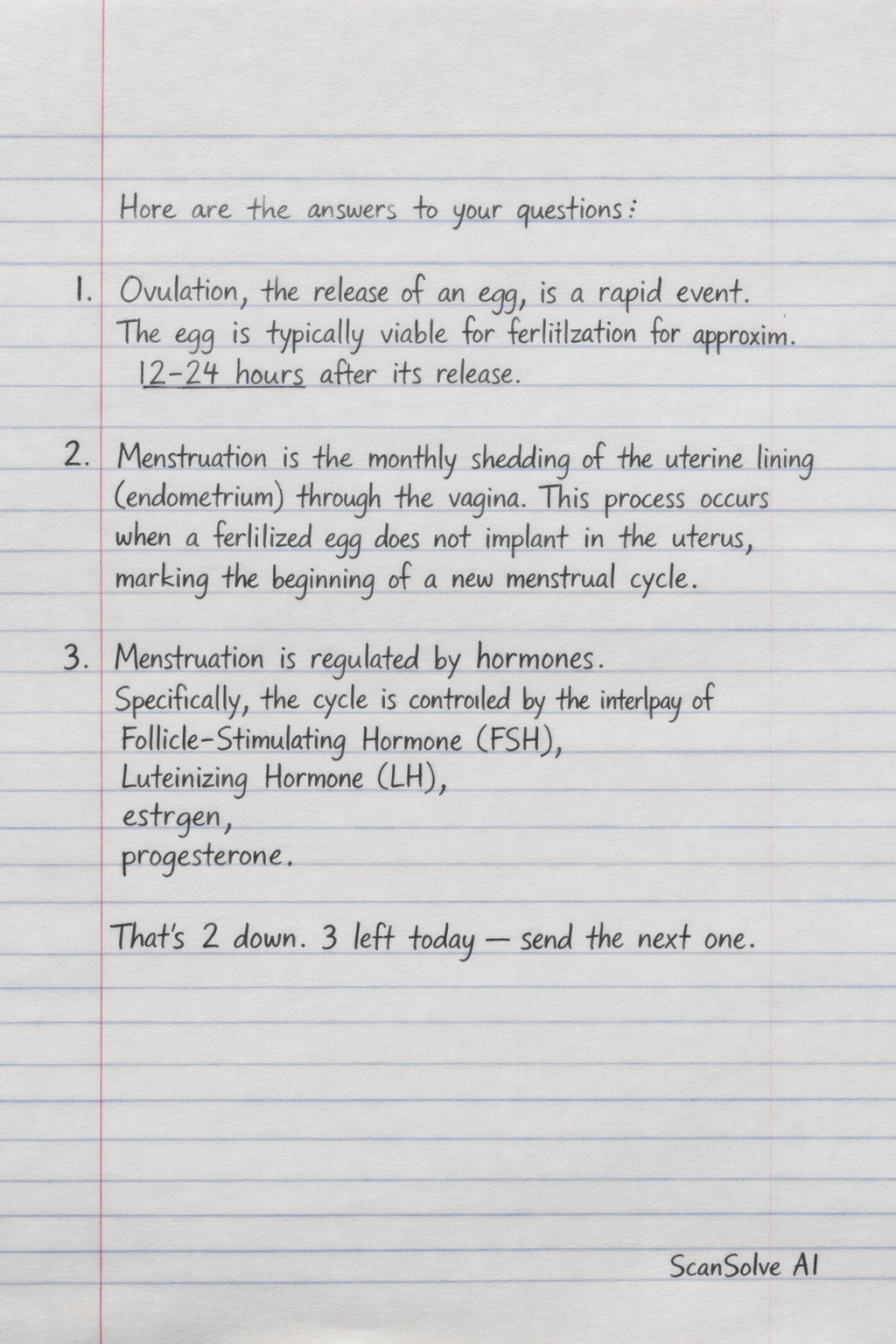
Handwritten Step-by-Step Solution
Get this as a handwritten image on WhatsApp — like a tutor wrote it for you.
Try on WhatsApp