

This biology question covers important biological concepts and processes. The step-by-step explanation below helps you understand the underlying mechanisms and reasoning.
ScanSolve AI Answer
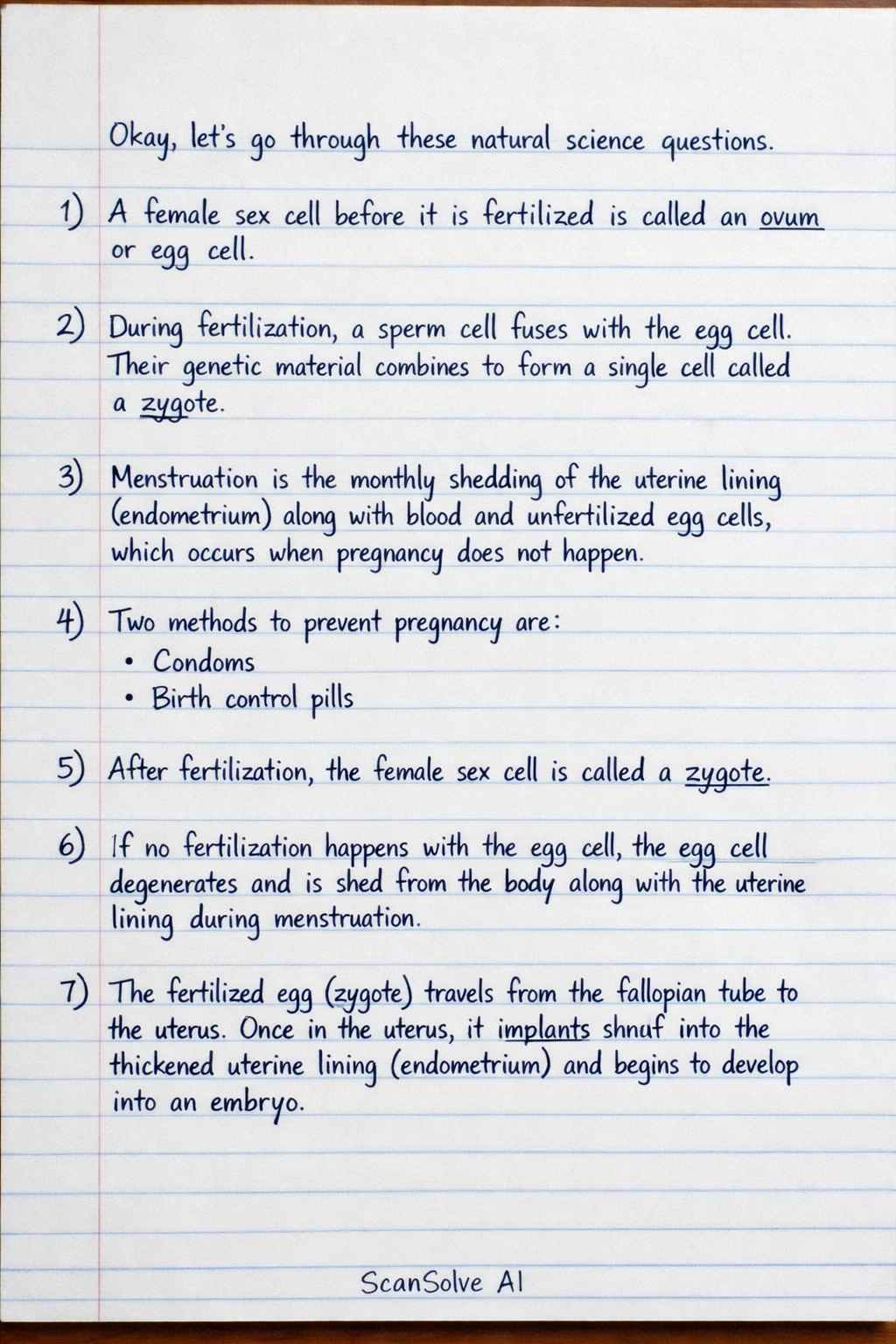
Okay, let's go through these natural science questions. 1) A female sex cell before it is fertilized is called an ovum or egg cell. 2) During fertilization, a sperm cell fuses with the egg cell. Their genetic material combines to form a single cell called a zygote. 3) Menstruation is the monthly shedding of the uterine lining (endometrium) along with blood and unfertilized egg cells, which occurs when pregnancy does not happen. 4) Two methods to prevent pregnancy are: • Condoms • Birth control pills 5) After fertilization, the female sex cell is called a zygote. 6) If no fertilization happens with the egg cell, the egg cell degenerates and is shed from the body along with the uterine lining during menstruation. 7) The fertilized egg (zygote) travels from the fallopian tube to the uterus. Once in the uterus, it implants itself into the thickened uterine lining (endometrium) and begins to develop into an embryo. 8) The uterine lining (endometrium) is crucial for pregnancy because it provides a nutrient-rich environment and a secure site for the implantation of the fertilized egg. It nourishes the developing embryo in its early stages. 9) The body's preparation for pregnancy involves the thickening of the uterine lining, which becomes rich in blood vessels and nutrients. If pregnancy does not occur, this prepared lining is shed during menstruation, and the cycle begins anew. 10) The condition that occurs between conception and birth is called pregnancy. 3 done, 2 left today. You're making progress.