
We read your photo as:
Prepare a list of non-communicable diseases that are finding in your community. Present your list in the class and make a discussion for the prevention.
ScanSolve AI Answer
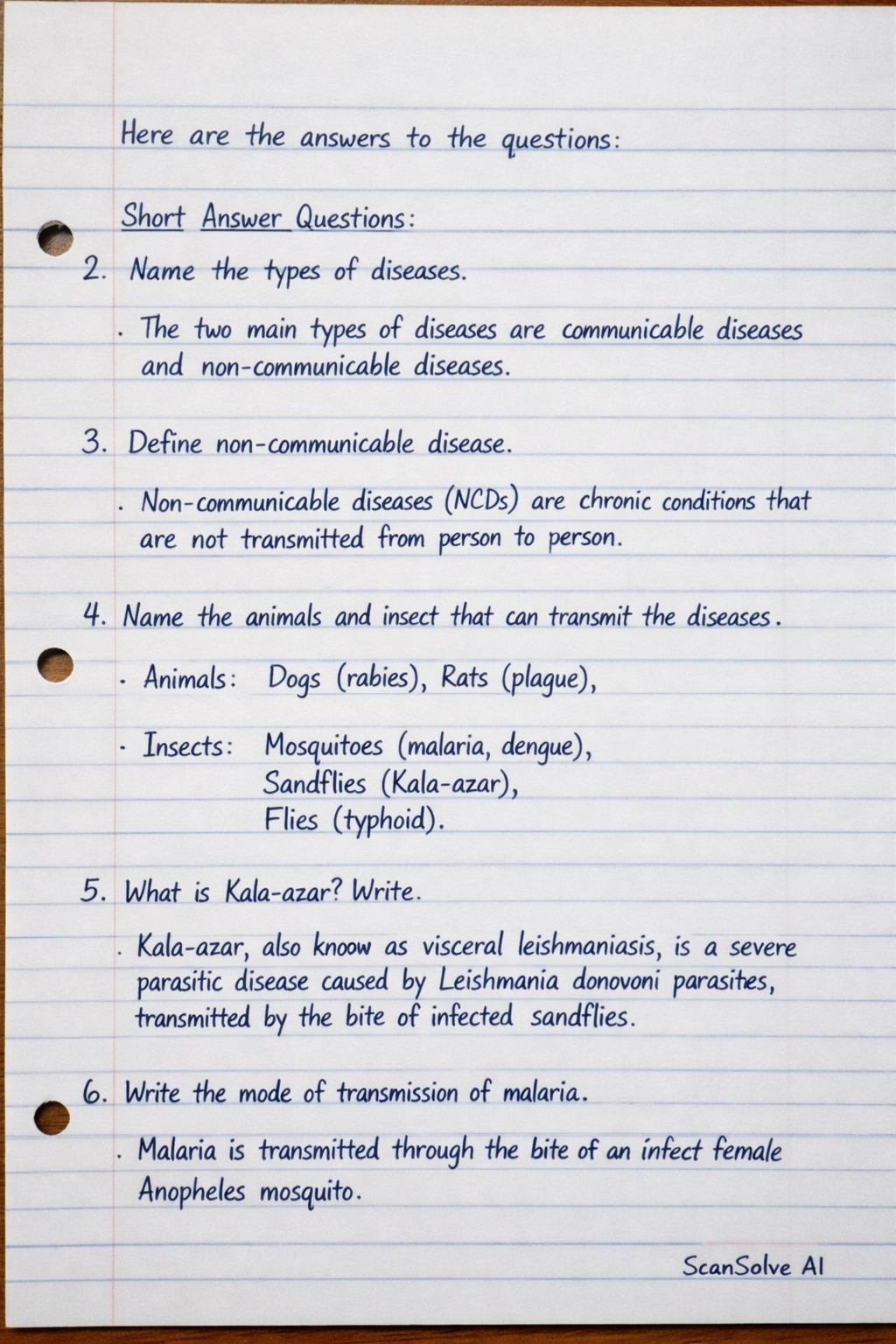
Here are the answers to the questions:
Short Answer Questions:
-
Name the types of diseases.
- The two main types of diseases are communicable diseases and non-communicable diseases.
-
Define non-communicable disease.
- Non-communicable diseases (NCDs) are chronic conditions that are not transmitted from person to person.
-
Name the animals and insect that can transmit the diseases.
- Animals: Dogs (rabies), Rats (plague).
- Insects: Mosquitoes (malaria, dengue), Sandflies (Kala-azar), Flies (typhoid).
-
What is Kala-azar? Write.
- Kala-azar, also known as visceral leishmaniasis, is a severe parasitic disease caused by Leishmania donovani parasites, transmitted by the bite of infected sandflies.
-
Write the mode of transmission of malaria.
- Malaria is transmitted through the bite of an infected female Anopheles mosquito.
-
What is rabies? Define.
- Rabies is a viral disease that causes inflammation of the brain and spinal cord, primarily transmitted through the saliva of infected animals, usually via a bite.
-
What is non-communicable disease?
- Non-communicable diseases (NCDs) are chronic conditions that are not spread from person to person and are often long-lasting, resulting from a combination of genetic, physiological, environmental, and behavioral factors.
-
List the causes of non-communicable disease.
- Causes include unhealthy diet, lack of physical activity, tobacco use, excessive alcohol consumption, genetic predisposition, and environmental pollution.
Long Answer Questions:
-
What are the modes of transmission of the diseases?
- Diseases can be transmitted through various modes:
- Direct contact: Such as skin-to-skin contact, sexual contact, or droplet spread from coughing and sneezing.
- Indirect contact: Involving contaminated objects (fomites), airborne particles, vector-borne transmission (via insects or animals), or through contaminated food and water.
- Vertical transmission: From a mother to her child during pregnancy, childbirth, or breastfeeding.
- Diseases can be transmitted through various modes:
-
Explain the preventive measures to control the diseases that transmit through direct contact.
- Preventive measures for diseases transmitted through direct contact include:
- Practicing frequent handwashing with soap and water.
- Avoiding close physical contact with individuals who are sick.
- Practicing safe sex to prevent sexually transmitted infections.
- Covering coughs and sneezes with a tissue or the elbow to prevent droplet spread.
- Ensuring vaccination against specific diseases where available.
- Preventive measures for diseases transmitted through direct contact include:
-
What are the symptoms of Kala-azar?
- Symptoms of Kala-azar typically include:
- Prolonged and irregular fever.
- Significant weight loss.
- Enlargement of the spleen (splenomegaly) and liver (hepatomegaly).
- Anemia, leading to paleness and fatigue.
- Darkening of the skin in some cases, which gives the disease its name ("black fever").
- Symptoms of Kala-azar typically include:
-
Write the preventive measures of Kala-azar.
- Preventive measures for Kala-azar include:
- Vector control: Using insecticides, insecticide-treated bed nets, and repellents to protect against sandfly bites.
- Early diagnosis and treatment of infected individuals to reduce the parasite reservoir in the community.
- Environmental management: Clearing vegetation and debris around homes to reduce sandfly breeding sites.
- Personal protection: Wearing long-sleeved clothing and trousers, especially from dusk to dawn when sandflies are most active.
- Preventive measures for Kala-azar include:
-
What are the symptoms of malaria?
- Symptoms of malaria typically include:
- Fever, often characterized by cyclical episodes of chills, high fever, and profuse sweating.
- Headache and muscle aches.
- Fatigue and general malaise.
- Nausea and vomiting.
- In severe cases, symptoms can progress to anemia, jaundice, seizures, and coma.
- Symptoms of malaria typically include:
-
Write the preventive methods of malaria in points.
- Preventive methods of malaria include:
- Using insecticide-treated bed nets (ITNs) while sleeping.
- Implementing indoor residual spraying (IRS) with insecticides in homes.
- Taking antimalarial drugs for prophylaxis when traveling to malaria-endemic areas.
- Eliminating mosquito breeding sites by draining stagnant water and proper waste management.
- Wearing protective clothing and using insect repellents when outdoors, especially during peak mosquito activity.
- Preventive methods of malaria include:
-
Tell the symptoms of rabies.
- Symptoms of rabies in humans typically progress in stages:
- Early symptoms: Fever, headache, general weakness, and discomfort or tingling at the site of the bite.
- Later symptoms: Hydrophobia (fear of water), aerophobia (fear of fresh air), hallucinations, agitation, paralysis, and eventually coma and death.
- Symptoms of rabies in humans typically progress in stages:
-
What are the preventive methods of rabies?
- Preventive methods of rabies include:
- Vaccinating domestic animals, particularly dogs and cats, against rabies.
- Avoiding contact with wild animals that may carry the virus.
- Administering post-exposure prophylaxis (PEP) for humans after potential exposure, which involves thorough wound cleaning, a series of rabies vaccines, and rabies immunoglobulin.
- Implementing public awareness campaigns to educate people about rabies prevention and what to do if bitten by an animal.
- Preventive methods of rabies include:
-
Write the preventive measures of non-communicable disease.
- Preventive measures for non-communicable diseases include:
- Adopting a healthy and balanced diet rich in fruits, vegetables, and whole grains, while limiting processed foods, sugar, and unhealthy fats.
- Engaging in regular physical activity for at least 30 minutes most days of the week.
- Avoiding tobacco use in all forms and limiting alcohol consumption.
- Maintaining a healthy body weight through diet and exercise.
- Undergoing regular health screenings for early detection and management of risk factors like high blood pressure or diabetes.
- Preventive measures for non-communicable diseases include:
-
Write the symptoms of common cold.
- Symptoms of common cold typically include:
- Runny or stuffy nose.
- Sore throat.
- Cough and sneezing.
- Mild body aches or headache.
- Sometimes a low-grade fever.
- General feeling of malaise or fatigue.
- Symptoms of common cold typically include:
-
What are the preventive methods of common cold?
- Preventive methods for common cold include:
- Frequent handwashing with soap and water, especially after coughing, sneezing, or touching public surfaces.
- Avoiding touching the face (eyes, nose, mouth) to prevent germ transfer.
- Avoiding close contact with individuals who are sick.
- Disinfecting frequently touched surfaces in homes and workplaces.
- Maintaining a healthy lifestyle with adequate sleep, a balanced diet, and regular exercise to support the immune system.
- Preventive methods for common cold include:
Still stuck on this one?
Ask a follow-up, and the answer starts from this question.
More Biology Questions
Handwritten Step-by-Step Solution
Get this as a handwritten image on WhatsApp — like a tutor wrote it for you.
Try on WhatsApp