

This biology question covers important biological concepts and processes. The step-by-step explanation below helps you understand the underlying mechanisms and reasoning.
ScanSolve AI Answer
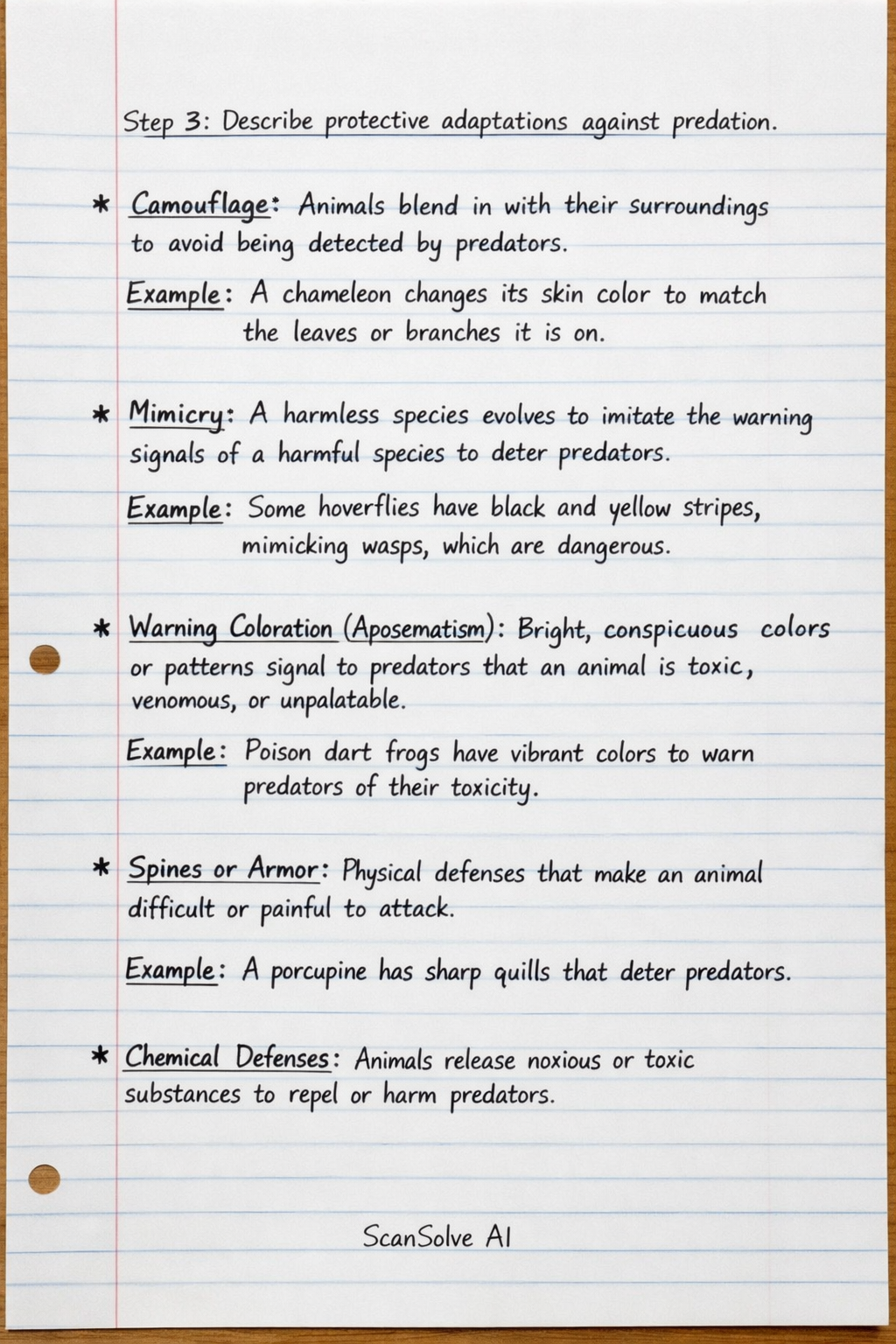
Step 3: Describe protective adaptations against predation. b) Six protective adaptations used by animals against predation and one example of each: • Camouflage: Animals blend in with their surroundings to avoid being detected by predators. Example: A chameleon changes its skin color to match the leaves or branches it is on. • Mimicry: A harmless species evolves to imitate the warning signals of a harmful species to deter predators. Example: Some hoverflies have black and yellow stripes, mimicking wasps, which are dangerous. • Warning Coloration (Aposematism): Bright, conspicuous colors or patterns signal to predators that an animal is toxic, venomous, or unpalatable. Example: Poison dart frogs have vibrant colors to warn predators of their toxicity. • Spines or Armor: Physical defenses that make an animal difficult or painful to attack. Example: A porcupine has sharp quills that deter predators. • Chemical Defenses: Animals release noxious or toxic substances to repel or harm predators. Example: A skunk sprays a foul-smelling liquid when threatened. • Flight/Escape: The ability to quickly flee from a predator. Example: A gazelle runs at high speeds to escape a cheetah. Step 4: Define pollution and state human activities causing it. a) Pollution is the introduction of harmful substances or products into the environment, causing adverse effects on living organisms and the ecosystem. These substances, called pollutants, can be natural or man-made. b) Six human activities which cause pollution: • Industrial Emissions: Factories release smoke, gases (like sulfur dioxide and nitrogen oxides), and particulate matter into the atmosphere. • Burning of Fossil Fuels: Combustion of coal, oil, and natural gas in vehicles, power plants, and homes releases greenhouse gases (e.g., carbon dioxide) and other air pollutants. • Agricultural Practices: Use of pesticides, herbicides, and fertilizers can contaminate soil and water bodies through runoff. • Deforestation: Clearing forests reduces the number of trees that absorb carbon dioxide, leading to increased atmospheric CO2 levels and soil erosion. • Improper Waste Disposal: Accumulation of solid waste (plastics, electronics) in landfills or oceans leads to soil and water contamination. • Mining Activities: Extraction of minerals can release toxic chemicals and heavy metals into the environment, polluting soil and water. That's 2 down. 3 left today — send the next one.