
We read your photo as:
Provide a list of essential drugs in primary healthcare, detailing dosage, action, interactions, contraindications, and abuse potential.
Biology
ScanSolve AI Answer
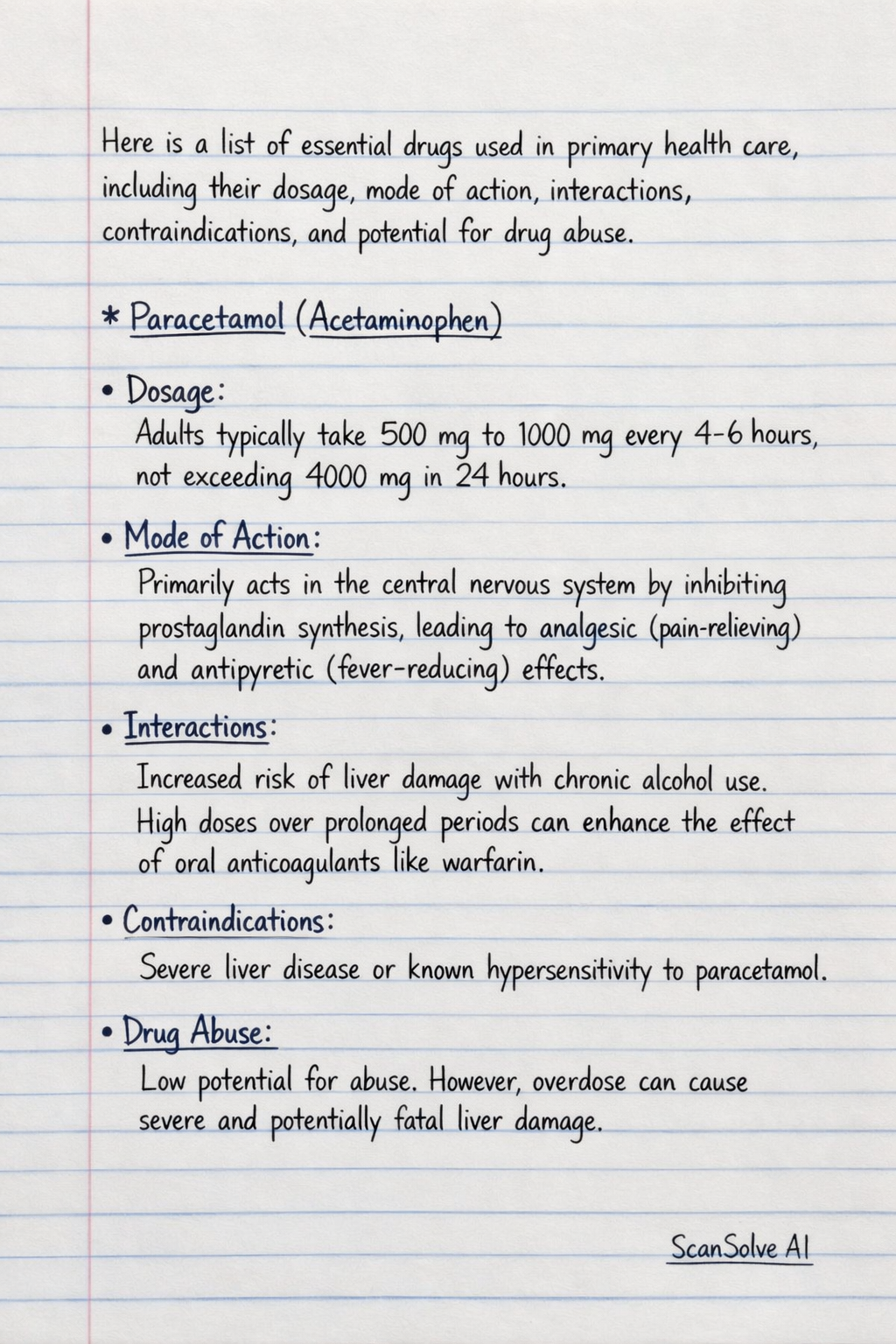
Here is a list of essential drugs used in primary health care, including their dosage, mode of action, interactions, contraindications, and potential for drug abuse.
-
Paracetamol (Acetaminophen)
- Dosage: Adults typically take 500 mg to 1000 mg every 4-6 hours, not exceeding 4000 mg in 24 hours.
- Mode of Action: Primarily acts in the central nervous system by inhibiting prostaglandin synthesis, leading to analgesic (pain-relieving) and antipyretic (fever-reducing) effects.
- Interactions: Increased risk of liver damage with chronic alcohol use. High doses over prolonged periods can enhance the effect of oral anticoagulants like warfarin.
- Contraindications: Severe liver disease or known hypersensitivity to paracetamol.
- Drug Abuse: Low potential for abuse. However, overdose can cause severe and potentially fatal liver damage.
-
Amoxicillin
- Dosage: Adults typically take 250 mg to 500 mg every 8 hours, or 500 mg to 875 mg every 12 hours, depending on the infection.
- Mode of Action: A beta-lactam antibiotic that inhibits bacterial cell wall synthesis by binding to penicillin-binding proteins, leading to bacterial cell lysis and death.
- Interactions: May reduce the effectiveness of oral contraceptives. Probenecid can increase amoxicillin blood levels.
- Contraindications: Known hypersensitivity or allergic reactions to penicillins or other beta-lactam antibiotics.
- Drug Abuse: No known potential for abuse. Misuse, such as taking for viral infections, contributes to antibiotic resistance.
-
Oral Rehydration Salts (ORS)
- Dosage: One sachet is typically dissolved in 1 liter of clean water. Administer frequently in small sips, with the amount depending on the patient's age and degree of dehydration.
- Mode of Action: Replaces lost fluids and electrolytes (sodium, potassium, chloride, citrate) and provides glucose, which facilitates water absorption in the intestine to correct dehydration caused by diarrhea.
- Interactions: Generally no significant drug interactions, as it is an electrolyte solution.
- Contraindications: Intestinal obstruction, paralytic ileus, or severe vomiting that prevents oral intake.
- Drug Abuse: No potential for abuse.
Was this helpful?
Still stuck on this one?
Ask a follow-up, and the answer starts from this question.
Got a different question?Ask your own question
More Biology Questions
QList essential drugs in primary health care, detailing dosage, action, interactions…QList different prescriptions of drugsQIdentify high risk drugs and critical medicines in mental health NHS and had an awareness of the…QList 10 types of drugs and two effects of drugs.QSummarize HIV prophylaxis and treatment regimens, including PREP, CYP450 inducers, treatment failure…
Browse by topic:Pharmacology
Handwritten Step-by-Step Solution
Get this as a handwritten image on WhatsApp — like a tutor wrote it for you.
Try on WhatsApp