
Question 1 Identify and name four(4) lifestyle diseases, for each disease, state one(1) main cause Question 2 Select any two lifestyle diseases from your answer to question 5. For each disease, describe two ways symptoms and explain two prevention methods Question 3 Reflect on your own lifestyle choices, consider your diet, physical activity, sleep and stress management. Write a short paragraph (5-7 sentences) explaining how you could improve your lifestyle to reduce the risk of developing lifestyle diseases. Question 4 Explain the relationship between obesity and our lifestyle diseases such as diabetes and cardiovascular disease. Question 5 Describe any four classes of drugs and their effects on human body. Question 6 Explain why drug abuse is considered as a public health concern. In your answer, discuss the impact on individuals, the impact on families and communities, prevention strategies. Question 7 Design a simple awareness poster or write a short message (50-75 words) that could be used to educate young people about the dangers of recreational drug use. Question 8 Choose one local food from the following: Gari- kenkey- tubani List the main ingredients and describe the traditional method of preparation in (6-8 steps).
ScanSolve AI Answer
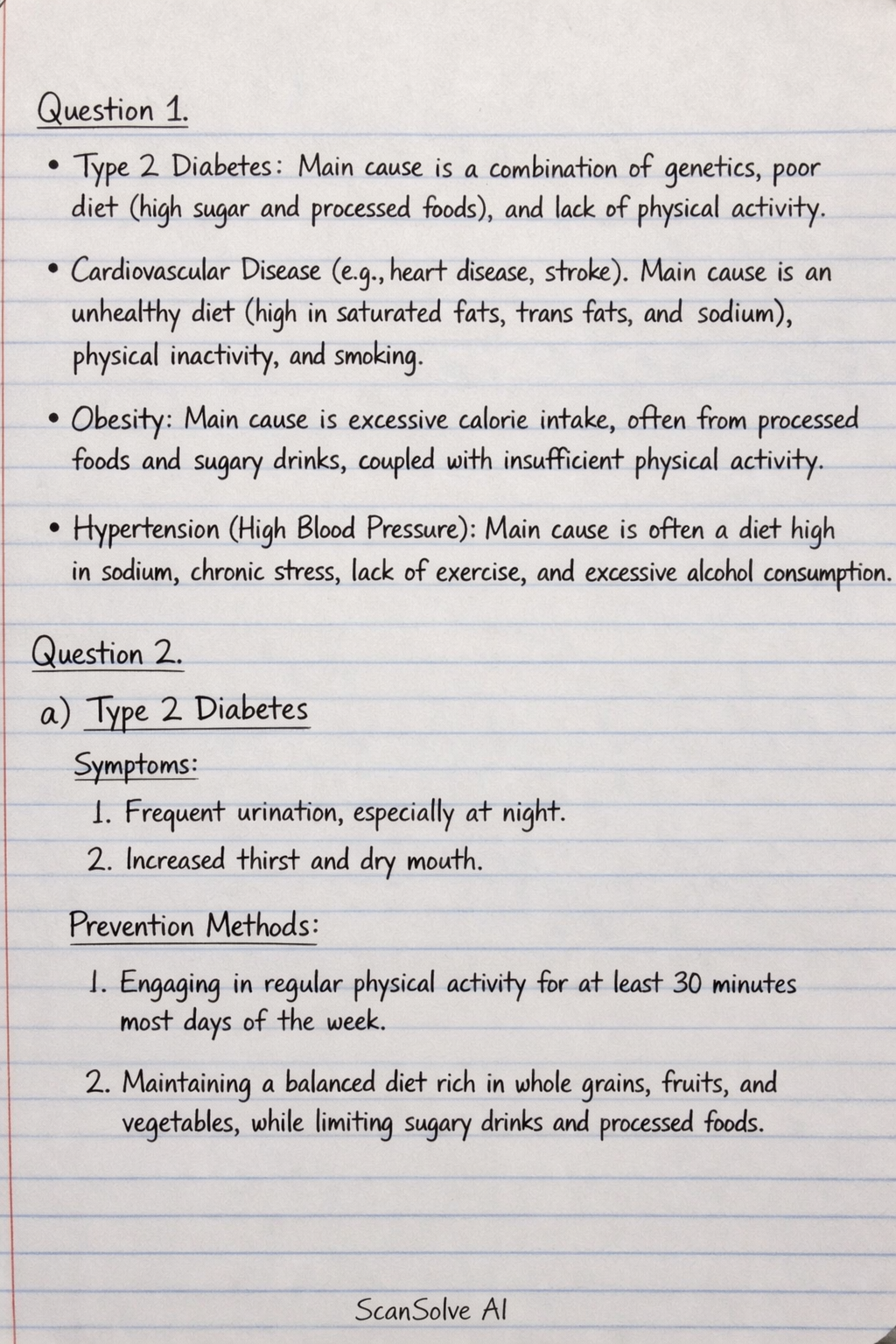
Question 1
- Type 2 Diabetes: Main cause is a combination of genetics, poor diet (high sugar and processed foods), and lack of physical activity.
- Cardiovascular Disease (e.g., heart disease, stroke): Main cause is an unhealthy diet (high in saturated fats, trans fats, and sodium), physical inactivity, and smoking.
- Obesity: Main cause is excessive calorie intake, often from processed foods and sugary drinks, coupled with insufficient physical activity.
- Hypertension (High Blood Pressure): Main cause is often a diet high in sodium, chronic stress, lack of exercise, and excessive alcohol consumption.
Question 2
a) Type 2 Diabetes
- Symptoms:
- Frequent urination, especially at night.
- Increased thirst and dry mouth.
- Prevention Methods:
- Engaging in regular physical activity for at least 30 minutes most days of the week.
- Maintaining a balanced diet rich in whole grains, fruits, and vegetables, while limiting sugary drinks and processed foods.
b) Cardiovascular Disease
- Symptoms:
- Chest pain or discomfort (angina), often radiating to the arm, neck, or jaw.
- Shortness of breath, especially during exertion.
- Prevention Methods:
- Adopting a heart-healthy diet low in saturated and trans fats, cholesterol, and sodium.
- Avoiding smoking and excessive alcohol consumption.
Question 3
My current lifestyle could be improved in several areas to reduce the risk of lifestyle diseases. Regarding diet, I could focus on reducing my intake of processed snacks and sugary beverages, opting instead for more whole foods like fresh fruits, vegetables, and lean proteins. To enhance physical activity, I plan to incorporate daily brisk walks or cycling sessions, aiming for at least 150 minutes of moderate exercise per week. Improving my sleep hygiene by establishing a consistent bedtime and ensuring 7-8 hours of sleep nightly would also be beneficial. For stress management, I intend to practice mindfulness meditation for 10-15 minutes daily. These conscious adjustments across diet, exercise, sleep, and stress will significantly lower my susceptibility to chronic health conditions.
Question 4
Obesity is a significant risk factor that directly contributes to the development of several lifestyle diseases, including diabetes and cardiovascular disease. When an individual is obese, excess body fat, particularly around the abdomen, can lead to insulin resistance. This means the body's cells don't respond effectively to insulin, causing blood sugar levels to rise, which is a hallmark of Type 2 Diabetes. Furthermore, obesity often results in higher blood pressure, elevated levels of "bad" cholesterol (LDL), and increased inflammation throughout the body. These factors collectively strain the heart and blood vessels, significantly increasing the risk of cardiovascular diseases such as heart attacks and strokes.
Question 5
- Stimulants: These drugs increase alertness, energy, and attention. They speed up the central nervous system, leading to increased heart rate, blood pressure, and body temperature. Examples include caffeine and amphetamines.
- Depressants: These drugs slow down brain activity, producing a calming and relaxing effect. They can reduce anxiety, induce sleep, and impair coordination and judgment. Examples include alcohol and benzodiazepines.
- Hallucinogens: These drugs profoundly alter perception, mood, and thought processes. They can cause hallucinations, distorted sensory experiences, and changes in consciousness. Examples include LSD and psilocybin.
- Opioids: These drugs primarily act as pain relievers and can produce feelings of euphoria. They depress the central nervous system, slowing breathing and heart rate, and can be highly addictive. Examples include morphine and heroin.
Question 6
Drug abuse is considered a major public health concern due to its widespread negative impacts on individuals, families, and communities, alongside the significant strain it places on public resources.
- Impact on Individuals: Drug abuse leads to severe health problems, including addiction, overdose, organ damage (e.g., liver, heart), and mental health disorders like depression and anxiety. It also results in impaired judgment, increased risk of accidents, legal issues, and loss of employment or educational opportunities.
- Impact on Families and Communities: Families often experience emotional distress, financial hardship, and breakdown due to drug abuse. Children may suffer neglect or abuse. Communities face increased crime rates, violence, and a greater demand for social services, emergency medical care, and law enforcement, diverting resources from other essential areas.
- Prevention Strategies: Effective prevention includes comprehensive education and awareness campaigns targeting young people about the dangers of drug use. Early intervention programs for at-risk individuals, accessible and affordable treatment and recovery services, and community-based support groups are crucial. Policies that limit access to illicit drugs and promote healthy environments also play a vital role.
Question 7
"Think Twice Before You Try! Recreational drugs promise a quick thrill but deliver lasting harm. They can damage your brain, body, and future, leading to addiction, mental health issues, and legal trouble. Protect your potential and choose a healthy path. Your future is too valuable to risk. Say NO to drugs and YES to life!"
Question 8
Food: Kenkey (specifically Ga Kenkey)
Main Ingredients:
- Corn
- Water
Traditional Method of Preparation (6-8 steps):
- Soak dried corn kernels in water for 2-3 days, changing the water daily to prevent fermentation and ensure cleanliness.
- Mill the soaked corn into a smooth, fine dough using a traditional grinding stone or a modern corn mill.
- Take about one-third of the corn dough and mix it with water to form a smooth paste.
- Cook this portion of the paste over medium heat, stirring continuously, until it thickens into a smooth, sticky, and translucent paste known as "nshio" or "aflata."
- Allow the "nshio" to cool slightly, then thoroughly mix it with the remaining two-thirds of the uncooked corn dough until well combined.
- Divide the mixed dough into individual portions, typically about the size of a fist.
- Wrap each portion tightly in dried corn husks or plantain leaves, ensuring no dough is exposed.
- Arrange the wrapped kenkey in a large pot, cover with water, and boil for 2-3 hours until the kenkey is thoroughly cooked, firm, and has a distinct aroma.
Still stuck on this one?
Ask a follow-up, and the answer starts from this question.
More English Questions
Handwritten Step-by-Step Solution
Get this as a handwritten image on WhatsApp — like a tutor wrote it for you.
Try on WhatsApp