
We read your photo as:
Q1. Discuss the role of public health law in disease prevention and control in Sierra Leone and Explain key legal measures such as vaccination, quarantine, and disease surveillance.
ScanSolve AI Answer
Here are the answers to your questions:
Q1. Discuss the role of public health law in disease prevention and control in Sierra Leone and Explain key legal measures such as vaccination, quarantine, and disease surveillance.
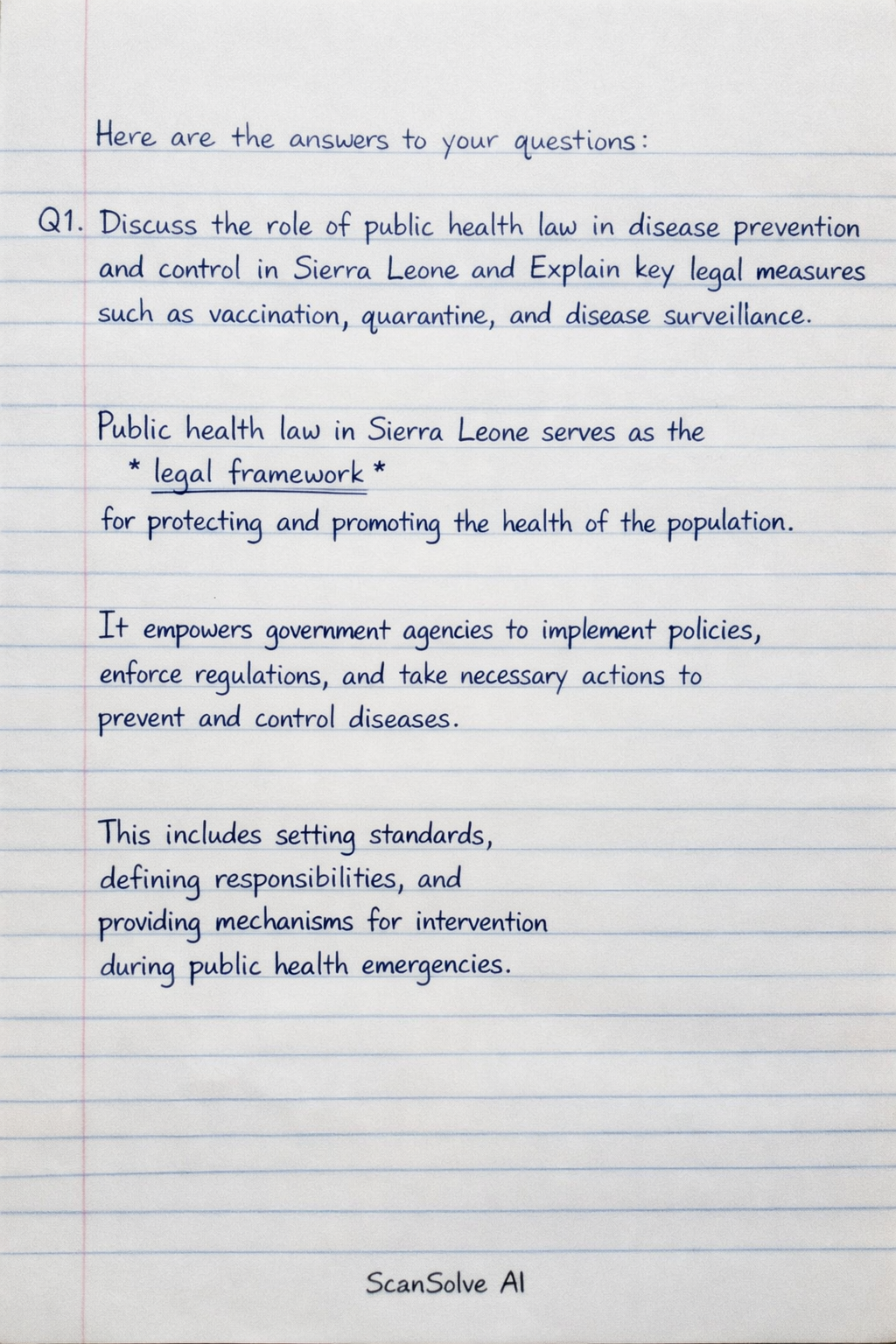
Public health law in Sierra Leone serves as the legal framework for protecting and promoting the health of the population. It empowers government agencies to implement policies, enforce regulations, and take necessary actions to prevent and control diseases. This includes setting standards, defining responsibilities, and providing mechanisms for intervention during public health emergencies.
Key legal measures include:
- Vaccination: Public health laws often mandate or strongly encourage vaccination programs, particularly for communicable diseases. These laws ensure the procurement, distribution, and safe administration of vaccines, and may include provisions for school entry requirements or emergency vaccination campaigns to achieve herd immunity and prevent outbreaks.
- Quarantine: Legal provisions for quarantine and isolation allow authorities to restrict the movement of individuals or groups exposed to or infected with highly contagious diseases. This measure is crucial for containing outbreaks by preventing further spread, and laws define the conditions, duration, and rights of individuals under quarantine.
- Disease Surveillance: Laws require the mandatory reporting of certain notifiable diseases by healthcare providers and laboratories to public health authorities. This legal obligation ensures timely collection, analysis, and dissemination of health data, enabling early detection of outbreaks, monitoring disease trends, and guiding public health interventions and resource allocation.
Q2. Outline and discuss the major components of environmental health laws in Sierra Leone.
Environmental health laws in Sierra Leone aim to protect human health from environmental hazards by regulating various aspects of the environment. Major components include:
- Water Quality and Sanitation: Laws govern the safety of drinking water sources, treatment, and distribution, as well as the proper disposal of human waste and wastewater. This includes regulations for sewage systems, latrines, and preventing contamination of water bodies to reduce waterborne diseases.
- Waste Management: Legislation addresses the collection, transportation, treatment, and disposal of solid and hazardous waste. These laws aim to prevent pollution, minimize health risks from waste accumulation, and promote recycling and proper waste segregation.
- Air Quality Control: Laws are designed to regulate emissions from industrial activities, vehicles, and other sources to maintain acceptable levels of air pollutants. This helps to reduce respiratory illnesses and other health problems associated with poor air quality.
- Food Safety: Regulations cover the entire food chain, from production and processing to storage, distribution, and sale. These laws establish standards for hygiene, labeling, and inspection to prevent foodborne illnesses and ensure that food products are safe for consumption.
- Vector Control: Laws may include provisions for controlling disease vectors like mosquitoes and rodents, which transmit diseases such as malaria and Lassa fever. This involves regulations on pest control measures, environmental sanitation, and public awareness campaigns.
Q3. Analyze the impact of the Ebola outbreak (2014-2016) on the development of public health laws in Sierra Leone.
The 2014-2016 Ebola outbreak had a profound impact on the development of public health laws in Sierra Leone, exposing significant weaknesses in the existing legal and institutional frameworks. The crisis highlighted the urgent need for more robust and comprehensive legislation to manage public health emergencies effectively.
- Strengthening Emergency Powers: The outbreak led to the enactment of new laws or amendments that granted broader emergency powers to the government, allowing for rapid deployment of resources, enforcement of quarantines, and restrictions on movement. This included legalizing measures like curfews and travel bans to contain the spread.
- Enhanced Disease Surveillance and Reporting: The inadequacy of the existing surveillance system became apparent. Post-Ebola, there was a push to strengthen legal requirements for disease reporting, data sharing, and the establishment of more effective early warning systems to detect and respond to future outbreaks promptly.
- Improved Public Health Infrastructure: The crisis underscored the need for better healthcare infrastructure and human resources. Legal reforms aimed at improving the capacity of public health institutions, including laboratories and treatment centers, and ensuring adequate training and protection for health workers.
- Community Engagement and Rights: The outbreak also highlighted the importance of community engagement and addressing human rights concerns during public health crises. Subsequent legal developments sought to balance public health imperatives with individual rights, ensuring transparency and accountability in emergency responses. The experience led to a greater emphasis on laws that facilitate community participation in health initiatives.
Q4. Evaluate the challenges in enforcing public health laws in Sierra Leone and propose practical solutions.
Enforcing public health laws in Sierra Leone faces several significant challenges, often stemming from systemic issues.
- Limited Resources and Capacity: There is often a severe shortage of funding, trained personnel, and essential equipment for public health agencies. This hampers their ability to conduct inspections, monitor compliance, and implement programs effectively.
- Solution: Increase government allocation to public health, seek international partnerships for funding and technical assistance, and invest in capacity building through training programs for health workers and legal professionals.
- Weak Institutional Framework and Coordination: Fragmented responsibilities among various government ministries and agencies, coupled with a lack of clear coordination mechanisms, can lead to inefficiencies and gaps in enforcement.
- Solution: Establish a strong, centralized public health authority with clear mandates and powers, and develop inter-agency coordination protocols to ensure a unified approach to public health law enforcement.
- Lack of Public Awareness and Compliance: Many citizens may not be fully aware of public health laws or understand their importance, leading to low compliance rates, especially in areas like sanitation and waste disposal. Cultural practices can also sometimes conflict with public health directives.
- Solution: Implement widespread public education campaigns using various media to raise awareness about public health laws and their benefits. Engage community leaders and traditional authorities to promote compliance and address cultural sensitivities.
- Corruption and Governance Issues: Corruption can undermine enforcement efforts, leading to lax inspections, unpunished violations, and diversion of resources.
- Solution: Strengthen anti-corruption measures within public health institutions, promote transparency and accountability in decision-making, and establish independent oversight bodies to monitor enforcement activities.
- Inadequate Legal Infrastructure and Enforcement Mechanisms: The legal system itself may have weaknesses, such as outdated laws, slow judicial processes, or insufficient penalties for violations, which can deter effective enforcement.
- Solution: Review and update existing public health laws to align with international best practices, streamline judicial processes for public health offenses, and ensure that penalties are sufficiently deterrent.
Still stuck on this one?
Ask a follow-up, and the answer starts from this question.
More Biology Questions
Handwritten Step-by-Step Solution
Get this as a handwritten image on WhatsApp — like a tutor wrote it for you.
Try on WhatsApp