
We read your photo as:
Shortly before menstruation: A. blood levels of estrogen and progesterone decrease. B. blood levels of estrogen and progesterone increase. C. blood levels of FSH stabilize. D. the corpus luteum secretes progesterone. E. none of the above occur.
ScanSolve AI Answer
Answer
blood levels of estrogen and progesterone decrease
Here are the answers to the questions:
331. Shortly before menstruation:
The correct answer is A. blood levels of estrogen and progesterone decrease.
The drop in estrogen and progesterone levels, due to the degeneration of the corpus luteum, triggers the shedding of the uterine lining, which is menstruation.
332. With reference to the ovary, the postmenstrual phase of the menstrual cycle is also called the:
The correct answer is D. follicular phase.
The postmenstrual phase (after menstruation) is characterized by the growth and maturation of ovarian follicles, hence it is called the follicular phase of the ovarian cycle.
333. In mammalian males, the reproductive and excretory systems share the same urethra.
The correct answer is A. True.
In male mammals, the urethra serves as a common pathway for both urine (excretory system) and semen (reproductive system).
334. The adaptation of the amniotic egg by reptiles and birds had little impact on their ability to survive a terrestrial environment.
The correct answer is B. False.
The amniotic egg was a critical adaptation that allowed reptiles and birds to reproduce successfully on land, significantly impacting their ability to thrive in terrestrial environments.
335. The male hormone testosterone is produced by A. Leydig cells.
Leydig cells, found in the testes, are responsible for the production of testosterone.
336. Male gonads are called A. Testes.
The testes are the primary male reproductive organs, producing sperm and male hormones.
337. The fertilized egg is called D. Zygote.
A zygote is the single diploid cell formed when a sperm fertilizes an egg (ovum).
338. The ultimate stoppage of menstrual cycle is called C. menopause.
Menopause is the natural biological process that marks the permanent cessation of menstruation and fertility in women.
339. The process by which the sperms are produced is known as Spermatogenesis.
Spermatogenesis is the biological process of producing spermatozoa (sperm) from germ cells in the seminiferous tubules of the testes.
Try one yourself
A new problem that tests the same skill.
Still stuck on this one?
Ask a follow-up, and the answer starts from this question.
More Biology Questions
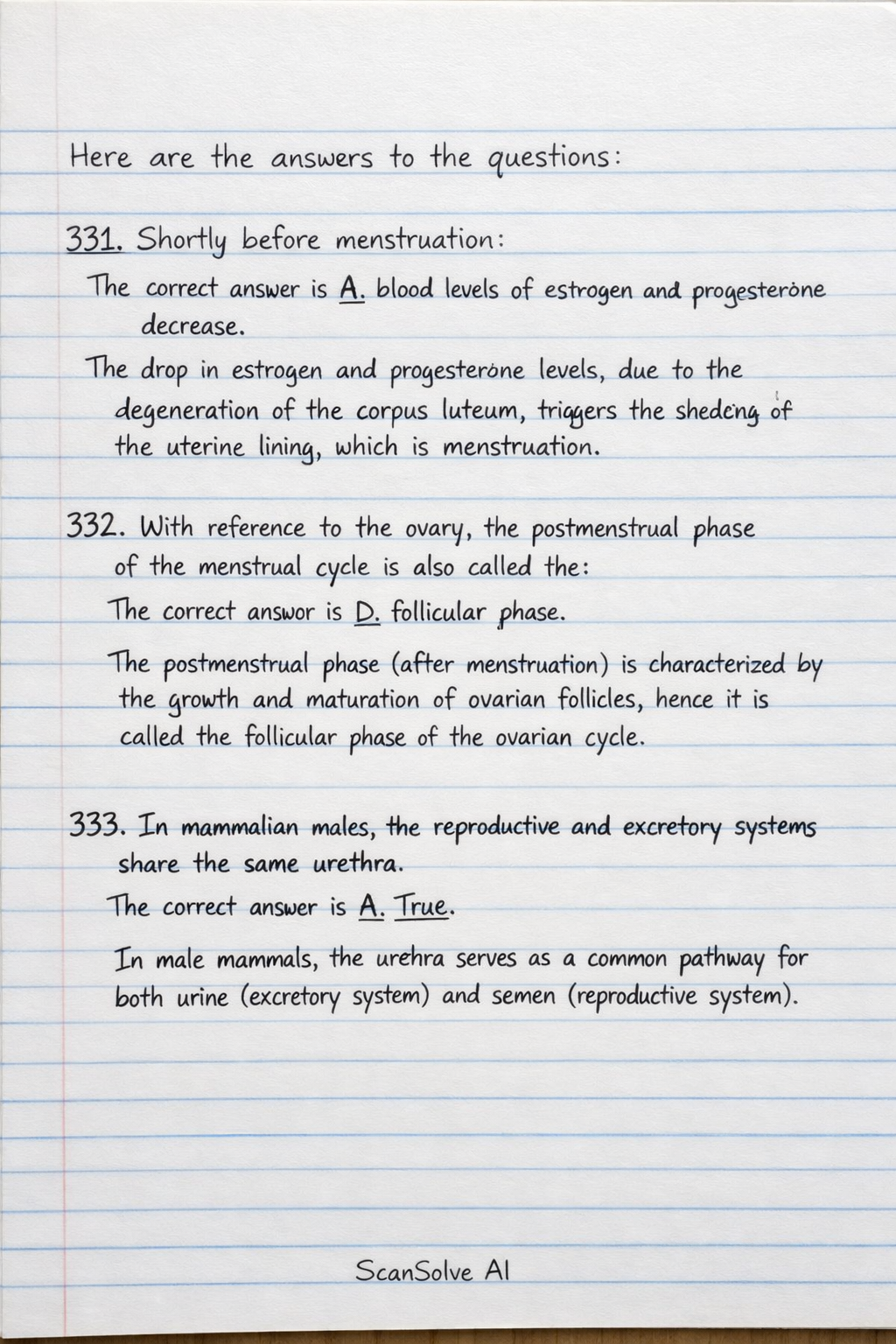
Handwritten Step-by-Step Solution
Get this as a handwritten image on WhatsApp — like a tutor wrote it for you.
Try on WhatsApp