
We read your photo as:
Describe sickle cell crisis: its definition, common types, and typical treatments.
ScanSolve AI Answer
Here are the answers to your questions:
a) A sickle cell crisis is a sudden, painful episode that occurs in individuals with sickle cell disease. It is caused by sickled red blood cells blocking small blood vessels, leading to ischemia, pain, and potential organ damage.
b) The four main types of sickle cell crisis are:
- Vaso-occlusive crisis (VOC): The most common type, characterized by severe pain in bones, joints, chest, or abdomen due to blocked blood flow.
- Aplastic crisis: A temporary halt in red blood cell production in the bone marrow, often triggered by viral infections (e.g., parvovirus B19), leading to severe anemia.
- Splenic sequestration crisis: Occurs when a large number of sickled red blood cells become trapped in the spleen, causing rapid splenic enlargement, severe anemia, and hypovolemic shock. This is more common in young children.
- Acute chest syndrome (ACS): A serious complication involving chest pain, fever, cough, and difficulty breathing, often caused by infection or fat embolism in the lungs.
c)
i) Specific treatment for sickle cell crisis focuses on managing symptoms and preventing complications:
- Pain management: Administering strong analgesics, often opioids, to control severe pain.
- Hydration: Providing intravenous fluids to improve blood flow and reduce sickling.
- Oxygen therapy: Supplying supplemental oxygen if the patient has low oxygen saturation.
- Blood transfusions: May be necessary for severe anemia, acute chest syndrome, or splenic sequestration crisis.
- Antibiotics: Administered if an infection is suspected or confirmed.
ii) Specific nursing management for a patient with sickle cell disease during a crisis includes:
- Pain assessment and management: Regularly assessing pain levels and administering prescribed analgesics promptly, along with non-pharmacological comfort measures.
- Maintaining hydration: Administering IV fluids as ordered and encouraging oral fluid intake to prevent dehydration.
- Monitoring respiratory status: Assessing oxygen saturation, administering oxygen as needed, and monitoring for signs of acute chest syndrome.
- Infection prevention: Monitoring for signs of infection, ensuring strict hygiene, and administering antibiotics if prescribed.
- Promoting rest: Providing a quiet and comfortable environment to minimize energy expenditure and promote healing.
- Patient and family education: Educating about triggers, early signs of crisis, and home management strategies.
d) The complications of sickle cell disease include:
- Acute pain crises (vaso-occlusive crises)
- Acute chest syndrome
- Stroke
- Splenic sequestration
- Aplastic crisis
- Increased susceptibility to infections (due to functional asplenia)
- Priapism (prolonged, painful erection)
- Chronic pain
- Organ damage (e.g., kidney disease, liver damage, pulmonary hypertension)
- Avascular necrosis (bone damage, especially in hips and shoulders)
- Leg ulcers
- Retinopathy (eye damage leading to vision loss)
- Gallstones
Still stuck on this one?
Ask a follow-up, and the answer starts from this question.
More Biology Questions
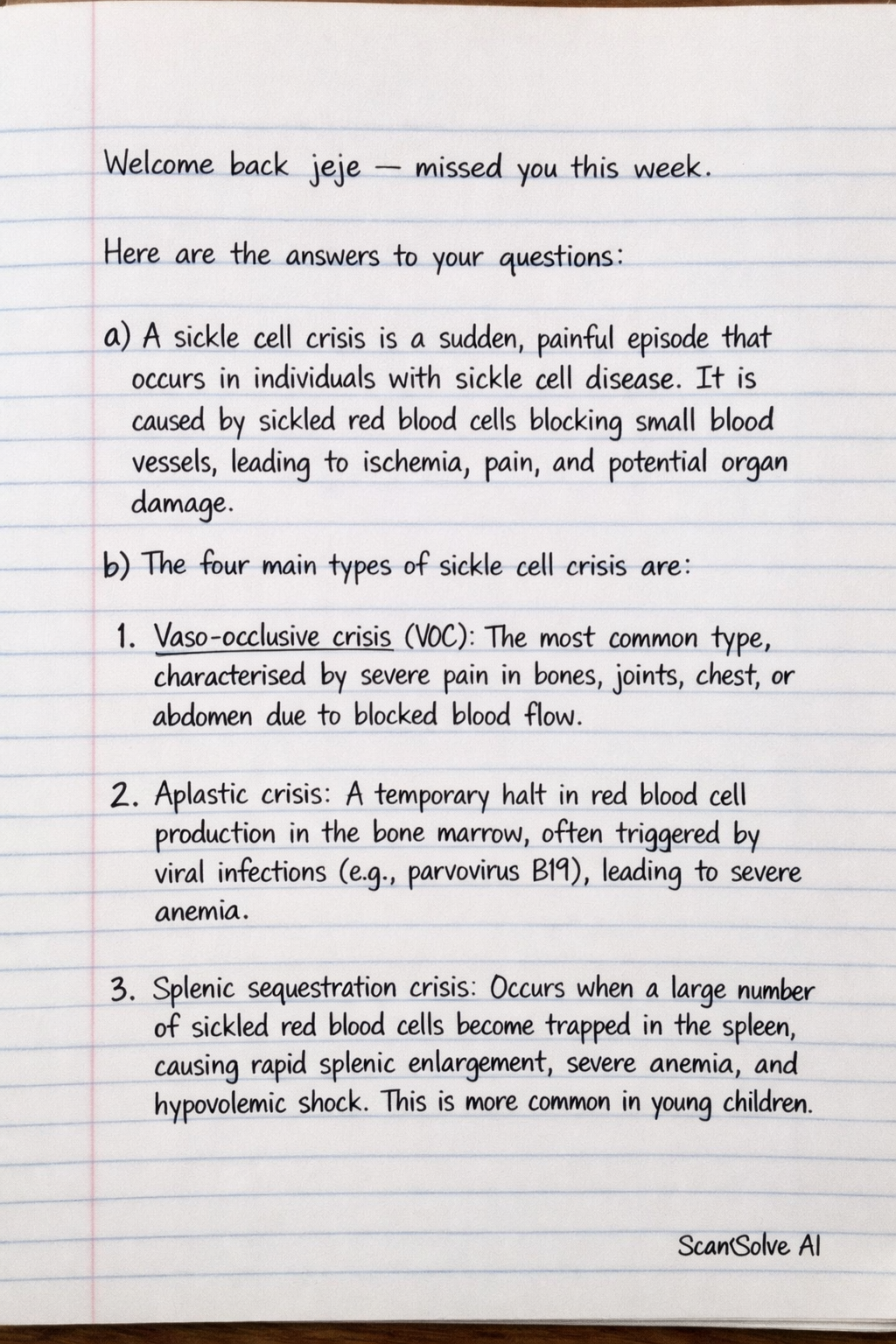
Handwritten Step-by-Step Solution
Get this as a handwritten image on WhatsApp — like a tutor wrote it for you.
Try on WhatsApp