
We read your photo as:
What are the different classification methods for crude drugs and the definition and methods of adulteration?
ScanSolve AI Answer
Here are the answers to your questions:
-
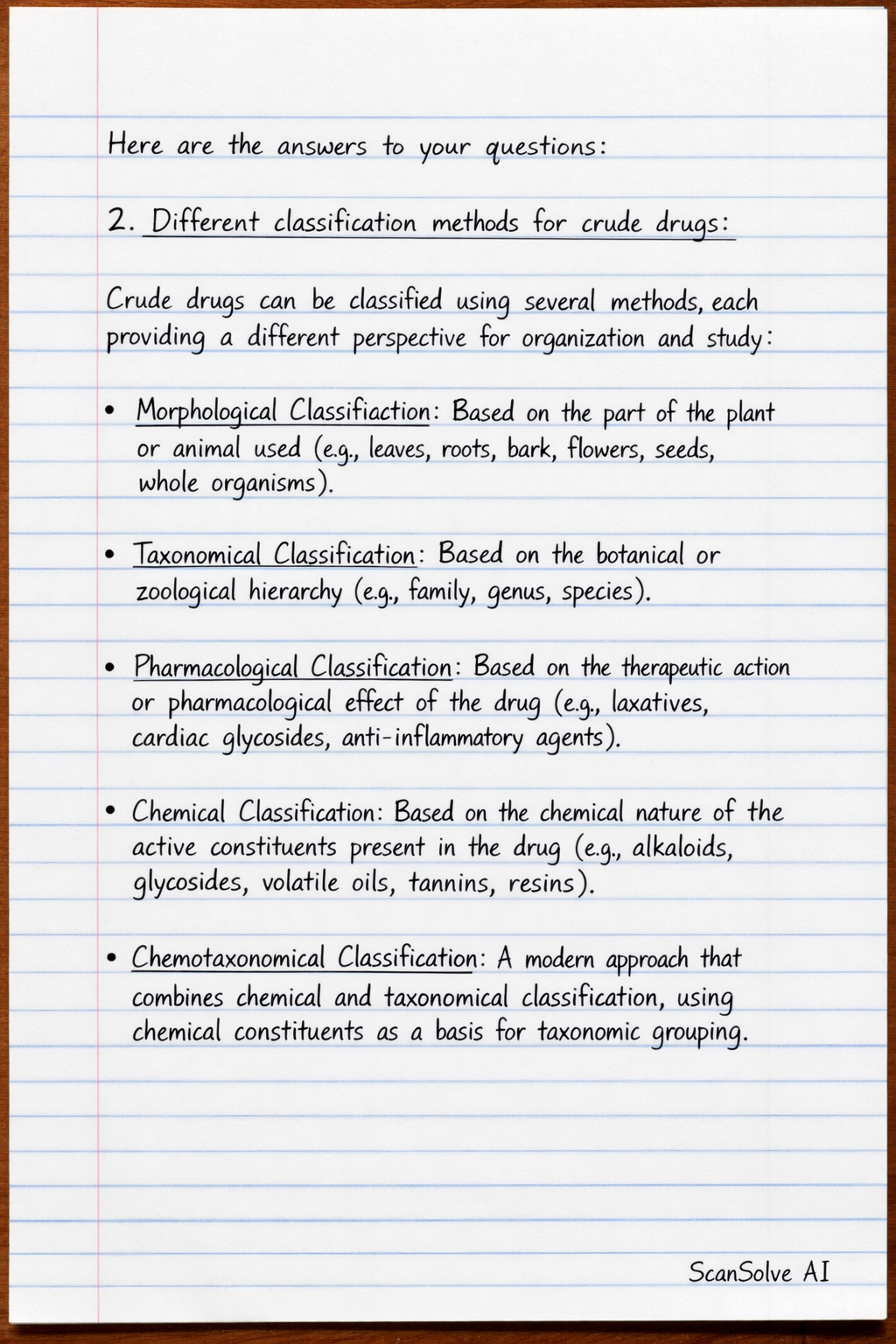
Different classification methods for crude drugs: Crude drugs can be classified using several methods, each providing a different perspective for organization and study:
- Morphological Classification: Based on the part of the plant or animal used (e.g., leaves, roots, bark, flowers, seeds, whole organisms).
- Taxonomical Classification: Based on the botanical or zoological hierarchy (e.g., family, genus, species).
- Pharmacological Classification: Based on the therapeutic action or pharmacological effect of the drug (e.g., laxatives, cardiac glycosides, anti-inflammatory agents).
- Chemical Classification: Based on the chemical nature of the active constituents present in the drug (e.g., alkaloids, glycosides, volatile oils, tannins, resins).
- Chemotaxonomical Classification: A modern approach that combines chemical and taxonomical classification, using chemical constituents as a basis for taxonomic grouping.
-
Definition of adulteration and 5 methods:
-
Adulteration refers to the intentional debasement of a crude drug by substituting it wholly or partially with an inferior, spurious, or foreign material, or by adding such material to it. This practice reduces the quality, purity, and therapeutic value of the genuine drug.
-
Five methods of adulteration:
- Substitution with inferior commercial varieties: Using a similar-looking but less potent or cheaper variety of the same plant or a related species.
- Substitution with superficially similar but different plants: Replacing the genuine drug with a plant that resembles it in appearance but is botanically distinct and lacks the desired active constituents.
- Substitution with exhausted drugs: Using the genuine drug after its active medicinal constituents have been extracted, leaving behind inert material.
- Addition of artificially manufactured substitutes: Incorporating synthetic or processed materials that mimic the physical characteristics of the genuine drug.
- Addition of foreign matter: Mixing in inert materials such as stones, sand, dirt, excessive stems, or other plant parts to increase the weight and bulk of the drug.
-
Still stuck on this one?
Ask a follow-up, and the answer starts from this question.
More Biology Questions
Handwritten Step-by-Step Solution
Get this as a handwritten image on WhatsApp — like a tutor wrote it for you.
Try on WhatsApp