
We read your photo as:
What are the health challenges of poor nutrition in children, why is parental nutrition knowledge important, and how can schools promote a healthy environment?
Biology
ScanSolve AI Answer
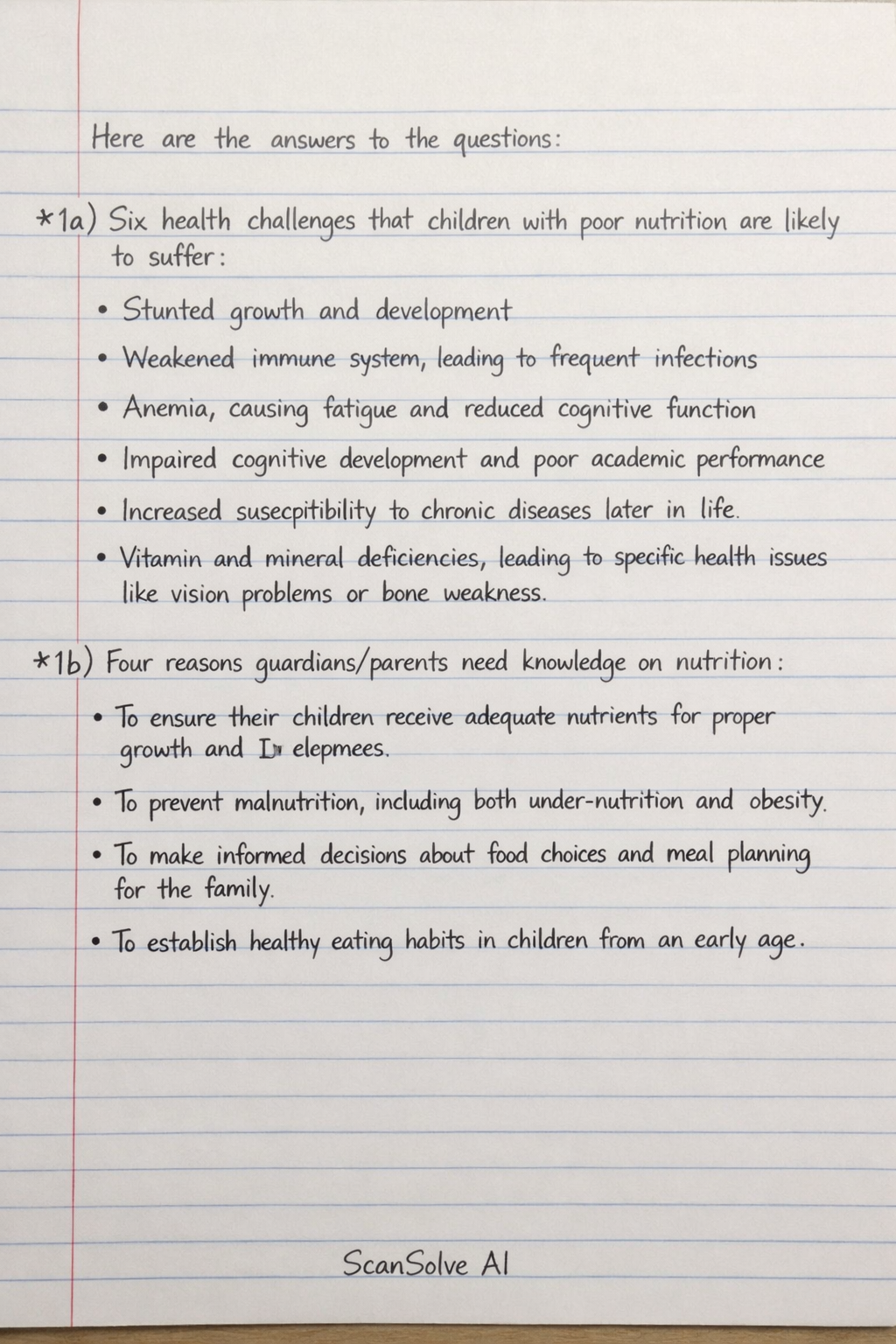
Here are the answers to the questions:
1a) Six health challenges that children with poor nutrition are likely to suffer:
- Stunted growth and development
- Weakened immune system, leading to frequent infections
- Anemia, causing fatigue and reduced cognitive function
- Impaired cognitive development and poor academic performance
- Increased susceptibility to chronic diseases later in life
- Vitamin and mineral deficiencies, leading to specific health issues like vision problems or bone weakness
1b) Four reasons guardians/parents need knowledge on nutrition:
- To ensure their children receive adequate nutrients for proper growth and development.
- To prevent malnutrition, including both under-nutrition and obesity.
- To make informed decisions about food choices and meal planning for the family.
- To establish healthy eating habits in children from an early age.
2a) Five actions needed to be taken by schools to build a healthy school environment:
- Provide nutritious and balanced meals and snacks, promoting healthy eating habits.
- Ensure clean and hygienic facilities, including restrooms, classrooms, and play areas, to prevent the spread of illness.
- Promote regular physical activity through structured physical education classes and ample playtime.
- Implement comprehensive health education programs that cover topics like hygiene, nutrition, and disease prevention.
- Foster a positive and supportive social-emotional climate to address mental health and prevent bullying.
2b) Five environmental management strategies to adopt as a school head to protect, conserve, and sustain the various elements of the school environment:
- Implement a robust waste management program focusing on reducing, reusing, and recycling waste generated within the school.
- Promote water conservation by fixing leaks, installing water-efficient fixtures, and educating students on responsible water use.
- Encourage energy conservation through the use of energy-efficient lighting, turning off electronics when not in use, and utilizing natural light.
- Establish and maintain green spaces within the school grounds, including planting trees and gardens, to improve air quality and biodiversity.
- Integrate environmental education into the curriculum to raise awareness and encourage sustainable practices among students and staff.
Was this helpful?
Still stuck on this one?
Ask a follow-up, and the answer starts from this question.
Got a different question?Ask your own question
More Biology Questions
QWhat are factors promoting corruption in schools, ways citizens can participate in civil society…QWhat are five food or nutrition-related problems that can be addressed by a kitchen garden?QHow can schools foster a supportive environment for students and families?QWhat are the key takeaways from the opening speech of the "A Healthy Diet for a Healthy Life"…QWhat is material and child health
Browse by topic:Nutrition
Handwritten Step-by-Step Solution
Get this as a handwritten image on WhatsApp — like a tutor wrote it for you.
Try on WhatsApp