
We read your photo as:
What are five food or nutrition-related problems that can be addressed by a kitchen garden?
Biology
ScanSolve AI Answer
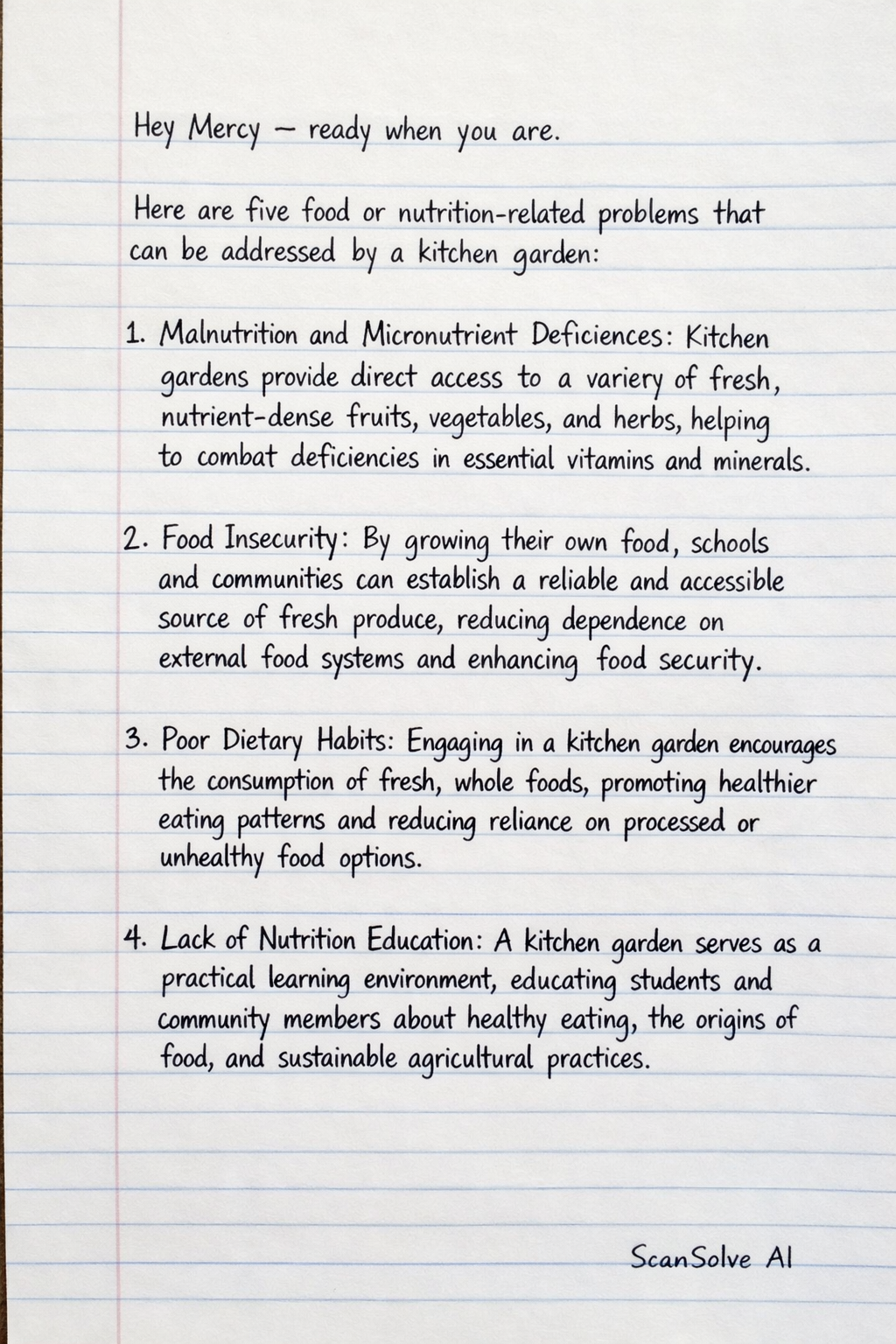
Here are five food or nutrition-related problems that can be addressed by a kitchen garden:
- Malnutrition and Micronutrient Deficiencies: Kitchen gardens provide direct access to a variety of fresh, nutrient-dense fruits, vegetables, and herbs, helping to combat deficiencies in essential vitamins and minerals.
- Food Insecurity: By growing their own food, schools and communities can establish a reliable and accessible source of fresh produce, reducing dependence on external food systems and enhancing food security.
- Poor Dietary Habits: Engaging in a kitchen garden encourages the consumption of fresh, whole foods, promoting healthier eating patterns and reducing reliance on processed or unhealthy food options.
- Lack of Nutrition Education: A kitchen garden serves as a practical learning environment, educating students and community members about healthy eating, the origins of food, and sustainable agricultural practices.
- Economic Burden of Purchasing Fresh Produce: Growing food in a kitchen garden can significantly reduce the cost of groceries, making healthy eating more affordable for families and communities, especially those with limited income.
Was this helpful?
Still stuck on this one?
Ask a follow-up, and the answer starts from this question.
Got a different question?Ask your own question
More Biology Questions
QEstablishing a kitchen garden effectively addresses several food and nutrition-related problems by…QWhat are the health challenges of poor nutrition in children, why is parental nutrition knowledge…QDescribe the five food groups, diseases from their deficiency, and their functions. Also, list four…QWhat are the benefits of organic gardening, common kitchen garden herbs, and disadvantages of…QDifferentiate between malnutrition and undernutrition. Enumerate five functions of carbohydrate…
Browse by topic:Nutrition
Handwritten Step-by-Step Solution
Get this as a handwritten image on WhatsApp — like a tutor wrote it for you.
Try on WhatsApp