
We read your photo as:
What are the key aspects of Great Vessel Injury including pathophysiology, assessment, and management?
ScanSolve AI Answer
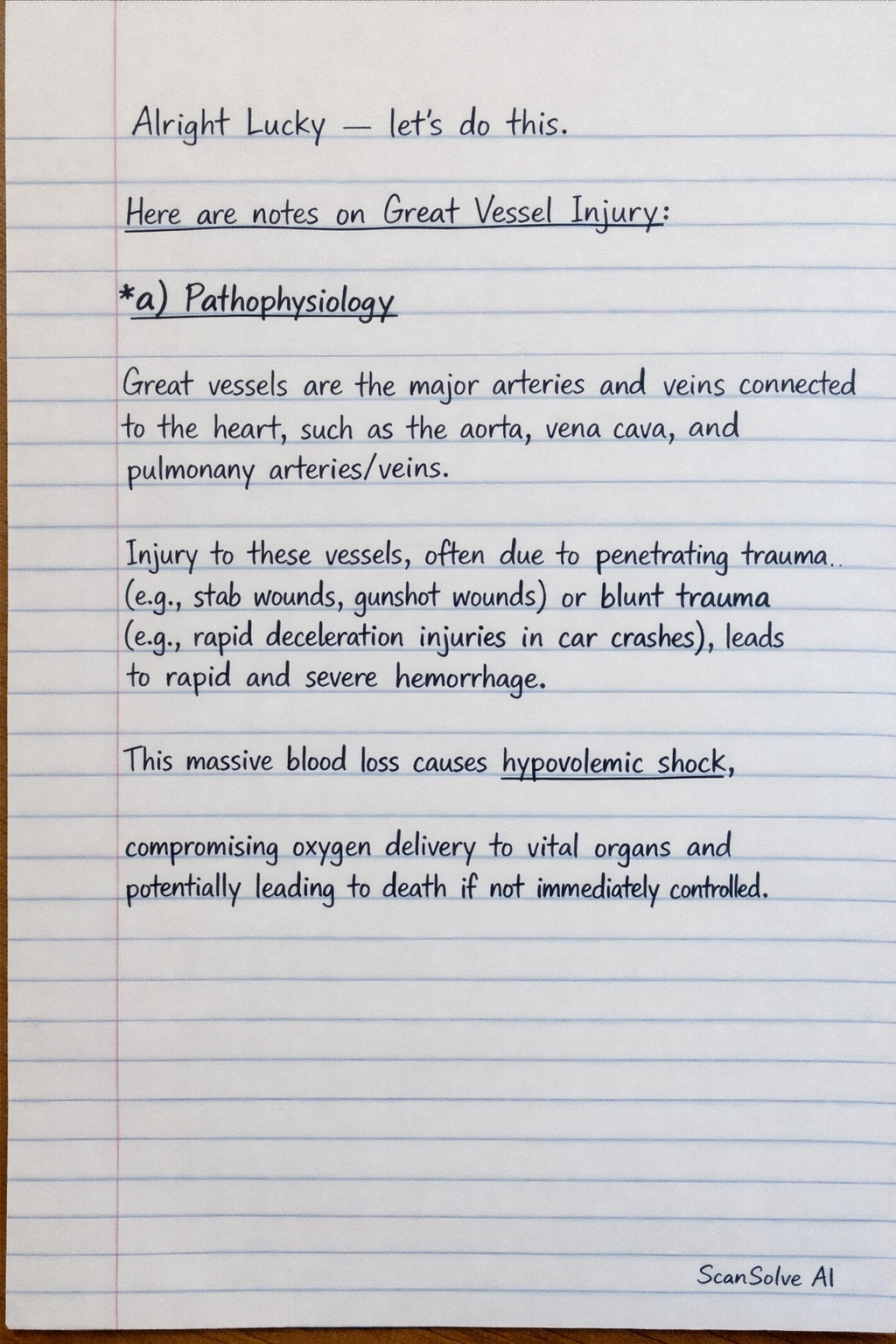
Here are notes on Great Vessel Injury:
a) Pathophysiology
Great vessels are the major arteries and veins connected to the heart, such as the aorta, vena cava, and pulmonary arteries/veins. Injury to these vessels, often due to penetrating trauma (e.g., stab wounds, gunshot wounds) or blunt trauma (e.g., rapid deceleration injuries in car crashes), leads to rapid and severe hemorrhage. This massive blood loss causes hypovolemic shock, compromising oxygen delivery to vital organs and potentially leading to death if not immediately controlled.
b) Assessment
Assessment focuses on identifying signs of severe internal bleeding and shock.
- Mechanism of Injury (MOI): High index of suspicion with significant trauma to the chest or abdomen.
- Primary Assessment (ABCDE): Look for signs of airway compromise, rapid and weak pulse, hypotension, rapid shallow breathing, and altered mental status.
- Physical Exam:
- External bleeding: Obvious hemorrhage from penetrating wounds.
- Chest: Distended neck veins (if superior vena cava injury), tracheal deviation (tension pneumothorax often associated), diminished or absent breath sounds, bruising, crepitus.
- Abdomen: Distension, rigidity, tenderness, bruising (e.g., Cullen's or Grey Turner's sign for retroperitoneal bleeding).
- Extremities: Absent or diminished peripheral pulses, pallor, cool clammy skin.
- Signs of Shock: Tachycardia, hypotension, tachypnea, altered mental status, delayed capillary refill.
c) Management
Management in the pre-hospital setting is focused on immediate life threats and rapid transport.
- Airway and Breathing: Ensure a patent airway and adequate ventilation; administer high-flow oxygen.
- Hemorrhage Control: Apply direct pressure to external bleeding sites. For internal bleeding, there is no direct pre-hospital control, so focus on managing shock.
- Circulation: Establish two large-bore intravenous (IV) lines. Administer fluid resuscitation with crystalloids (e.g., normal saline) to maintain perfusion, but avoid aggressive fluid boluses that can worsen bleeding by dislodging clots (permissive hypotension, if protocols allow).
- Shock Management: Keep the patient warm to prevent hypothermia, which can worsen coagulopathy.
- Rapid Transport: Expedite transport to a trauma center for definitive surgical intervention. Notify the receiving hospital early.
Still stuck on this one?
Ask a follow-up, and the answer starts from this question.
More Biology Questions
Handwritten Step-by-Step Solution
Get this as a handwritten image on WhatsApp — like a tutor wrote it for you.
Try on WhatsApp