
We read your photo as:
What are the main functions of blood in the human body?
Biology
ScanSolve AI Answer
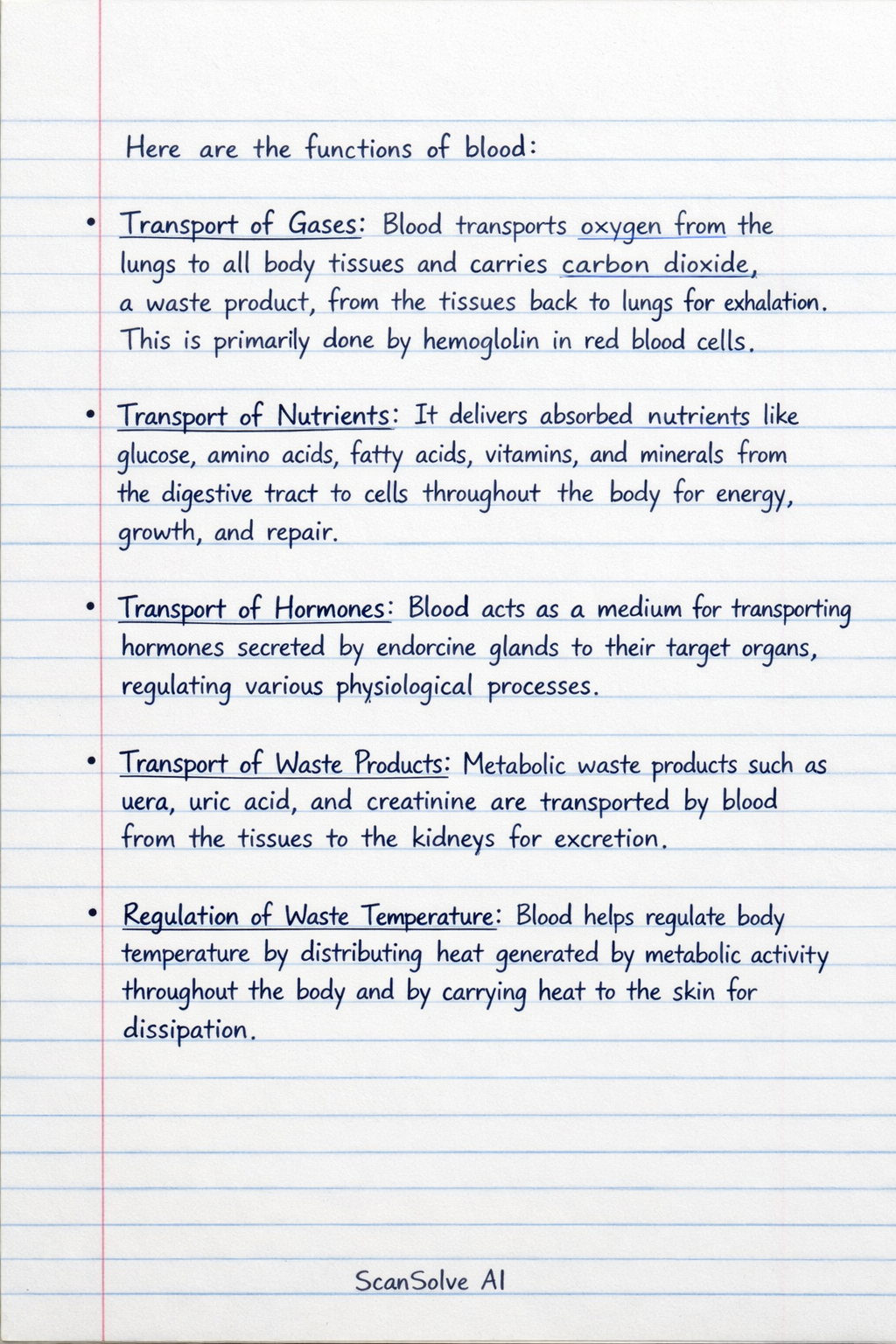
Here are the functions of blood:
- Transport of Gases: Blood transports oxygen from the lungs to all body tissues and carries carbon dioxide, a waste product, from the tissues back to the lungs for exhalation. This is primarily done by hemoglobin in red blood cells.
- Transport of Nutrients: It delivers absorbed nutrients like glucose, amino acids, fatty acids, vitamins, and minerals from the digestive tract to cells throughout the body for energy, growth, and repair.
- Transport of Hormones: Blood acts as a medium for transporting hormones secreted by endocrine glands to their target organs, regulating various physiological processes.
- Transport of Waste Products: Metabolic waste products such as urea, uric acid, and creatinine are transported by blood from the tissues to the kidneys for excretion.
- Regulation of Body Temperature: Blood helps regulate body temperature by distributing heat generated by metabolic activity throughout the body and by carrying heat to the skin for dissipation.
- Regulation of pH: Blood contains buffer systems (e.g., bicarbonate buffer system) that help maintain the body's pH within a narrow, physiological range (7.35-7.45).
- Regulation of Fluid and Electrolyte Balance: Blood plasma contributes to maintaining the osmotic pressure and fluid balance between blood and interstitial fluid, as well as distributing electrolytes.
- Protection Against Infection: White blood cells (leukocytes) and antibodies (immunoglobulins) in the blood are crucial components of the immune system, defending the body against pathogens, foreign substances, and diseased cells.
- Protection Against Blood Loss: Platelets and clotting factors in the blood initiate the process of hemostasis, forming blood clots to prevent excessive blood loss from injured vessels.
Was this helpful?
Still stuck on this one?
Ask a follow-up, and the answer starts from this question.
Got a different question?Ask your own question
More Biology Questions
QWhat are the primary functions of the heart in the human circulatory system?QWhat are the main functions of carbohydrates in the human body and in biological systems?QWhat are the main functions of the skeletal system?QWhat are the three main components of blood?QFunctions of water in the body
Browse by topic:Anatomy
Handwritten Step-by-Step Solution
Get this as a handwritten image on WhatsApp — like a tutor wrote it for you.
Try on WhatsApp